

Agenda
Ordinary Council Meeting
23 April 2026, 7:00 PM
Council will commence consideration of
all business paper agenda items at 7.00
pm.
Notice
of Meeting
Dear Councillors,
Notice is
given of the Ordinary Council Meeting, to be held in
the Council Chambers on Thursday 23
April 2026 commencing at 7:00 PM. The business
to be transacted at the meeting is included in this business paper.
In accordance with clause 3.26 of the Code of Meeting Practice
Councillors are reminded of their oath or affirmation of office made under
section 233A of the Act, and of their obligations under the Council’s
Code of Conduct to disclose and appropriately manage conflicts of interest.
Yours faithfully
Louise Kerr
General Manager
Council
Meeting Procedures
The Council meeting is chaired by
the Mayor, Councillor Merri Southwood. Councillors are entitled to one vote on
a matter. If votes are equal, the Chairperson has a second or casting vote.
When a majority of Councillors vote in favour of a Motion it becomes a decision
of the Council. Minutes of Council and Committee meetings are published on
Council’s website www.lanecove.nsw.gov.au by 5.00 pm on the Tuesday following
the meeting.
The
Meeting is conducted in accordance with Council's Code of Meeting Practice. The
order of business is listed in the Agenda on the next page. That order will be
followed unless Council resolves to modify the order at the meeting. This may
occur for example where the members of the public in attendance are interested
in specific items on the agenda.
The Public Forum will hear
registered speakers from the Public Gallery as well as online using the web
platform Zoom. All speakers wishing to participate in
the public forum must register by using the online form no later than midnight, on the day
prior to the meeting (Wednesday, 22 April 2026) and a
Zoom meeting link will be emailed to the provided email address of those
registered as an online speaker. Please note that the time limit of three
minutes per address still applies, so please make sure your submission meets
this criteria. Alternatively, members of the public can still submit their
written address via email to service@lanecove.nsw.gov.au. Written addresses are to be received by Council no later
than midnight, on the day prior to the meeting. (500 words maximum).
Please note that meetings held in
the Council Chambers are webcasted, and recordings are made publicly available
on the Council's website. Should you require assistance to participate in the
meeting due to a disability; or wish to obtain further information in relation
to Council, please contact Council’s Director - Corporate Services and
Strategy on (02) 9911 3550.
Ordinary Council 23 April 2026
TABLE OF
CONTENTS
1 DECLARATIONS
OF INTEREST
2 APOLOGIES
AND APPLICATIONS FOR LEAVE OF ABSENCE OR ATTENDANCE BY AUDIO-VISUAL LINK BY
COUNCILLORS
3 ACKNOWLEDGEMENT
TO COUNTRY
4 MINUTE
OF SILENCE FOR RELECTION OR PRAYER
5 NOTICE
OF WEBCASTING OF MEETING
6 CONFIRMATION OF MINUTES
6.1 Ordinary Council Meeting - 19 March 2026
7 Mayoral
Minutes
Nil
8 Petitions
Nil
9 Recission
Motion
Nil
10 ITEMS OF BUSINESS BY EXCEPTION
11 Notices
of Motion
11.1.... Notice
of Motion - Partnership with the National Heart Foundation - Community CPR
& AED Training Initiative................. 5
11.2.... Notice
of Motion - Enhancing Urban Biodiversity through Scalable Habitat Initiatives.................................................................... 8
11.3.... Notice
of Motion - Exemption for Existing Strata Developments under the Food Organics
Mandate.................................................... 10
11.4.... Notice
of Motion - Development of a Synthetic Turf in Public Spaces Policy............................................................................................... 13
12 Office
of the General Manager Reports
12.1.... Post
Exhibition - Draft Planning Agreement for 2-4 Pacific Highway, St Leonards............................................................................... 20
13 Corporate
Services and Strategy Division Reports
13.1.... Public
Exhibition - Draft 2026/27 Budget, 2026/27 Fees and Charges, 2026/27 Delivery
Program and Draft Operational Plan, Resourcing Strategy and associated Resource
Plans.......... 24
13.2.... Public
Exhibition - Draft Restricted Cash (Reserves) Policy 34
13.3.... Council
Policies Review........................................................................... 38
14 Community
and Culture Division Reports
14.1.... 2026-2027
Community Assistance Grants Program - Funding Recommendations....................................................................................... 42
15 Planning
and Sustainability Division Reports
15.1.... Planning
Proposal 48 - 1 Austin Crescent Lane Cove (Heritage de-listing)....................................................................................................... 51
15.2.... Planning
Proposal 46 - 94 Northwood Road, Northwood (Heritage de-listing).................................................................................. 73
15.3.... Adoption
- Draft Electric Vehicle Charging Infrastructure Policy............................................................................................................... 88
15.4.... Adoption
- Sustainability Action Plan 2026 - 2030 and Outcomes Report for the
Sustainability Action Plan 2022 - 2025.............. 95
16 Open
Space and infrastructure Division Reports
16.1.... Feasibility
of Community E-Shuttle for Lane Cove.................. 102
16.2.... Public
Exhibition - Draft Small Watercraft Storage Policy 118
16.3.... Local
Transport Forum - March 2026.............................................. 123
16.4.... Public
Exhibition - Draft Infrastructure Asset Management Policy............................................................................................................. 127
17 Questions With
Notice
Nil
18 Officer
Reports for Information
18.1.... Council
Snapshot March 2026............................................................. 130
19 cLOSED
COMMITTEE
Nil
Ordinary Council Meeting 23 April 2026
Notice of Motion -
Partnership with the National Heart Foundation - Community CPR & AED
Training Initiative
Item No: 11.1
Subject: Notice
of Motion - Partnership with the National Heart Foundation - Community CPR
& AED Training Initiative
Record No: SU129 - 26026/26
Division: Lane
Cove Council
Author(s): Councillor
Helena Greenwell; Councillor Merri Southwood
Purpose
A motion
requesting Council partner with the National Heart Foundation to provide
cardiopulmonary resuscitation (CPR) and automated external defibrillator (AED)
training to the community.
|
RECOMMENDATION
That Council:
1. commit
to participating in the Heart Foundation’s Shockingly Simple
community-based cardiopulmonary resuscitation (CPR)
and Automated External Defibrillator (AED) training
program.
2. provide
suitable Council-owned venues, at no cost where appropriate, to facilitate
the delivery of community training sessions.
a) support
community engagement and participation by:
b) promoting
the program through Council communication channels
c) facilitating
connections with local community groups, including culturally and
linguistically diverse communities; and
d) assisting
with recruitment of volunteer trainers
3. allocate
the necessary funding from the 2025-2026 budget for the purchase of essential
training equipment, including CPR manikins, training AEDs and associated
resources.
|
BACKGROUNd
Sudden cardiac arrest is a leading cause of
death in Australia, often occurring without warning and outside of hospital
settings. Over 32,000 people in Australia experience a heart attack each year,
however only 10% of those who experience it survive when it occurs outside of a
hospital. Survival rates are heavily dependent on immediate intervention,
particularly the early administration of cardiopulmonary resuscitation (CPR)
and the use of an Automated External Defibrillator (AED) in which case survival
rates increase to 60-70%. The use of CPR and AEDs are both easily accessible
methods.
Despite this drastic increase in survival
rates most community members lack the confidence, training, or awareness to
respond effectively in an emergency. Barriers to participation in CPR and AED
training currently include cost, accessibility, language, and a lack of
targeted outreach to culturally and linguistically diverse communities.
The National Heart Foundation of Australia
has recently launched the program ‘Shockingly Simple’ - a
community-based training initiative that provides CPR and AED education
sessions, supported by trained volunteer facilitators, multilingual resources,
and community engagement strategies designed to increase awareness and give
individuals the confidence to administer CPR or AEDs if required.
The program is already taking place in
several other local council areas including North Sydney, where it has been
well received with their events consistently booked out.
DISCUSSION
This initiative presents a valuable
opportunity for Council to play a proactive role in improving community health
outcomes and emergency preparedness. Increasing the number of residents trained
in the use of CPR and AED directly contributes to a more resilient and capable
community. In emergency situations, bystanders are often the first responders
and equipping more people with life-saving skills can significantly improve
survival rates and recovery outcomes.
GoodSAM partnered with the Greenwich
Village Games in 2025 with outstanding success, training over 1,000
participants in the use of CPR and AEDs. The initiative significantly increased
community awareness of cardiac arrest response and introduced attendees to the
GoodSAM app, which alerts nearby trained responders when a cardiac emergency
occurs.
While the program demonstrated strong
community interest, there has been limited ongoing follow-through. This
highlights the value of establishing a more consistent and sustained training
program to build on this momentum and ensure long-term community capability and
preparedness.
The Shockingly Simple program also has a
strong focus on accessibility and inclusion. The provision of translated
materials and targeted outreach supports engagement with culturally and
linguistically diverse communities, ensuring that the benefits of the program
are accessible to all community members. This aligns with Council’s
broader commitments to social inclusion, community wellbeing, and equitable
service delivery.
The partnership model also represents an efficient use of resources. The Heart Foundation brings established
expertise, evidence-based training programs, and a network of trained
facilitators, while Council’s role is primarily supportive - focused on
enabling access, promoting participation, and leveraging local community
networks. This minimises financial impact while maximising community benefit.
Overall, this partnership represents a
practical, community-focused initiative that delivers measurable public
benefit, strengthens local capacity, and aligns with Council’s strategic
objectives in health, wellbeing, and community resilience.
Councillor Helena Greenwell
Councillor
Councillor Merri Southwood
Councillor
ATTACHMENTS:
There are no supporting documents for this report.
Ordinary Council Meeting 23 April 2026
Notice of Motion -
Enhancing Urban Biodiversity through Scalable Habitat Initiatives
Item No: 11.2
Subject: Notice
of Motion - Enhancing Urban Biodiversity through Scalable Habitat
Initiatives
Record No: SU7389 - 27087/26
Division: Lane
Cove Council
Author(s): Councillor
Bridget Kennedy
Purpose
To ensure Council’s biodiversity
initiatives deliver the greatest ecological benefit by identifying cost-effective, scalable, and community-supported approaches to habitat creation across the Lane
Cove local government area.
|
RECOMMENDATION
That Council:
1. notes the importance of creating additional habitat for
native fauna, including bluetongue lizards, within the Lane Cove local
government area.
2. requests
that staff investigate and report back to Council on a cost-effective urban
habitat program that encourages participation by residents and improves
habitat availability for native reptiles and other small fauna.
3. the
report should consider:
a) low-cost habitat
creation methods suitable for residential properties, including the use of
repurposed materials such as clay pipes (new and salvaged from building
sites), rock shelters, timber offcuts and other artificial refuges,
b) the relative costs of
implementing the program and any implications it may have on Council’s
adopted budgets,
c) that the program
should be considered in conjunction with the Habitat Log Salvage program that
was adopted for investigation at the March 2026 meeting,
d) opportunities for
community participation and integration with existing Council initiatives
such as the Backyard Habitat Program, Bush Friends, On the Verge Program,
Bush Kids Activities and Nursery Workshops.
|
BACKGROUND
At the March 2026 Council meeting, Council resolved to
support the resourcing of a report on the costs of a Habitat Log Salvage
Program aimed at increasing habitat for native fauna, including blue-tongue
lizards, within the Lane Cove local government area.
While this initiative reflects a shared commitment to
biodiversity, it represents only one of a range of possible habitat creation
approaches in an urban environment.
Urban biodiversity outcomes are typically strongest when
habitat interventions are diverse, scalable, and supported by community
participation, rather than reliant on a single method or asset type. Distributed,
ground-level habitat structures, vegetation complexity, and resident engagement
are important in creating resilient habitat networks.
Species such as the eastern blue-tongue lizard (Tiliqua
scincoides) are highly adaptable and utilise a wide variety of shelter types in
suburban landscapes, including rocks, dense planting, leaf litter, timber
debris, and artificial refuges. This means that effective habitat creation can
often be achieved through simple, low-cost interventions that are easily
replicated across many properties.
The use of repurposed materials (including both savaged and
new clay pipes, rock shelters and timber offcuts), combined with appropriate
planting and ground cover - can deliver meaningful biodiversity outcomes while
also increasing community awareness and participation.
In contrast, more complex interventions such as the salvage,
transport, manufacturing and placement of large habitat logs can be resource-intensive
and inherently limited in scale, reducing the number of sites that can
be reached within existing budgets.
Given the importance of maximising ecological outcomes from
available and finite Council resources, there is value in taking a broader and
more strategic approach to urban habitat creation.
This Notice of Motion therefore seeks to build on
Council’s existing commitment to biodiversity by requesting a comparative
assessment of habitat creation methods, with a focus on identifying approaches
that are cost-effective, scalable, and capable of engaging a large number of
residents across the municipality.
Such an approach would ensure that Council’s biodiversity initiatives are
not only well-intentioned, but also evidence-based, financially
responsible, and capable of delivering the greatest ecological benefit at a
community-wide scale.
Councillor Bridget Kennedy
Councillor
ATTACHMENTS:
There are no supporting documents for this report.
Ordinary Council Meeting 23 April 2026
Notice of Motion -
Exemption for Existing Strata Developments under the Food Organics Mandate
Item No: 11.3
Subject: Notice
of Motion - Exemption for Existing Strata Developments under the Food Organics
Mandate
Record No: SU9369 - 27402/26
Division: Lane
Cove Council
Author(s): Councillor
Scott Bennison; Councillor Caleb Taylor
Purpose
This motion discusses the impact of the
Food Organics (FO) service on existing strata developments with insufficient
space and recommends that Council advocates for an exemption from the NSW
Government for the implementation of FO for these properties.
|
RECOMMENDATION
That Council:
1. notes that while compliance with the NSW Food Organics
mandate is required, the practical impacts of implementation differ
significantly between stand‑alone homes and existing strata
developments.
2. notes
that mandatory retrofitting of additional waste infrastructure in existing
strata developments where insufficient space exists may result in
disproportionate cost, amenity loss and financial burden on unit owners.
3. resolves to
write to the NSW Government, including the Minister for the Environment and
the Minister for Planning, requesting that:
a) existing residential strata and
multi‑unit developments be exempt from mandatory Food Organics (FO) or
Food Organics and Garden Organics (FOGO) rollout where there is insufficient
space to accommodate additional bins without unreasonable loss of common
property, parking or amenity; and
b) in the event that residential
strata and multi-unit developments are not exempted, the NSW Government make
funds available to strata corporations to fund any costs associated with the
provision of additional bi storage.
|
Background
The NSW Government has legislated a
statewide requirement for local councils to provide a Food Organics (FO) or
Food Organics and Garden Organics (FOGO) collection service to households by 1
July 2030.
Lane Cove Council is required to act
consistently with this legislation and commenced the collection of FO from
stand-alone dwellings on 16 March 2026 to meet its statutory obligations.
Lane Cove is a predominantly high‑density
local government area, with more than half of residents living in strata‑titled
apartments and multi‑unit developments, meaning policy decisions
affecting strata housing have a disproportionate impact across the community.
Existing strata developments within Lane
Cove were, in most cases, approved and constructed without allowance for
additional waste streams or expanded bin storage, and already experience
constrained capacity for existing red, yellow and green bins.
Unlike stand‑alone dwellings, strata
developments rely on shared, restricted and fixed bin areas, so the
introduction of additional bins or intensified food organics use may impact on:
· car parking spaces,
· landscaped areas and tree protection zones,
· circulation and access areas on common property, or
· in some cases, encroaches onto public footpaths or local
streets.
Retrofitting additional waste
infrastructure into existing strata developments therefore results in a direct
financial imposition on all lot owners, including:
· capital works to reconfigure bin areas,
· loss of common property functionality,
· increased ongoing cleaning and operational costs, and
· the raising of special levies by owners’ corporations.
These costs are compulsory rather than
discretionary, are borne individually by strata owners—including retirees
and residents on fixed incomes—and occur during a period of high interest
rates and significant cost‑of‑living pressures
Evidence from other council areas indicates
that the introduction of food organics systems, whether FO or FOGO, has been
associated with increased complaints relating to odour, flies, maggots and
hygiene concerns, particularly in shared and enclosed bin environments typical
of strata housing.
Council is already undertaking
investigations into practical implementation options for strata and multi‑unit
developments and recognises that these challenges are common across high‑density
councils in New South Wales.
Councillor Scott Bennison
Councillor
Councillor Caleb Taylor
Councillor
ATTACHMENTS:
There are no supporting documents for this report.
Ordinary Council Meeting 23 April 2026
Notice of Motion -
Development of a Synthetic Turf in Public Spaces Policy
Item No: 11.4
Subject: Notice
of Motion - Development of a Synthetic Turf in Public Spaces Policy
Record No: SU1228 - 27536/26
Division: Lane
Cove Council
Author(s): Councillor
Helena Greenwell; Councillor Rochelle Flood; Councillor Merri Southwood
Purpose
To request that staff develop a policy on the installation,
use, and end of life recycling of synthetic turf within the municipality, with
a focus on ensuring synthetic turf is used as a last resort.
|
RECOMMENDATION
That Council:
1. note
that research conducted by Dr Sebastian Pfautsch, Associate Professor in
Urban Management and Planning at Western Sydney University suggests that the
ground temperatures on synthetic playing fields are often double those on
fields with natural turf and that the ‘Synthetic Turf in Public
Spaces’ assessment (2022) prepared by the Office of Sport Chief
Scientist and Engineer, found that when daytime temperatures rise above 27
degrees, synthetic fields can inflict serious skin burns on users.
2. note that there is consensus on environmental risks and public
health risks associated with synthetic turf including:
a) loss of biodiversity
b) chemical run-off contaminated by PFAS and PFOA
c) risk of bacterial infections
d) lack of permeability
e) increased risk of non-contact related injury.
3. note
that there is broad consensus on the environmental risks associated with
synthetic turf surfaces exposed to waterways, particularly during flooding
events and periods of heavy rain. The recent AUSMAP microplastics report
found that 16% of the microplastic contamination in the Lane Cove River was
from synthetic fibres including turf fibres, well above the average in the
report.
4. note
that modern natural turf fields such as Middle Head Oval in Mosman have demonstrated
increased usage and capacity through well maintained, best practice natural
turf fields that balance sporting needs with environmental and health
concerns.
5. note
that Council staff have taken every effort to adopt the best options
available for existing synthetic turf surfaces.
6. develop
a draft Synthetic Turf in Public Spaces Policy which sets out the following
policy position:
a) synthetic turf must
not be used to replace natural turf on Sports Fields or in other public spaces unless there is no viable alternative to the use of
synthetic turf,
b) all decisions to install synthetic turf
(including the replacement of existing synthetic surfaces with a synthetic
surface) must be referred to the elected Council for determination,
c) where there is no alternate option available
and the installation of synthetic turf in a capital works project is
proposed, the project must be developed and assessed against International
best practice standards for the use of synthetic surfaces and in accordance
with the NSW Governments guidelines and recommendations for Councils
regarding synthetic turf (Division 5.1 Assessments – Addendum for
Synthetic Sports Fields May 2025)
d) where synthetic turf is to be used the
community will be consulted on the proposed measures that are being
incorporated into the project to minimise environmental and public health
risk prior to the approval of the project and subsequent commencement
e) where synthetic turf is removed, best
endeavours are to be made to ensure that the material is disposed of in an
ethical and sustainable manner.
f) receive the draft policy for review and
endorsement to commence public consultation.
7. prepare guidance
material for the community on environmentally sustainable landscape
alternatives to synthetic turf available for private property, including
native planting, permeable surfaces, and biodiverse gardens, and staff
investigate whether development controls can be incorporated into the Lane
Cove Development Control Plan to prevent the use of synthetic turf in new
private developments.
8. undertake a review of
the Council owned or managed locations within the Local Government Area where
synthetic turf is used in public spaces and commit to prioritising
replacement of synthetic turf with natural grass or environmentally
sustainable alternatives subject to budget being available for the
replacement.
|
Background
The
original upgrade proposal for Bob Campbell Oval recommended the replacement of
the natural grass surface with synthetic grass to provide the maximum playing
capacity for sports groups. This proposal prompted community concern, including the
potential for increased surface temperatures, the environmental impacts
associated with synthetic materials, and the long-term costs of replacement and
disposal.
The
community response around BCO clearly demonstrated that the use of artificial
turf is a matter of strong public interest and that there is value in Council
providing clearer policy guidance on where and how synthetic surfaces should be
considered. In October 2022, the NSW Chief Scientist and Engineer published the
‘Independent Review into the design, use and impacts of synthetic turf in
public open spaces’. This report highlighted concerns with the use of
synthetic turf and encouraged local authorities to appropriately consider
potential impacts of synthetic turf use and to develop policies
accordingly.
More
broadly, many councils in Australia are reviewing the role of artificial turf
within their local government areas, particularly in relation to public land
such as parks, sports fields and nature strips. While synthetic turf can
provide benefits in certain circumstances, primarily in increasing playing
capacity for sports fields, it also raises a number of environmental
considerations, including changing habitat for native wildlife, urban
heat, microplastic pollution and end-of-life disposal challenges. It also
prevents areas from being used as passive recreation areas for other activities
such as such as picnicking, informal play, dog walking, community gatherings
and general relaxation.
Given
the strong community interest in supporting environmentally friendly measures and the increase in use of
artificial turf in residential and commercial landscaping, it is timely for
Council to consider whether a clear policy position should be developed to
guide its future use within the Lane Cove local government area.
Discussion.
As
residential density grows in Lane Cove due to the implementation of the Low to
Mid-rise Housing Policy and the approaching completion of many of the St
Leonards South developments, the demand placed on our open space will only
continue to rise. At the same time, participation in organised sport and
recreational activities is increasing, placing further pressure on existing
sporting infrastructure.
While
synthetic turf is often promoted as a solution to increasing demand for sports
fields, its installation is a significant and irreversible shift in how public
open space is used and experienced by the broader community. Natural grass
fields are multi-functional spaces that can support organised sport while also
being used for informal recreation such as casual play, dog walking, picnicking
and community gatherings. Artificial turf fields are generally designed for
structured sporting use and are less suitable for passive recreation, which can
reduce accessibility for the wider community.
In
addition, the environmental impacts of artificial turf are magnified when
installed at the scale of a full sporting field. Large synthetic surfaces
contribute to increased heat retention, reduce permeable ground cover, and
introduce substantial volumes of plastic materials into the landscape. Given
the limited amount of public open space within the Lane Cove LGA, and the
significant health and environmental concerns associated with synthetic turf,
we should develop a policy that prioritises best practice natural turf and
avoids the use of synthetic turf wherever possible.
Lane
Cove is at the forefront of sustainable practices, and ensuring we
avoid/minimise the use of synthetic turf is in keeping with our
community’s support for sustainable practices. There is broad consensus
among experts on the environmental and health risks associated with synthetic
turf, from
the impact of microplastics to the loss of biodiversity, the creation of urban
heat islands, and the risk of chemical run-off. These are each addressed in
detail below.
Microplastics
Microplastics
are tiny plastic particles that result from the breakdown of larger plastic
materials, such as the fibres in synthetic turf. Once released into the
environment through weathering or runoff, these particles can persist in soil
and water and take between 100 and 1,000 years to break down.
Artificial
turf sheds fibres over time through weathering, UV exposure and physical wear.
The fibres enter stormwater systems and ultimately waterways, contributing to
microplastic pollution. Because nature strips and verges sit immediately next
to kerbs and gutters, the impact on the environment is exacerbated.
Infill
is usually spread over the turf to help the grass blades stand up and keep the
turf flat. In backyards, infill is often made from silica sand, which has sharp edges
that can contribute to the grass blades breaking off. While newer synthetic
turf varieties have replaced rubber infill with cork or other inorganic
substances, microplastic pollution still occurs as the synthetic turf blades become
damaged and worn down, either by use or through exposure to the elements.
Ultimately,
these synthetic fibres end up in our waterways, as revealed by the AUSMAP
report released earlier this year, which showed that 16% of the microplastic
contamination in The Lane Cove River was from synthetic fibres (including
synthetic turf fibres) and film.
Microplastic
pollution causes significant harm to native wildlife, and questions remain about the potential human
health impacts. Reducing microplastic pollution at the source is the most
effective way of minimising harm.
Urban heat island impacts
Artificial
turf can reach significantly higher surface temperatures than natural grass
during warm weather. Studies have recorded temperatures substantially above
surrounding surfaces during summer conditions, contributing to urban heat
island effects and reducing thermal comfort in residential areas.
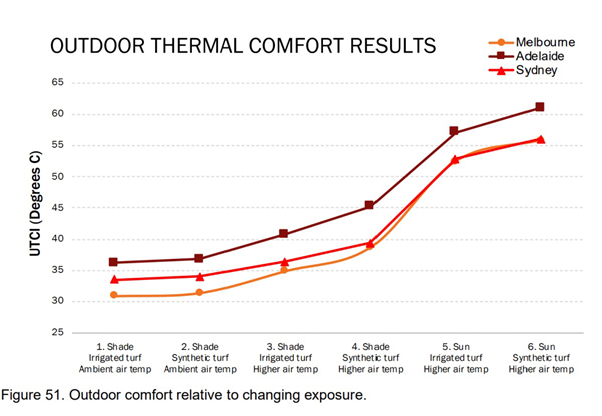
According
to research conducted by Western Sydney University, artificial turf surfaces
can reach temperatures of over 80 °C in direct sunlight on a typical summer
day, even when the air temperature is only around 28 °C.
In comparison, natural grass under the same conditions generally reaches just
above 30 °C. Another report from the NSW Department
of Planning, Housing, and Infrastructure last year noted that during very hot
summer days in Western Sydney, synthetic surfaces reached average surface
temperatures of 70-75 degrees, compared with 37 degrees for irrigated natural
grass. The graph below is from Sweltering Cities and it reveals the temperature of synthetic
turf surfaces compared to natural irrigated turf.
Synthetic
turf also radiates heat, impacting the health of those using the immediate
environment and increasing the temperature of the surrounding area if installed in residential
settings. Given the ongoing impacts of climate change, ensuring that public and
private spaces remain as cool as possible remains a high priority and aligns
with the goals of our urban forest strategy and our priorities around climate
resilience and adaptation.
The
belief that artificial turf will significantly expand the usable hours of a
field fails to consider the potential for extreme surface heat and community
safety. As average summer temperatures continue to increase each year, the use
of artificial turf during the summer will become more and more limited.
A
recent SMH article interviewed a cricketer who plays on Blackman Oval. He is
quoted as saying that while he appreciates the even surface, it “comes with a
big downside, even during normal summer heat.” He went on to say
“whenever we are going to play on an astroturf field, and we see
it’s going to be 30-plus degrees, there’s a bit of a groan from the
whole team about ‘oh no, this is going to be a really tough
day’”. He also said that “There’s been quite a few
times we’ve had multiple teammates just at the end of the game with a bit
of blood or a bit of burning, which is a bit rare from a game of
cricket.”(The Age, January 2026, https://www.theage.com.au/environment/climate-change/on-a-hot-day-astroturf-can-reach-up-to-75-degrees-that-s-only-the-start-of-its-problems-20251216-p5no75.html) This demonstrates that artificial turf is not
really an “all-weather” solution. It’s one that will become
increasingly dangerous as temperatures continue to rise.
Biodiversity and urban greening
Unlike
natural vegetation, synthetic surfaces provide no ecological value. Artificial
turf does not support soil health – it kills nutrients in the soil and
ultimately creates ‘green deserts’ that destroy habitats, seal
soil, and eliminate food sources for insects, birds and soil organisms.
Overtime it can result in a loss of urban wildlife and remove opportunities for biodiversity within the
landscape.
Artificial
turf typically has a lifespan of approximately 8–15 years. At
end-of-life, most synthetic turf products are difficult to recycle due to the
combination of plastics, backing materials and infill. As a result, the
majority of removed artificial turf is disposed of in landfill.
In
the context of Lane Cove, future artificial turf installations may undermine
the Council’s urban forest strategy objectives, which aim to
increase vegetation cover, support biodiversity, and reduce urban heat in
residential and public areas. Natural grass and landscaped vegetation along
nature strips, parks, and open spaces contribute to the cooling of streets,
improved air quality, and habitat for native wildlife, all of which are key
priorities in Lane Cove’s Environmental Strategy. Replacing these areas
with synthetic surfaces would reduce opportunities for urban wildlife, soil
health, and green connectivity, while also limiting the ability of public and
private spaces to contribute to the overall liveability and environmental
resilience of the municipality.
PFAS
PFAS,
or per- and polyfluoroalkyl substances, are a class of about 15,000 chemicals
often used to make products resist water, stain and heat. The compounds are
linked to cancer, liver problems, thyroid issues, birth defects, kidney
disease, decreased immunity and other serious health problems.
All
artificial turf is made with what public health advocates say are dangerous levels of
PFAS. Artificial turf is made with several layers, including plastic grass blades, plastic backing
that holds the blades in place and infill that weighs down the turf to help
blades stand upright. Industry has said the grass blades and backing cannot be
made without PFAS.
When
the highly mobile chemicals break off from plastic grass blades, they can be
absorbed through the skin, inhaled, ingested or get in open wounds. A study in
the US found that players had much higher levels of these forever chemicals on
their skin after playing on synthetic fields. (Public Employees for
Environmental Responsibility, 2023 https://peer.org/wp-content/uploads/2024/03/3_6_2024-Dermal-absorption-PFAS-AT.pdf)
One
of the co-authors of the study said “in 2024, the last thing we should be
doing is putting down acres of a plastic fossil fuel product … with
chemicals that are going to get all over athletes’ skin, and into soil
and water,” “It just boggles my mind that people are still
considering using this stuff” (The Guardian, March 2024 https://www.theguardian.com/environment/2024/mar/15/athletes-higher-pfas-levels-artificial-turf) .
We
also know that these fibres and the chemicals used to hold them together run
off into nearby water sources and have the potential to impact the health of
the broader community. The federal parliamentary inquiry into PFAS in November
last year indicated a single synthetic field could release 800 to 3200
kilograms of PFAS-contaminated particulate into the environment. The inquiry
recommended that Australian governments should ban PFAS in artificial ground
coverings.
Councils reducing and banning synthetic turf
Increasingly,
councils are moving to ban or significantly reduce their reliance on synthetic
fields. Dr Safiullah, a senior lecturer at RMIT has urged councils to ban the
use of synthetic fields where possible – citing concerns with heat island
effects and loss of biodiversity. This applies to both playing fields and
public spaces, as well as lawns in new developments.
Adelaide
City Council has banned synthetic grass on verges. The City of Marion and Tea Tree Gully have also
taken action to curb the use of synthetic turf. Just this year,
Queanbeyan-Palerang has put forward a proposal to ban artificial turf in new
developments. Similar restrictions have been placed on new developments in
parts of the Gold Coast. There’s a clear precedent to support councils taking
stronger action to address the negative impact of synthetic turf.
Councillor Helena Greenwell
Councillor
Councillor Rochelle Flood
Councillor
Councillor Merri Southwood
Councillor
ATTACHMENTS:
There are no supporting documents for this report.
Ordinary Council Meeting 23 April 2026
Post Exhibition - Draft
Planning Agreement for 2-4 Pacific Highway, St Leonards
Item No: 12.1
Subject: Post Exhibition - Draft Planning Agreement for 2-4 Pacific Highway,
St Leonards
Record No: SU6258 - 26199/26
Division: Office of the
General Manager
Author(s): David
Stevens
Purpose
The purpose of this report is to present to
Council the outcome of the public exhibition of a draft Planning Agreement for
2-4 Pacific Highway, St Leonards and to seek endorsement of the draft Planning
Agreement and delegate authority to the General Manager to execute the
agreement.
Executive
Summary
· At
the meeting of 18 September 2025 Council considered an Offer to Enter into a
Planning Agreement submitted to Council by the proponent for 2-4 Pacific
Highway, St Leonards and resolved to place the draft Planning Agreement on
public exhibition.
· The
Planning Agreement comprises a monetary contribution for local works or
projects at Council’s discretion and, a share of advertising time on the
sign, at no charge to Council.
· Council
staff have determined that the annually indexed monetary contribution shall be
deployed to the maintenance of Wadanggari Park, St Leonards for a term of 10
years.
· A
development application (24/2026) for the removal of existing backlit signs and
the installation of a new western facing digital sign has been submitted to
Council and recently exhibited. The DA is yet to be determined.
· The
draft Planning Agreement, including Explanatory Note, and Offer to Enter into a
Planning Agreement was placed on public exhibition between 11 March 2026 and 10
April 2026.
· No
submissions have been received.
· This
Report recommends that Council delegate authority to the General Manager to
execute all necessary documentation required to finalise the Planning Agreement
for 2-4 Pacific Highway, St Leonards.
|
RECOMMENDATION
That Council:
1. enter
into the Planning Agreement for 2-4 Pacific Highway, St Leonards.
2. delegate
authority to the General Manager to execute all necessary documentation to
give effect to this resolution.
|
Background
Council received a Letter of Public Benefit
Offer from the Proponent of 2-4 Pacific Highway, St Leonards to enter into a
Planning Agreement (PA) for the site.
State Environmental Planning Policy
Industry and Employment (SEPP) (Chapter 3 Advertising and Signage)
provides Council with the assessment criteria to consider for signage, in
conjunction with Council’s own DCP controls.
Clause 3.1 of the SEPP titled “Aims,
objectives” section (3) “to ensure that public benefits may be
derived from advertising in and adjacent to transport corridors” is a
cornerstone of the Proponents offer, and indeed Council’s assessment
thereof.
A Planning Agreement is a legal arrangement
between a Developer/Landowner and Council to facilitate the delivery of a
public benefit. Public benefits may include the dedication of land at no cost
to Council, the payment of a monetary contribution and/or the provision of
infrastructure works.
At its meeting of 18 September 2025,
Council considered the Offer and resolved to exhibit the draft Planning
Agreement.
Resolution
201/25
That:
1. Council place the draft Planning Agreement for 2-4
Pacific Highway, St Leonards and supporting documentation on public exhibition;
and
2. receive a Report on the outcomes of the public
exhibition for the draft Planning Agreement.
The draft Planning Agreement was placed on
public exhibition for 28 days closing on 10 April 2026. No submissions have
been received.
Discussion
The Proponent has offered the following
public benefit contributions:
1. A 5% share of advertising time at no charge to
Council that may only be used for community messages that are directly
affiliated with Council; and
2. A fixed (recurring) monetary contribution of $10,000
per annum indexed at CPI to be expended by Council on local community works or
projects at Council’s discretion.
Council staff have determined that the
annually indexed monetary contribution shall be deployed to the maintenance of
Wadanggari Park, St Leonards for a term of 10 years. Under Section 3.19 (2) (a)
of the SEPP, consent granted ceases to be in force “on the expiration of
10 years after the date on which the consent becomes effective”. The
Proponent’s financial performance under the PA is secured by a $10,000
Bank Guarantee for the 10-year term.
The Monetary Contribution offered by the
Proponent will augment Council’s funding for maintenance and repairs at
the award-winning Wadanggari Park site. Further, such external and recurring
revenue stream(s) afford Council the opportunity to re-deploy working capital
to other projects and works in the LGA.
The proposed share of advertising time at
no charge provides Council an opportunity to elevate community messaging from a
prominently visible site and in so doing, raise awareness and activation to
capture an audience that extends beyond the LGA for prominent Council events.
Exhibited Planning Agreement
Clause 3.1 of the SEPP titled “Aims,
objectives” section (3) “to ensure that public benefits may be
derived from advertising in and adjacent to transport corridors” is a
cornerstone of the Proponents offer, and indeed Council’s assessment
thereof.
The proposed Planning Agreement aligns with
the provision of infrastructure works, in this instance operating expenditure
to effect maintenance and repairs via a recurring monetary (indexed)
contribution.
The proposed Planning Agreement was
prepared by Council’s in-house lawyer and reviewed by Council and the
proponent including the negotiation of terms. Whilst the exhibited Planning
Agreement does not differ from the Planning Agreement recommended for Council
endorsement, the Public Benefit(s) as described under “DISCUSSION”
represent a negotiated outcome between the Parties, namely Council identifying
its operational expenditure needs at Wadanggari Park.
The Final Letter of Public Benefit Offer (AT-1)
is the culmination of negotiations with the Proponent.
The proposed Planning Agreement shall not
apply if consent is not granted for the DA.
Community
Consultation
Council publicly
exhibited the draft Planning Agreement (concurrently with the associated
Development Application) on its website for 28 days under “Have Your
Say”. The community consultation closed on 10 April 2026. No submissions
were received.
The following
evidentiary statistics are offered from the public exhibition phase:
· 77 visits to “Have Your Say”.
· One (1) person downloaded the associated Development Application.
· Zero (0) persons downloaded the Letter of Public Benefit Offer.
Financial
Considerations
The proposed monetary contribution provides
flexibility to Council for the re-deployment of financial resources to other
unfunded and / or partially funded projects and services in the Lane Cove Local
Government Area (LGA). Simultaneously, it relieves pressure on Council from an
ongoing operational expenditure perspective regarding the cost of maintenance
and repairs at Wadanggari Park.
Governance
and Risk Considerations
Council’s Finance and Assets Teams
shall complete the necessary actions to ensure the monetary contribution and
associated works are appropriately reported, provisioned, and scheduled during
the term.
Environmental
Considerations
The subject of this report has no
environmental implications for Council.
Social
Considerations
The recommendations in this report will
have positive social outcomes for the community through regular and pro-active
maintenance of Wadanggari Park thereby ensuring a safe environment for families
and visitors.
Timing
The associated DA has not yet been
determined but that does not prevent Council from considering the Planning
Agreement.
Link to Strategy
This report relates to the Community
Strategic Plan Outcome/s and Goal/s:
2. Our
Built Environment - A well designed, liveable and connected area
2.3 Assets,
Infrastructure & Public Domain
2.3.3 Investigate
opportunities to improve the public domain to enhance public lifestyle
Louise Kerr
General Manager
Office of the General Manager
ATTACHMENTS:
|
AT‑1 View
|
Letter of Public Benefit Offer: 2-4 Pacific Highway
|
1 Page
|
Available Electronically
|
|
AT‑2 View
|
Final DRAFT VPA 2-4 Pacific Highway - LED Billboard
Upgrade
|
45 Pages
|
Available Electronically
|
Ordinary Council Meeting 23 April 2026
Public Exhibition -
Draft 2026/27 Budget, 2026/27 Fees and Charges, 2026/27 Delivery Program and
Draft Operational Plan, Resourcing Strategy and associated Resource Plans
Item No: 13.1
Subject: Public Exhibition - Draft 2026/27 Budget, 2026/27 Fees and Charges,
2026/27 Delivery Program and Draft Operational Plan, Resourcing Strategy and
associated Resource Plans
Record No: SU10923 - 21845/26
Division: Corporate Services
and Strategy Division
Author(s): Don
Johnston
Purpose
The purpose of
this report is to seek Council’s endorsement to publicly exhibit the
draft Delivery Program 2026-2030, Operational Plan 2026/27 (including draft
Budget and Fees and Charges), and a revised Resourcing Strategy, which
includes the Long -Term Financial Plan 2026-2036.
Executive
Summary
· Section
404 of the Local Government Act 1993 (Act) requires Council to have an
Operational Plan each financial year outlining the planned activities and
services to be delivered. The Delivery Program and Operational Plan are
combined into one document.
· The
draft Delivery Program 2026-2030 and Operational Plan 2026/27 turn
Council’s vision of Lane Cove as a connected, inclusive, sustainable
community as set out in our Community Strategic Plan - Liveable Lane Cove 2025
into action.
· The
draft Delivery and Operational Plan propose a draft budget for 2026/27 which
forecasts a small operating deficit before capital grants and contributions of
$165k. However, the draft program budget (including capital works and transfers
to/from Reserves) has been balanced for the 2026/27 financial year.
· The
draft budget proposes operating expenditure of $74M and a capital works program
of $15M which includes significant projects such as the Lane Cove Aquatic
Centre Electrification Program and various major culture infrastructure
projects including extended studio space and a rooftop outdoor room at Gallery
Lane Cove. More than $10m of the proposed capital works are asset renewal
related.
· While
the draft 2026/27 program budget is balanced and Council has the financial
capacity to maintain services and meet community commitments, some financial
performance benchmarks are again not likely to be achieved, meaning that
Council will need to carefully manage its financial position to ensure a
financially sustainable position into the future. The Long Term Financial Plan
explores alternative scenarios to strengthen our position into the future.
· The
draft Delivery Program 2026-2030 and Operational Plan 2026/27 (including a
draft Budget and Fees and Charges), revised Resourcing Strategy, including the
draft Long Term Financial Plan 2026/27-2035/36 have been prepared for public
consultation.
|
RECOMMENDATION
That
Council exhibit the draft
Delivery Program 2026-2030 and draft Operational Plan 2026/27 (includes draft 2026/27 Fees and Charges), and the draft Resourcing Strategy and
associated Resource Plans for a period of 6 weeks and a report on the
outcomes of the public exhibition be reported to Council at the June 2026
Ordinary Meeting.
|
Background
In
October 2009, the NSW Government enacted the Local Government (Planning and
Reporting) Amendment Act 2009, which set a new framework to integrate the
various statutory planning and reporting processes as required by the Local
Government Act 1993.
Following
the ordinary local government election in September 2024, Council in accordance
with the Local Government Act 1993 and Integrated Planning and Reporting
Guidelines reviewed Council’s Integrated Planning & Reporting
Framework and adopted a revised Community Strategic Plan – Liveable Lane
Cove 2035; 4 Year Delivery Program; 1 year Operational Plan; and Resourcing
Strategy (including a 10 year Long-Term Financial Plan, Asset Management
Strategy and Workforce Management Strategy). These documents were endorsed at
the 19 June 2025 Council meeting.
Section
405 of the Local Government Act requires the annual operational plan to be
adopted by 30 June each. Lane Cove Council also takes the opportunity to roll
forward the Delivery Program a year to show a 4-year program and reviews of the
Resourcing Strategy (including the Long-Term Financial Plan) to ensure
financial planning for the annual Operational Plan and Budget are sound.
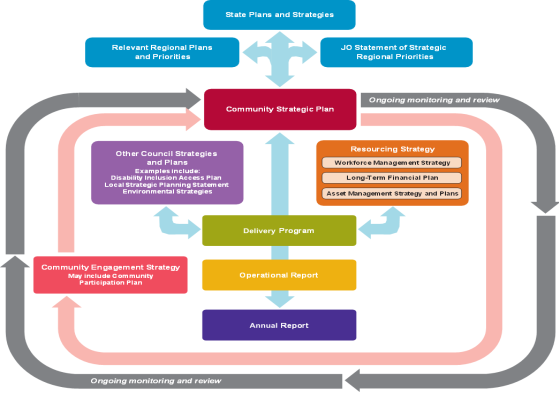
The
Delivery Plan acts as the link between the long-term community strategic plan
and the annual operational plan, and it identifies the actions we will take
that support the community strategic plan outcomes. The Operational Plan is an
annual plan with more details about the specific projects, programs and
activities to be delivered in the year ahead and is aligned to out delivery
program.
Integrated Planning and Reporting Framework
Discussion
Budget Summary
The draft 2026/27 budget projects total
operating expenditure of $74M and a capital works program of $15M. The proposed
capital works program includes $10.5M in asset renewal.
The budget forecasts an Operating Deficit
before capital grants and contributions of $165k.
Most financial and asset management ratios
are expected to meet industry benchmarks, except for Operating Performance
Ratio and Building and Infrastructire Renewal ratios.
Salary and
Wages related expenditure totals $27.79m, which includes an estimated Local
Government (State) Award increase of 4.0% and other employee related expenses
such as Employee Leave Entitlements and Superannuation.
The list of
programs and projects to be delivered in 2026/27 are discussed further in the
report.
Draft Revenue Policy
Rating Structure 2026/27
The NSW Government, through the Independent
Pricing and Regulatory Tribunal (IPART) caps the total general income that may
be raised from levying rates on property. IPART has determined that general
income from rates in 2026/27 may increase by a maximum of 4.7%. This is the
basis of the draft 2026/27 budget.
It is proposed to levy two (2) Ordinary
Rates in 2026/27 in accordance with S.492 and S.497(a) of the Local Government
Act.
a. An Ordinary Residential Rate of 0.077674 cents
in the dollar, on the Land Value of all Rateable Land categorised as
Residential in accordance with S.516 of the Local Government Act, (with the
exception of heritage properties which are rated on their heritage value), with
a Minimum Rate of $1,123.68 to yield $26,968,171.
b. An Ordinary Business Rate of 0.478237 cents in
the dollar, on the Land Value of all Rateable Land categorised as Business in
accordance with S.518 of the Local Government Act, with a Minimum Rate of
$1,147.81 to yield $7,248,632.
Car Parking Special Rate
It is proposed to levy a Car Parking
Special Rate on Business premises in the Lane Cove Village Commercial Area of 0.184626
cents in dollar with a minimum rate of $2 per assessment, to yield $210,313.
This revenue will continue to offset the maintenance of car parking now
available within the Village.
Domestic Waste Management Charge 2026/27
The Domestic Waste Management (DMW) Service
is provided to all residential properties. Council must make and levy an annual
charge for the service and income must not exceed the reasonable cost of
providing the services (section 496 and 504). The draft 2026/27 Budget provides
for the levying of a Domestic Waste Management Charge (under S.496 of the Act)
of $637.65 for each 80 litre MGB and recycling service on all rateable and
non-rateable residential properties. The DWM is expected to raise $11.1M in revenue.
Charges for DWM services rendered to
residential units above business premises, or extra DWM services rendered to
other premises, are set out in the Schedule of Fees and Charges for 2026/27.
Stormwater Management Services Charge
2026/27
The Stormwater Management Services Charge
is levied to all eligible residential and business ratepayers to find a program
of stormwater improvement projects and is forecast to raise $386,500. It is
proposed to levy a stormwater levy of $25 per single residential dwelling,
$12,50 for each residential strata lot, flat or unit, $25 per 350m2 for
properties classified as business and $5 for each business strata lot.
Sustainability Levy
Council continues to support sustainability
initiatives utilising funds from the Sustainability Levy. A total amount of
$844k has been allocated towards operating projects/programs and $342k has been
allocated towards capital projects. The full list of sustainability projects
included in the draft 2026/27 Budget can be found in AT-1.
Pricing methodology and Fees and Charges
2026/27
Fees and
Charges relate mainly to the recovery of service delivery costs through the
charging of fees to users. A full schedule of the user fees and charges
proposed for the year is included in the Draft Revenue Policy. The
proposed fees have been set in accordance with Council’s pricing policy,
which requires consideration of a number of factors including community service
obligations, the cost of service provision, whether the goods or services are
provided on a commercial basis, and the capacity of the user to pay.
Draft Delivery Program 2026/27- 2029/30 including the
2026/27 Operational Plan
The Delivery Program and
Operational Plan (AT-2) continue to respond to community priorities
identified in the Community Strategic Plan - Liveable Lane
Cove 2035. The Delivery Program and Operational Plan describe
Council’s commitment to the community during the Council term and, like
the Community Strategic Plan, is presented in the form of the six Strategic
Themes.
Within each of the six Strategic
Themes, community priorities are identified and include strategies, recurrent
actions and new initiatives. Also included in the Draft Delivery Program and
Operational Plan is a budget allocated for each of the six strategic themes and
Council’s Revenue Policy.
The Operational Plan 2026/27
supports the continued delivery of high-quality services and key operational
projects to ensure better community outcomes. It also includes a capital works
program of $15.5 M including:
· Lane
Cove Aquatic Centre - Electrification Programme, facility enhancements and
upgrades to structure and plant
· Gallery
Lane Cove – extended studio space, rooftop outdoor room and other
associated cultural and creative projects
· Burns
Bay Reserve - Playground
· Lucretia
Baths demolition and rewilding
· Ronald
Avenue Greenwich - Stair Replacement
· Christie
Street - Path & Drainage
· Centennial
Avenue - Pedestrian Refuge
· Lane
Cove Plaza - Blinds
· Mindarie
Street / Kullah Parade raised intersection and pedestrian crossing treatment
· Pedestrian
Crossings - Elizabeth Parade & Wardrop Street
· Enhanced
Dog Infrastructure for Blackman Park
· Lane
Cove Library - Airconditioning / Lighting
· Canopy
- Resurfacing of grass & Refurbishment of Playground
· River
Road cycleway (stage 2) design
· Mowbray
Road Safety Improvements
· Market
Square car park cameras
A range of New Initiatives
(non-capital) are also identified in the draft Operational Plan 2026/27,
including:
· New Climate
Emergency Plan
· Increase
Council’s capacity to improve environmental compliance
· Rehabilitate
14 Gay Street
· Implement
new abandoned watercraft program
· Implement
the new Sydney Plan
· Develop
new Disability Inclusion Access Plan
· Introduce
a 24-hour library service program
· Implement
new library management system
· Develop
a new Cultural Plan for Lane Cove
· Undertake
two service reviews: Regulatory Services and Property/Commercial
Operations
· Upgrade
Council’s core enterprise software solution
· Introduce
Direct Debit payment option for customers
· Develop
a new Customer Experience Strategy
· Implement
outcomes from Community Engagement Strategy and Digital Engagement reviews
· Develop
an Affordable Housing Contributions Scheme
The draft
2026/27 Operational Plan also includes Council’s Revenue Policy
(including estimated residential and business rates) and a proposed Schedule of
Fees and Charges for 2026/27.
Service
Review Program
We are
committed to improving the quality of services to the community. This will be
the first year where we commence a program of reviews and implement
improvements actions across several services and functions as part of the Lane
Cove Service Review Framework.
Proposed
service reviews for 2026/27 include property/commercial operations and
regulatory services. It is expected that there may be some other priority areas
that will emerge over the year.
Resourcing the Plan
To support the community’s
objectives expressed in the community strategic plan a long-term resourcing
strategy is required as part of the Integrated Planning and Reporting
Framework.
The Resourcing Strategy (AT-3)
ensures that Council has adequate resources to achieve the planned outcomes for
which it is responsible, while maintaining the long-term financial
sustainability of the organisation.
The resourcing strategy has 3
components:
1. Long Term Financial Plan (AT-4)
2. Strategic Asset Management Plan (AT-5)
3. Workforce Management Plan (AT-6)
The Strategic Asset Management Plan and Workforce Management
Plan were both adopted by Council in June 2025. Only minor administrative
changes have been made to both documents, primarily to reflect updated data or
reference information.
Council’s Long Term Financial Plan (LTFP) is a 10-year
plan that identifies current and future financial capacity to act on the
aspirations of the community strategic plan, including providing high quality
services, facilities and infrastructure to the community.
The LTFP is reviewed and updated each year as a rolling
10-year projection of Council’s income and expenditure, assets and
liabilities and cashflows to reflect prevailing economic conditions and/or new
priorities. The attached LTFP (AT-4) contains financial modelling for 3
scenarios.
The 3 scenarios considered in the draft LTFP are:
Scenario 1 – models the continuation of existing services and service levels and
includes identified operational priorities. The operational priorities, which
improve Council’s current service offering include:
• additional
staff resources in areas such as compliance and regulatory, legal services and
governance;
• additional
asset maintenance and fire safety requirements; and
• new
initiatives such as an improved after hours call service and improvements to
small watercraft management.
This scenario is not sustainable into the future.
Scenario 2 – builds on Scenario 1 by
including some internal strategic interventions and models the impact of
an ongoing $0.5 million net improvement in Council’s “bottom
line” in both 2027/28 and 2028/29, a total of $1 million over two years.
This is achieved by income producing and expenditure savings opportunities.
This scenario is not sustainable into the future due to
insufficient funding available to meet infrastructure renewal requirements.
Some of the opportunities that staff will be exploring in
202627 include:
· Investigate
advertising opportunities across the LGA local government area to broaden
revenue streams
· Facilitate a pilot
program for food trucks or comparable temporary vendors to activate public
spaces with economic opportunities
· Review service
contracts to identify where shifting delivery back in‑house could achieve
cost efficiencies and improved outcomes
· Investigate trial
reductions in free parking periods in Council car parks
· Lease
underutilised storage areas and parking spaces within Council‑owned car
parks to maximise asset use and broaden revenue streams
· Replace Justice of
the Peace Service at Civic Centre with volunteer service at Lane Cove Library
· Develop a Property
Opportunities Plan to maximise value of operational land and assets
Scenario 3 – builds on Scenario 2 and demonstrates the
importance of an integrated planning approach. It models the
investment of a further $7.4 million ($7 million indexed to today’s
dollars) in infrastructure asset renewal identified in Council’s
Strategic Asset Management Plan (SAMP). This investment would increase asset
health from 64% to 71% and reduce portfolio PVP (poor, very poor) from 7% to
2%. This is the ‘Improvement’ scenario in the adopted SAMP. This
scenario assumes that the additional investment from 2028/29 onwards.
This scenario would ensure financial
sustainability into the future.
Community Consultation
It is a statutory requirement that the draft Budget 2026/27,
draft Delivery Program and the Operational Plan 2026/27
and Fees and Charges 2026/27 be placed on public exhibition for a period of not
less than 28 days. Following this, Council must consider any public comments
submitted before the Plans can be adopted.
It is proposed to exhibit these documents for 6 weeks from
late April 2026. A report will be prepared for Council’s consideration at
the June 2026 Ordinary Council Meeting advising of the results of the community
consultation and recommendations for final adoption. Until the Delivery
Program and Operational Plan (including Budget) is adopted, Council is unable
to levy rates and charges for the financial year for which the plan is
prepared.
Consultation Statement of Intent
The consultation is designed to provide the community with
the opportunity to comment on the proposed actions and initiatives over the
next year. Council will consider feedback in determining to adopt the
final plans and budget.
The methods of consultation proposed are outlined below.
Methods
|
Level of Participation
|
Inform
|
Consult
|
|
Form of Participation
|
Open
|
Open
|
|
Target Audience
|
Whole Community
|
Whole Community
|
|
Proposed Medium
|
Website Exhibition
eNewsletter
|
Written Submissions &
Survey
|
|
Indicative Timing
|
6 weeks from late April 2026
|
6 weeks from late April 2026
|
Financial
Considerations
The draft 2026/27 Operational Plan and
Budget have been prepared in a fiscally responsible manner. Council does,
however, acknowledge the increasing difficulty in balancing the budget in the
future and will need to continue exploring new income producing and/or
expenditure saving opportunities to not only balance the budget but
significantly increase its ability to provide additional funds for the renewal
of Council’s assets.
Governance
and Risk Considerations
In developing the draft 2026/27 Operational
Plan and Budget, Council has taken a risk-based approach to the capital works
projects it proposes to deliver during 2026/27. Another important consideration
was Council’s capacity to deliver the works within the next 12 months.
Environmental
Considerations
In developing the draft 2026/27 Operational
Plan and Budget, consideration was given to the environmental benefits that
would accrue from the investment of funds in a range of sustainability
projects, programs and other related initiatives.
Social
Considerations
The draft 2026/27 Operational Plan and
Budget contain significant funding for a range of social projects and programs
that will have a positive impact on the social wellbeing of our community.
Timing
In order to meet legislative requirements
around the adoption of the 2026/27 Operational Plan and Budget, it is important
to commence the public exhibition process in April each year to ensure the
necessary documents can be considered by the public and ultimately adopted by
Council by 30 June each year.
Link to Strategy
This report relates to the Community
Strategic Plan Outcome/s and Goal/s:
6 Our
Council - A Leading Council that Engages its Community to Deliver Effective,
Efficient and Sustainable Services
6.1 Governance
6.1.2 To
provide assistance to Councillors and support the organisation to operate
within its legal framework
Steven Kludass
Director - Corporate Services and Strategy
Corporate Services and Strategy Division
ATTACHMENTS:
|
AT‑1 View
|
DRAFT 2026-27 Budget Summary
|
|
Available Electronically
|
|
AT‑2 View
|
DRAFT Delivery Program & 2026-27 Operational Plan
|
|
Available Electronically
|
|
AT‑3 View
|
DRAFT Resourcing Strategy
|
|
Available Electronically
|
|
AT‑4 View
|
DRAFT Long term Financial Plan
|
|
Available Electronically
|
|
AT‑5 View
|
DRAFT Strategic Asset Management Plan
|
|
Available Electronically
|
|
AT‑6 View
|
DRAFT Workforce Management Plan
|
|
Available Electronically
|
Ordinary Council Meeting 23 April 2026
Public Exhibition -
Draft Restricted Cash (Reserves) Policy
Item No: 13.2
Subject: Public Exhibition - Draft Restricted Cash (Reserves)
Policy
Record No: SU241 - 23916/26
Division: Corporate Services
and Strategy Division
Author(s): Don
Johnston
Purpose
The purpose of this report is to seek
Council’s endorsement to publicly exhibit the draft Restricted Cash
(Reserves) Policy.
Executive
Summary
· The annual statutory financial statements of Council include a
summary of the funds held in the external and internal financial reserves.
These reserves have been established over time.
· To date there has been no Council Policy that applies to the
establishment and management of all Council financial reserves, which sets out
the agreed direction and controls as well as a target balance to be held in
each reserve.
· Both externally and internally restricted financial reserves are
established and managed to meet a range of objectives. Externally restricted
financial reserves are established to meet legislative requirements, primarily
unspent developer contribution funds and unspent grants received by Council.
These unspent funds are set aside as externally restricted assets in financial
reserve as they can only be expended for that purpose.
· Internally restricted financial reserves are established at the
discretion of Council and are used to meet a variety of circumstances,
generally focused on a specific activity or service of Council. These unspent
funds are set aside as internally restricted assets in the internal financial
reserves.
· A
draft Restricted Cash (Reserves) Policy has been prepared to document the
future management and utilisation of Reserves to ensure that Council meets best
practice governance and audit controls.
|
RECOMMENDATION
That Council:
1. adopt the draft Restricted Cash (Reserves) Policy for the
purpose of public exhibition.
2. receive a further report on the Policy following public
exhibition.
|
Discussion
Council’s long-term financial plan
incorporates the establishment and management of financial reserves to ensure
long-term financial sustainability and capacity to provide infrastructure and
services into the future.
In the preparation of Council’s
annual statutory financial statements, funds are set aside in the external and
internal reserves. Both externally and internally restricted financial reserves
have been established and managed over time to meet a range of objectives.
Externally restricted financial reserves
are established to meet legislative requirements, primarily unspent developer
contribution funds and unspent grants received by Council. These unspent funds
are set aside as externally restricted assets in financial reserve as they can
only be expended for that purpose.
Internally restricted financial reserves
are established at the discretion of Council and are used to meet a variety of
circumstances, generally focused on a specific activity or service of Council.
These unspent funds are set aside as internally restricted assets in the
internal financial reserves
However, to date there has been no Council
policy that applies to the establishment and management of all Council
financial reserves.
Current forecasts indicate that Council
will hold approximately $17.3m in three (3) externally restricted Reserves
(developer contributions, domestic waste management and unexpended grants) and
approximately $23.3m in eighteen (18) internally restricted Reserves by 30 June
2026.
These Reserves are shown in the table
below:
|
Reserve
|
Forecast balance 30 June 2026
($’000)
|
|
Externally
Restricted:
|
|
|
Developer
Contributions
|
13,371
|
|
Domestic Waste
Management
|
3,151
|
|
Unexpended
Grants
|
781
|
|
Sub Total
|
17,303
|
|
|
|
|
Internally
Restricted:
|
|
|
Plant Replacement
|
628
|
|
Employee Leave
Entitlements
|
3,746
|
|
Capital Works
|
5,253
|
|
Kindy Cove
|
171
|
|
Library
|
5
|
|
Election
|
356
|
|
Aquatic Centre
|
640
|
|
Market Square
|
1,417
|
|
Office equipment
(IT)
|
413
|
|
Property
Acquisition
|
2,792
|
|
Bushland
Remediation
|
78
|
|
Sustainability
Levy
|
162
|
|
Affordable
Housing
|
2,440
|
|
Deposits and
Bonds
|
1,424
|
|
Public Liability
Insurance
|
410
|
|
The Canopy
|
2,557
|
|
Financial
Assistance Grants (Advance Payments)
|
792
|
|
Carry Over Works
|
12
|
|
Sub Total
|
23,296
|
The Reserves are currently managed through
the preparation of annual budgets, budget reviews and the adoption of annual
financial statements based on intended use.
The draft Policy seeks to formalise
Council’s current practice in relation to the establishment and
management of Reserves and to set out the purpose for the reserve, source of
funding, funding level targets (where applicable) and responsibility for each
Reserve.
This approach is consistent with
Council’s external auditor’s good governance advice around the need
to have a Council adopted Policy governing the use of Reserves.
Community
Consultation
Statement of Intent
The consultation is designed to elicit any
feedback members of our community may have on the matter and report that
feedback back to Council for its consideration.
Method
|
Level of Participation
|
Consult
|
|
Form of Participation
|
Open
|
|
Target Audience
|
Lane Cove Community
|
|
Proposed Medium
|
Website
Exhibition, inviting written submissions and survey responses (as part of the
Draft 2026/27 Budget & Operational Plan exhibition)
|
Financial
Considerations
Implementation of the Policy will not have
any financial impacts for Council and will establish a framework for the
establishment and use of Council’s Financial Reserves.
Governance
and Risk Considerations
The development of the draft Policy will
strengthen governance in relation to the establishment and management of
Council’s Financial Reserves.
Environmental
Considerations
The subject of this report has no
environmental implications for Council.
Social
Considerations
The subject of this report has no social
implications for the Council.
Timing
It is proposed that the draft Restricted
Cash (Reserves) Policy be placed on public exhibition for a period of six (6)
weeks to coincide with the exhibition of the draft Budget and Operational Plan.
A further report will be presented to Council following the exhibition period
providing comments on any submissions received.
Link to Strategy
This report relates to the Community
Strategic Plan Outcome/s and Goal/s:
6 Our
Council - A Leading Council that Engages its Community to Deliver Effective,
Efficient and Sustainable Services
6.2 Best
Value
6.2.1 Ensure
long term financial sustainability through effective short and long term
financial management
Steven Kludass
Director - Corporate Services and Strategy
Corporate Services and Strategy Division
ATTACHMENTS:
|
AT‑1 View
|
Draft Restricted Cash (Reserves) Policy
|
|
Available Electronically
|
Ordinary Council Meeting 23 April 2026
Council Policies Review
Item No: 13.3
Subject: Council Policies Review
Record No: SU241 - 24546/26
Division: Corporate Services
and Strategy Division
Author(s): Stephen
Golding
Purpose
The purpose of this report is to seek the re-adoption
of three (3) current policies: Financial Hardship Policy, Investment Policy and
Sister City Policy in accordance with Council’s ‘Council Policy Framework’
Executive
Summary
· Council’s
Policy Framework outlines the strategic principles for corporate documents
including Council Policies and provides a commitment to Council
policies being reviewed once per Council term, or more frequently if required
due to material changes to Council’s operating environment such as
legislative amendment, Council resolution or a variation to Councils strategic
direction.
· Council is
progressively reviewing all its corporate documents covered by the Framework.
· Reviews of the
Financial Hardship Policy, Investment Policy and Sister City Policy have been
completed, and minor administrative amendments have been made to each of the
policies.
· While Council
encourages involvement by the community in developing and reviewing its
policies, the public exhibition of the three (3) policies is not considered
necessary as the changes to the existing policies are administrative only and
the likely benefits of exhibition would not outweigh the likely costs and
impact on resources and associated delays.
· It is recommended
that Council adopt the three (3) reviewed Policies.
|
RECOMMENDATION
That Council adopt the Financial
Hardship Policy, Investment Policy and Sister Cities Policy.
|
Background
Council adopted a Policy Framework at the
19 September 2025 Council meeting. The Framework provides the strategic
principles for all Council policies and sets out the governance arrangements
for the establishment and review of Council policies and other internal facing
documents.
All existing Council policies and other
relevant internal corporate documents are progressively being reviewed in
accordance with the settings of the Framework which provides that Council
policies be reviewed once per Council term, or more frequently if required due
to material changes to Council’s operating environment such as
legislative amendment, Council resolution or a variation to Councils strategic
direction.
The purpose of the review is to ensure that
all policies are contemporary, compliant with current legislation and/or
guidelines issued by State and Federal agencies, are consistent with
Council’s policy and reflect industry standards.
Discussion
Council is progressively reviewing all its
Council policies over the remainder of the Council term. This report is the
first of a series of reports which will be presented to Council throughout the
remainder of the Council term.
Reviews of policies can result in a number
of outcomes - revocation, amendment or re-adoption if existing policy is fit
for purpose.
Reviews of three (3) policies have been
completed and are presented to Council for consideration. The policies the subject
of review are: Financial Hardship Policy; Investment Policy and Sister City
Policy/
Only minor administrative amendments are
proposed to each of the three (3) policies (found in the attachments). The
existing policies can be accessed via the hyperlink in the Policy headings
below.
Financial Hardship Policy
The purpose of this Policy is to fulfill
the statutory requirements of the Local Government Act 1993 with respect to the
recovery of outstanding Rates, Annual Charges and Interest and the provision of
assistance to those ratepayers who are experiencing genuine financial hardship
in meeting the obligation to pay their Rates and Annual Charges.
Minor administrative changes have been made to the Policy to
clarify that it applies to all forms of monies owed to Council, inclusive of
rates and charges. Clarification has also been included to acknowledge that
whilst it is preferred that debts be cleared before the end of a financial
year, arrangements can be made for repayment over a period of twelve months
under delegation that may span two (2) financial years.
There are tracked administrative amendments
only to this policy. (AT-1)
Investment Policy
The purpose of this Policy is to provide a
framework for the investment of Council’s funds with a view to minimising
the risk of loss of capital or interest and to ensure that Council’s
liquidity requirements are satisfied.
Administrative changes have been made to the Policy to:
· align
‘Authorised Investments’ directly with the Ministerial Order rather
than re-wording;
· align
‘Prohibited Investments’ with the Office of Local Government Investment
Policy Guidelines;
· re-word
the ‘Risk Management Guidelines’ in plain English and align with
the Office of Local Government Investment Policy Guidelines; and
· update
‘Related Legislation’
There are tracked administrative amendments
only to this policy. (AT-2)
Sister Cities Policy
The purpose of this Policy is to ensure
that any Sister City relationships that Council may enter into are relevant and
effective in delivering demonstrable economic, cultural and/or social benefits
for Lane Cove; and to clearly delineate the type and level of resourcing by
Council of Sister City relationships.
Administrative changes have been made to reflect updated
policies and legislative requirements, for example the requirement for Council
to provide notice of a proposed international Sister City Relationship to the
Minister for Foreign Affairs. While Lane Cove currently has no international
sister city arrangement in place, this policy sets out the appropriate steps
for Council when considering any prospective sister city relationships.
There are tracked administrative amendments
only to this policy. (AT-3)
Community
Consultation
While Council
encourages involvement by the community in developing and reviewing its
policies, the public exhibition of the three (3) policies is not considered
necessary as the changes to the existing policies are administrative only and
the likely benefits of exhibition would not outweigh the likely costs and
impact on resources and associated delays.
Financial
Considerations
The recommendations of this report do not
result in any change to the existing Council budget.
Governance
and Risk Considerations
Policy reviews are in accordance with
Council’s ‘Council Policy Framework’.
Environmental
Considerations
The subject of this report has no
environmental implications for Council.
Social
Considerations
The recommendations in this report will
have positive social outcomes for the community through assisting those who are
experiencing genuine financial hardship in meeting the obligation to pay their
Rates and Annual Charges.
Timing
Council policies are reviewed during the
term of Council.
Link to Strategy
This report relates to the Community
Strategic Plan Outcome/s and Goal/s:
6 Our
Council - A Leading Council that Engages its Community to Deliver Effective,
Efficient and Sustainable Services
6.1 Governance
6.1.2 To
provide assistance to Councillors and support the organisation to operate
within its legal framework
Steven Kludass
Director - Corporate Services and Strategy
Corporate Services and Strategy Division
ATTACHMENTS:
|
AT‑1 View
|
Draft Policy-CS-04 Financial Hardship
|
5 Pages
|
Available Electronically
|
|
AT‑2 View
|
Draft Policy-CS-04 Financial Hardship
|
10 Pages
|
Available Electronically
|
|
AT‑3 View
|
Draft Policy GMU-04 Sister Cities Policy
|
5 Pages
|
Available Electronically
|
Ordinary Council Meeting 23 April 2026
2026-2027 Community
Assistance Grants Program - Funding Recommendations
Item No: 14.1
Subject: 2026-2027 Community Assistance Grants Program - Funding
Recommendations
Record No: SU10985 - 25568/26
Division: Community and
Culture Division
Author(s): Susan
Heyne
Purpose
The purpose of this report is to seek
approval to allocate funding under Councils 2026/27 Community Grants Program.
Executive
Summary
· Under Section 356 of the Local Government Act
1993, Council may grant financial assistance to community organisations.
· Council’s draft 2026-2027 budget includes
funding under the Community Grants Program. The program comprises 2 grant
streams ‘Community Assistance Grants’ and ‘Cultural Venue
Hire Subsidy Grants’ as well as recurring commitments.
· The funding priorities align with the Community
Strategic Plan – Liveable Lane Cove 2035 and funding of $591,000 has been
allocated to the program in the 2026/27 financial year.
· Applications
for Community Assistance Grants and Cultural
Venue Hire Subsidy Grants were open for 11 weeks from 15 December 2025 to 2 March 2026.
· A
total of 26 applications were received from 20 organisations for Community
Assistance Grants and Cultural Venue Hire
Subsidy Grants. Recurring commitments remain unchanged.
· This
report recommends that 15 recipients receive grant funding, with a total of
$581,526 being made available.
|
RECOMMENDATION
That Council:
1. pursuant to Section 356 of the
Local Government Act 1993 approve the allocation of $581,526
(excluding GST) under the 2026–2027 Community Grants Program as
outlined in Attachment 1(AT-1) comprising of:
a) Community
Assistance Grants and Cultural Venue Hire Subsidy Grants for 2026–2027,
funding 15 recipients to a total value of $520,922.
b) recurring
commitments for 2026-2027 of $60,604.
2. approve
the inclusion of the late application from Lane Cove Historical Society.
3. approve
the extension of the contract with The Sydney Library of Things (Trading as
the Lane Cove Toy Library) until 30 June 2027.
4. host
the Community Assistance Grants Program Presentation Ceremony in August 2026.
5. extends its appreciation to all applicants for the time and effort
invested in supporting. initiatives that benefit the Lane Cove community.
|
|
|
Background
Community organisations play a
critical role in providing vital community and recreational activities and
keeping the community healthy and connected. Council’s approach to
working with local community organisations is to work in partnership so that
the local community can receive high quality services and participate in
volunteering and community orientated activities improving their connectedness
and ability to participate.
Applications for funding are reviewed and assessed using the eligibility and assessment criteria listed in the Financial Assistance to Community Groups Policy (AT-2), the
Community Assistance Grants 2026-2027 Guidelines and Information for Applicants
(AT-3) and the Cultural Performance Venue Hire
Subsidy 2026-2027 Guidelines and Information for Applicants (AT-4).
In past years grant recommendations have
been presented to Councillors (as a selection committee) prior to formal
reporting to Council for approval.
This year, grant recommendations were
initially presented to the Councillor Selection Committee in accordance with
the current grant guidelines and established practice. However, following
consideration of the updated Model Code of Meeting Practice and associated
guidance issued in February 2026 by the NSW Office of Local Government, the
Committee determined that this approach is no longer appropriate under the
revised governance framework.
The updated Code reinforces that
Councillors are to make decisions in formal Council or committee meetings, in
full view of the community, except where matters are confidential. The intent
of these reforms, introduced as part of broader changes by the NSW Government,
is to strengthen transparency, accountability and public confidence in local
government decision-making. In this context, it was considered that determining
grant allocations outside of a formal meeting setting may not align with the
revised requirements or the intent of the reforms. Accordingly, the Selection
Committee did not review or determine the recommendations and instead requested
that Council staff present recommendations to Councillors in a report presented
to the April 2026 Council meeting for consideration.
Council staff conducted eligibility checks on all
applications prior to proceeding with assessment. The Grant applications were
reviewed and assessed by 2 senior staff members and their recommendations have
been presented in this report.
To ensure ongoing compliance and clarity,
revised grant guidelines will be prepared and presented to Council along with
the reviewed Financial Assistance to Community Groups Policy. These will
formalise an updated assessment and decision-making process that is consistent
with the new legislative and governance framework and they will ensure that all
funding decisions are made transparently through formal Council processes.
A total of 26 applications were received
from 20 individual organisations. Twenty-one applications were received for the
Community Assistance Grant stream. This includes 3 applications from
organisations with a current Community Assistance Grant contract and one
application that was submitted past the closing date.
Five applications were received for the
Cultural Venue Hire Subsidy Grant steam. All applicants for the Cultural Venue
Hire Subsidy Grant also applied for a Community Assistance Grant. One
contracted applicant also submitted a separate Community Assistance Grant.
Community Grants Presentation
Each year Council invites all
funded groups to a presentation ceremony on the first Wednesday in August. This
provides the opportunity for Council to showcase its Grants Program and for
local groups to receive recognition for the work they do in a wider forum. It
also offers community groups the opportunity to network and connect with other
local organisations. It is suggested that the practice be continued, and
the ceremony take place on Wednesday 5 August 2026. The presentation evening is
funded out of the Community Assistance Grants budget.
Discussion
In 2021 Council resolved to require applicants to provide a
co-contribution, either as funding or an in-kind contribution. Organisations
who are unable to provide a co-contribution are required to provide an
explanation as to why the organisation is unable to contribute to the program.
The guidelines and application form for the 2026-2027 funding round clearly
indicate Council’s expectations regarding co-contributions.
To ensure a range of services and programs are supported by
the grants program, Council limited the maximum amount of funding available to
groups to $10,000, unless prior approval by Council has been granted. The
average amount of funding requested in 2026-2027 is $7,425. Organisations with
service agreements are exempted from this funding limit.
Applicants are required to show how their
application meets the needs of Lane Cove local government area by referring to
Council’s strategies and plans. The application form also includes
questions regarding inclusion to ensure people living with disability and
people from cultural and linguistically diverse backgrounds are considered and
included in the projects. Copies of the applications are included in the
separately circulated information to Councillors.
Funding recommendations for the 2026/27
Grant Program have been made with a focus on several areas including:
· Funding to support Council-initiated services that
respond to identified community needs, including the Centrehouse, Toy Library
and Sydney Community Services.
· support to projects that can be successfully
completed within the 2026-2027 financial year
Community Assistance Grant
Twenty-one (21) applications
were received, including contracted services.
Grant applications fall into the
following categories:
· arts
and cultural programs
· services
for youth, children, and families
· community
services for seniors and people with disability
· community
development and social inclusion
· sporting programs
It is recommended that $581,317 be made
available for the Community Assistance Grant in 2026/27 as shown in the table
below:
Community Assistance Grants recommended
for funding
|
Applicant
|
Requested
funding
|
Recommended
funding
|
Overview
|
|
Centrehouse –
Trading as Gallery Lane Cove + Creative Studios
|
$75,204
|
$78,379
|
Contracted
service supporting Creative Studios in delivering art workshops and classes
for adults and children.
Request did
not include specified annual increase.
Contract
ends 30/6/2027
|
|
Centrehouse –
Trading as Gallery Lane Cove + Creative Studios
|
$10,000
|
$10,000
|
Pilot
program developing online-store to support local artists and artisans to
exhibit and sell artwork. Partnering with Lane Cove Library to create a
satellite display to promote items from the online shop. Supports artist and
Gallery income.
|
|
Empowering Parents In
Crisis (EPIC)
|
$10,000
|
$10,000
|
Providing
parents with skills and resources to support young people in crisis through
online support and a podcast series as a permanent support resource
|
|
Hughes Park Community
Garden Inc.
|
$4,538
|
$4,538
|
Continuous
improvement of garden with view to growing and sharing produce and knowledge
across the Lane Cove Community.
|
|
Lane Cove Community
Bands*
|
$2,842
|
$2,842
|
New
equipment and instrument repairs supporting performance of concerts including
free concerts for the Lane Cove community
|
|
Lane Cove District
Music Club Inc*
|
$1,500
|
$1,500
|
Supporting
the performance of one concert in the series. High quality performances
provided locally
|
|
Lane Cove Historical
Society**
|
$4,378
|
$4,378
|
Late
submission. Application completed. Final step of submission omitted in error.
Funding to
expand museum activities and improve displays at Carisbrook Historic House.
|
|
Lane Cove Swim Club
|
$7,630
|
$6,630
|
Funding
equipment to support the swim club and improve swimming skills for all
members.
Funding has
been adjusted to exclude merchandise costs, consistent with Council’s
sustainability approach
|
|
Lane Cove Youth
Orchestra*
|
$8,000
|
$8,000
|
Funding to
support professional music tutors, enhancing rehearsal quality, developing
student skills, and strengthening pathways for young musicians in the community.
|
|
Sydney Community
Services
|
$339,687
|
$339,687
|
Contracted
service provides home support for older people and people with disabilities
including home nursing, personal care, wellness activities, volunteer
support.
Contract
ends 30/6/2027
|
|
St Vincent de Paul
Society
|
$5,000
|
$5,000
|
Vouchers for
food and essentials for Lane Cove residents in-crisis. Vouchers for use in
local businesses to support Lane Cove Community.
|
|
StreetWork Australia
Limited
|
$10,000
|
$5,000
|
Mentoring
and case management for young people at-risk across Northern Sydney and
including Lane Cove. Funding has been partially allocated, reflecting
the limited-service reach within the LGA
|
|
Taldumande Youth
Services
|
$10,000
|
$5,000
|
Food to
support at-risk young people and families in crisis including homeless people
across Northern Sydney and including Lane Cove. Funding has been partially
allocated, reflecting the limited-service reach within the LGA
|
|
The Sydney Library of
Things - T/A Lane Cove Toy Library
|
$21,398
|
$21,398
|
Contracted
service supporting the purchase and maintenance of toys, operational expenses
and agreed contractual obligations.
Contract
ends 30/6/2026 and a one-year extension is recommended.
|
|
Wheelchair Sports NSW
ACT
|
$7,500
|
$7,500
|
Establish
funding to support Lane Cove Cockatoos Wheelchair Basketball Club training
weekly at Galuwa Recreation Centre.
|
|
Women & Children
First
|
$8,465
|
$8,465
|
Revitalising
outdoor space to support children with trauma-related challenges, emerging
mental health concerns and neurodivergence.
|
|
Total funding
recommended
|
$569,942
|
$518,317
|
|
*Denotes applicant also applying for a
Cultural Venue Hire Subsidy Grant.
** Late submission of application.
Community Assistance Grants not
recommended for funding
|
Applicant
|
Total Funding Requested
from Council
|
Reason
|
|
Lane Cove Junior AFL
Club Incorporated
|
$10,000
|
Installation of a shed
at Blackman Park (lower oval) requires further consideration by Council. No
plans or approvals have been provided to date.
|
|
Lane Cove Public School
Parents & Citizens Committee
|
$10,000
|
Funding for race day
equipment hire. Funds raised support additional teachers and learning support
staff in a public school.
It is inappropriate for
Council to support activities that fall within State Government statutory
responsibilities, as this would constitute cost shifting. This includes
providing funding for events where proceeds are directed toward these
activities.
|
|
North Shore Rowing Club
|
$8,300
|
Funding request for
maintenance on a Council owned building.
Council already
provides funding for the Facilities portfolio through its established budget
process, where projects are assessed and prioritised based on need. Grant
funding would bypass this assessment framework.
|
|
PURE Korean Traditional
Art Music Performance and Academy Australia
|
$3,000
|
Not local. No ongoing
connection to Lane Cove. Possibility of engaging organisation to perform in
the future as part of a cultural festival or event.
|
|
Second Act Arts
|
$12,500
|
Western Australia based
organisation with no links to Lane Cove.
|
|
Total
|
$43,800
|
|
Cultural Venue Hire
Subsidy Grant
Five (5)
applications were received to assist with the cost of hiring a venue to hold a
performance with an audience capacity larger than any Council venue can
provide.
It is recommended that $2,605 be made
available for the Cultural Venue Hire Subsidy Grant in 2026/27 as shown in the
below table:
Cultural Venue Hire Subsidy Grants
recommended for funding
|
Applicant
|
Recommended amount
|
Purpose
|
|
Lane Cove Community Bands
|
$403
|
50% hire
cost of Bowie Hall, Brigidine College, St Ives for annual Young Soloist
Competition
|
|
Lane Cove District Music
|
$250
|
Contribution
(under 50%) towards hire cost of Longueville Uniting Church as Lane Cove
Mowbray Anglican Church Hall is being demolished.
|
|
Lane
Cove Youth Orchestra
|
$1,952
|
50% hire
cost of Sydney Conservatorium of Music for Lane Cove Festival Concert
|
|
Total funding recommended
|
$2,605
|
|
Cultural Venue Hire Subsidy Grants not
recommended for funding
|
Applicant
|
Recommended amount
|
Purpose
|
|
PURE Korean Traditional
Art Music Performance and Academy Australia
|
$0
|
Ineligible
– this program supports the hire of facilities not available within the
LGA and does not provide additional subsidy for Council-owned venues.
Applied to
use Lane Cove Library
|
|
Second Act Arts Inc
|
$0
|
Ineligible
– this program supports the hire of facilities not available within the
LGA and does not provide additional subsidy for Council-owned venues.
Applied to
use Pottery Lane Performance Space
|
Recurring Commitments for
2026-2027
It is recommended that $60,604
be made available for recurring commitments in 2026/27 as shown in the below
table.
Most of the recipients have
benefitted from longstanding commitments relating to Council’s
contributions to rate payments, or the waiving of payments and other costs.
|
Applicant/ Program
|
Recommended amount
|
Purpose
|
|
ANZAC Day Ceremony
|
$2,000
|
Wreaths and
Ceremony
|
|
Lane Cove Art Award
|
$18,000
|
Acquisitive
Art Prize and presentation event
|
|
Birrahlee Kindergarten
|
$5,275
|
Waste
Services & Stormwater Charge 100% subsidy
|
|
Lane Cove Bowling and
Recreation Club
|
$8,420
|
Rates and
Annual Charges – 50% subsidy
|
|
Longueville Sporting
Club (The Diddy)
|
$4,945
|
Rates and
Annual Charges – 50% Subsidy
|
|
Pottery
Gardens Aged Homes
|
$21,964
|
Waste
Services – 100% Subsidy
|
|
TOTAL
|
$60,604
|
|
Sydney Community Services and Centrehouse
In the 2024/2025 round of financial
assistance a 3-year Service Agreement was made with both Sydney Community
Services and Centrehouse (trading as Gallery Lane Cove + Creative
Studios). These 3-year agreements provide funding security for the organisations
whilst also allowing for flexibility if circumstances change for the
organisations.
These 3-year agreements end on 30 June
2027.
The Lane Cove Toy Library
At the Council meeting held 29 September
2022, it was resolved that Council enter into a funding and licence agreement
with The Sydney Library of Things to operate a Toy Library, and to provide
funding to cover initial establishment costs.
A 2-year service agreement was made with
The Sydney Library of Things to operate The Lane Cove Toy Library. This
agreement ends on 30 June 2026. It is recommended that this contract be
extended for a period of 12 months to 30 June 2027 in line with the Centrehouse
and Sydney Community Services contracts.
CONSULTATION
The 2026/27
Community Grants Program was open for applications from 15 December 2025 to 2
March 2026.
A total of 26
applications were received from 20 organisations for Community Assistance
Grants and Cultural Venue
Hire Subsidy Grants.
Financial
Considerations
$591,000 has been allocated in the draft
2026-2027 budget under the Community Grants Program. It is recommended that
$581,886 be allocated to the recommended projects. Costs associated with the
Presentation Ceremony are also taken from this budget at an amount of $5,000.
Governance
and Risk Considerations
The Community Grants Program is governed by
Council’s Financial Assistance to Community Groups Policy (AT-2),
the Community Assistance Grants 2026-2027 Guidelines and Information for
Applicants (AT-3) and the Cultural Performance
Venue Hire Subsidy 2026-2027 Guidelines and Information for Applicants (AT-4).
Environmental
Considerations
The subject of this report has no environmental
implications for Council.
Social
Considerations
The recommendations in this report will
have positive social outcomes for the community through supporting the delivery
of a broad range of services, events and programs through local groups and
organisations that have the skills and experience to deliver specialist
programs.
Timing
Funding and subsidies provided by the
Community Grants Program dependent on Council accepting the budgeted amount in
the draft 2026-2027 budget.
Community Grants are distributed at the
beginning of the financial year. Applicants are notified of the outcome of
their application by June.
Link to Strategy
This report relates to the Community
Strategic Plan Outcome/s and Goal/s:
3 Our
Society - An Inclusive, interconnected, active and resilient community
3.1 Community
Connections
3.1.2 Focus
community funding on projects that encourage diverse community interaction and
social cohesion
Stephanie Kelly
Director - Community and Culture
Community and Culture Division
ATTACHMENTS:
|
AT‑1 View
|
Summary of the Community Grants Program 2026-2027
|
1 Page
|
Available Electronically
|
|
AT‑2 View
|
Policy HS-01Financial Assistance to Community Groups
Policy
|
4 Pages
|
Available Electronically
|
|
AT‑3 View
|
Community Assistance Grants 2026-2027 - Guidelines and
Information for Applicants
|
5 Pages
|
Available Electronically
|
|
AT‑4 View
|
Cultural Performance Venue Hire Subsidy 2026-2027 -
Guidelines and Information for Applicants
|
5 Pages
|
Available Electronically
|
Ordinary Council Meeting 23 April 2026
Planning Proposal 48 - 1
Austin Crescent Lane Cove (Heritage de-listing)
Item No: 15.1
Subject: Planning Proposal 48 - 1 Austin Crescent Lane Cove (Heritage
de-listing)
Record No: SU11063 - 19575/26
Division: Planning and
Sustainability Division
Author(s): Golrokh
Heydarian; Christopher Pelcz
Purpose
A Planning Proposal (AT-1) for 1 Austin
Crescent, Lane Cove has been submitted for consideration. The Planning Proposal
seeks to remove the property at 1 Austin Crescent, Lane Cove from Schedule 5 of
the Lane Cove Local Environmental Plan 2009 (LEP).
Executive
Summary
· The Planning Proposal (PP) was prepared by Urbanism Pty Ltd and
includes a Heritage Assessment prepared by Three+One Heritage, which concludes
that the property no longer demonstrates historic significance at either the
local or state level.
· Council engaged an independent heritage consultant in November 2025
to review the Planning Proposal for 3 Austin Crescent (the property adjacent to
1 Austin Crescent), following a previous proposal submitted to Council seeking
to remove the property from the LEP heritage listing. Overall, the advisor is
of the opinion (AT-3) that the “proposal to remove the heritage
listing from No.3 Austin Crescent is supported, and it is recommended that the
item, and the adjacent house at No.1 Austen Crescent, be removed from Schedule
5”.
· Subsequent to the lodgement of Planning Proposal 48, it was reported
(AT-5) to the Lane Cove Local Planning Panel (LPP), for advice on 10
March 2026.
· The LPP advice was that Planning Proposal 48 (AT-6) be
supported as it satisfies both the strategic and site-specific merit tests.
· The
Panel also recommended that while the measure and criteria for
listing or de-listing heritage items should be on heritage criteria alone, the
Planning Proposal (like all Planning Proposals) should include information
about the planning implications of delisting upon future development, including
development potential that would arise from the ‘Low and Mid Rise
Housing’ development criteria within Part 6 of State Environmental
Planning Policy (Housing) 2021.
|
RECOMMENDATION
That Council:
1. endorse
the amended planning proposal for 1 Austin Street, Lane Cove at Attachment
AT6 to this Report (planning proposal) for forwarding to the Department of
Planning, Housing and Infrastructure for a Gateway Determination under
section 3.34 of the Environmental Planning and Assessment Act.
2. publicly
exhibit the Planning Proposal in accordance with any Gateway Determination.
3. advise
submitters to the informal consultation of the Planning Proposal of
Council’s decision.
|
SITE
The subject site is located on
the eastern side of Austin Crescent, in an angle formed by the junction between
Austin Crescent and Austin Street. The lot is roughly triangular in shape with
a splayed edge south, and a vaguely curved edge along its southeastern boundary
following the curvature of Austin Street. Development on the site is generally
oriented west to east. The site slopes upward from Austin Crescent, rising to
the east on Austin Street. The site contains one two-storey residential
dwelling.
The site is a listed heritage item (I151) located adjacent
to ‘House’, 3 Austin Crescent, Lane Cove (item no. I152), and in
close proximity to “Lane Cove Public School”, 145–153
Longueville Road (item no. I178). This is shown in Figure 1 below.

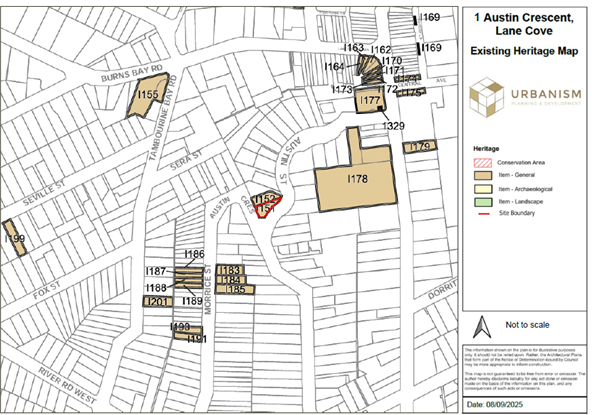
Figure
1: Heritage Map - Existing
The site is not located within or
in proximity to a Heritage Conservation Area (HCA).
The property adjoins neighbouring
residential development along its northern boundary, with the property’s
western boundary (principal) fronting Austin Crescent, with eastern/southern
boundaries (secondary) fronting Austin Street – shown in Figure 2.
The street view is shown in Figure 3.
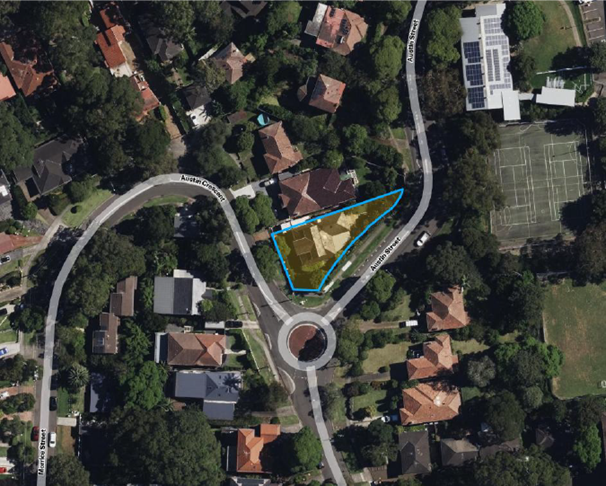
Figure 2: Aerial image of the local area, with subject site outlined in blue (Source: NSW Spatial
Explorer, 2026).
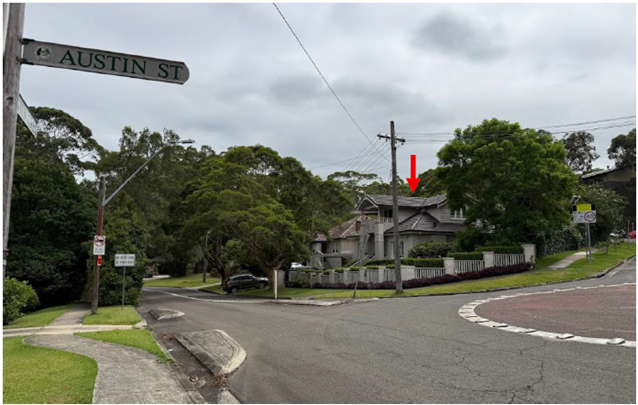
Figure 3: View of local streetscape looking
northeast along Austin Crescent with the subject site indicated with red arrow
(Source: Three + One Heritage, January 2026)
The subject dwelling is a
two-storey, late Interwar era dwelling, originally of a simple, austere style
but now with a heavily modified appearance. It is slightly elevated above
ground level and of brick construction with a modern cement render applied. The
original medium-pitched hipped roof form remains partially visible and is clad
with tiles, however it has been substantially impacted by a later first-floor
addition.
The two heritage items (1 and 3
Austin Crescent) in their original state are shown in Figure 4.
HISTORY
According to the
applicant’s study (AT-2), the subject dwelling was constructed
circa 1941, with aerial imagery confirming that Nos. 1, 3, and 5 Austin
Crescent were already completed by February 1942 (see Figure 5). At the
time of construction, the three houses shared a similar architectural style,
each being a full brick, single storey, detached Inter-War Californian
Bungalow.
It is
noted that both the subject site at No. 1 Austin Crescent and the adjoining
dwelling at No. 3 Austin Crescent were listed as local heritage items under
LCLEP 2009. No. 3 Austin Crescent has recently been the subject of a Council
decision to remove the heritage listing and the Department of Planning Housing
and Infrastructure has issued a Gateway Determination for the public exhibition
of the Planning Proposal to commence.
No. 5
Austin Crescent is not heritage listed. Notwithstanding their former heritage
status, both No. 1 and No. 3 Austin Crescent have undergone substantial
alterations in recent years and no longer retain a high level of architectural
integrity or consistency with their original built form. By contrast, No. 5
Austin Crescent, although not heritage listed, has experienced minimal
modification and remains the most intact and representative example of the
original Inter-War Californian Bungalow style within the immediate streetscape.


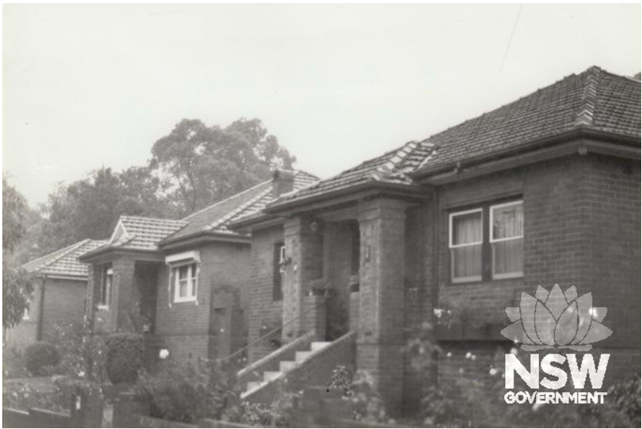
Figure 4: From
left to right: no. 5, no. 3, and no.1 Austin Crescent in 1987, Lane Cove
Council. (Source: NSW State Heritage Inventory)
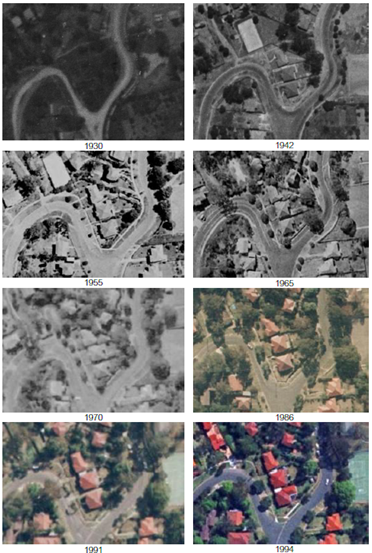
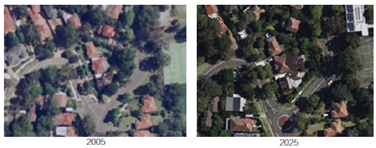
Figure 5: Historical aerial imagery of no. 1, 3, and 5 Austin
Crescent from 1930-2025 (Source: 1943-2005, NSW Historical Imagery Viewer;
2025, NSW Spatial Explorer)
According to the
applicant’s argument (in AT-2), the site at 5 Austin Crescent, is
not listed as a heritage item. However, the dwelling was constructed in the
same period as the neighbouring dwellings of 1 and 3 Austin Crescent (between
1930-1942). The dwelling presents as an example of development in the late
Interwar period with a face brick finish, simple tile clads hipped roof, and
minimal decorative detailing.
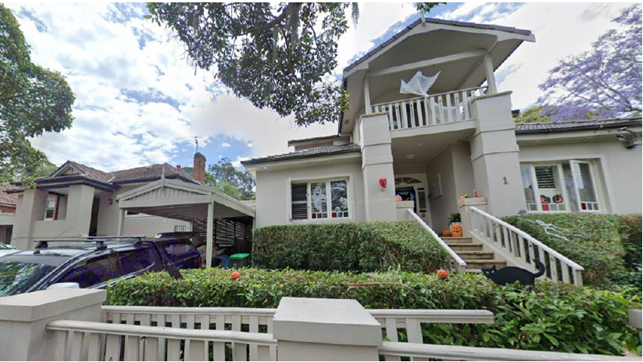
Figure 6: No. 1 Austin Crescent in October 2024. (Source:
Google Street View)
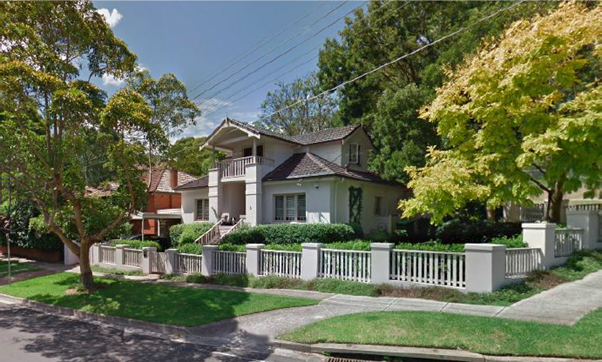
Figure 7: No. 1 Austin Crescent in Feb 2013 (Source: Google
Street View)
Dwelling Exterior
The subject dwelling is a
two-storey, late Interwar era dwelling, originally of a simple, austere style
but now with a heavily modified appearance. It is slightly elevated above
ground level and of brick construction with a modern cement render applied. The
original medium-pitched hipped roof form remains partially visible and is clad
with tiles, however it has been substantially impacted by a later first-floor
addition.
The
first-floor addition comprises weatherboard-clad walls and a cross-hipped gable
roof with tile roofing. It incorporates a centrally located balcony to the
western elevation fronting Austin Crescent, with a timber balustrade and gabled
awning roof, integrating the former ground floor portico at the entrance. Gable
elements to the north and south elevations incorporate windows. The western
façade openings have been modified, including replacement of former
timber sash windows with triple casement windows incorporating multi-pane
coloured glass detailing to the lower panes. The original chimney has been
removed, though the chimney flue remains evident to the southern elevation. The
side elevations are highly modified, with windows largely replaced (potentially
excluding kitchen sash windows to the northern elevation). A timber-framed
carport/garage structure is located along the northern boundary and projects
forward of the dwelling.
The rear
includes a later extension with a hipped roof, cement-rendered walls, and
contemporary aluminium-framed windows and doors. The rear yard is generous in
size and contains established plantings.
The exterior has been modified
with the following:
|
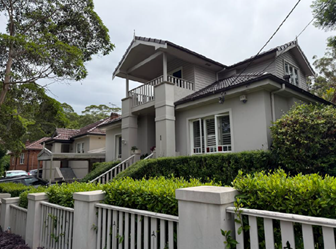
|
· Modern,
cement-rendered brick finish to principal façade
· Projecting porch
entryway with rendered masonry piers
· Tile-clad hipped
roof of medium pitch with later cross-gabled first floor addition
· First floor
addition with street facing balcony and gabled awning structure
|
|
Figure 8: Street-facing façade of 1 Austin Crescent,
Lane Cove (Source: Three + One Heritage, 16.01.26)
|
|
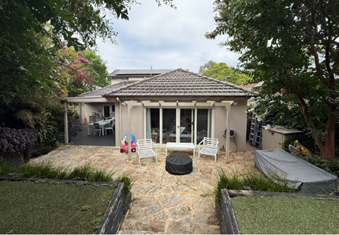
|
· Cement-rendered
external walls
· Tile-clad hipped
roof of medium pitch
· Aluminium framed
openings to rear extension, timber framed to principal building form
· Rear deck area
with timber shade structure
· Crazy paver tile
finish to rear courtyard and artificial grass finish to elevated rear yard
· Later stone wall
and koi pond feature adjacent deck area
|
|
Figure 9: Rear eastern elevation of 1 Austin Crescent, Lane
Cove (Source: Three + One Heritage, 16.01.26)
|
|
· Modern, cement-rendered
· Timber framed awning and sash windows
· Paved side pathway
|
|
Figure 10: Northern façade of 1 Austin Crescent, Lane
Cove (Source: Three + One Heritage, 16.01.26)
|
|
· Modern, cement-rendered brick finish
· AC unit enclosure
· Services box and battery
· Timber framed casement windows
· Rendered chimney flue
|
|
Figure 11: Southern
façade of 1 Austin Crescent, Lane Cove (Source: Three + One
Heritage, 16.01.26)
|
|
|
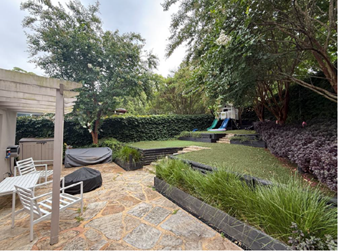
|
· Crazy paver finish to rear courtyard
· Elevated artificial grass area with timber retaining
walls
· Soft landscaping around northern and southeastern
boundary walls
· Rock feature wall with koi pond adjacent timber deck
area
|
|
Figure 12: Rear yard of
1 Austin Crescent, Lane Cove (Source: Three + One Heritage, 16.01.26)
|
|
Dwelling Interior
Inside the dwelling the ground
floor contains three bedrooms, two bathrooms, a kitchen, laundry and dining
room that gives way to a larger open plan living area at the rear of the
property. This rear portion, is a later addition and whilst externally has been
designed in a similar manner to the original building, internally is entirely
contemporary in appearance.
The bedroom floors, central
hallway, and dining room retain timber floors, whilst the kitchen, bathroom,
and laundry areas feature non-original tiles throughout. The ground floor areas
feature an array of different cornice and skirting types. The main bedroom
contains an original but highly modified rendered brick fireplace.
The first floor of the dwelling
contains the master bedroom, an ensuite bathroom, and two storage spaces. The
first floor is entirely contemporary with carpeted floors, plasterboard walls,
and tiled finish to the ensuite bathroom.
The interior has been modified with the following:
|
|
· Street-facing
non-original casement windows with later louvred shutters
· Rendered brick
fireplace (modified) and flue
· Simple
decorative plaster cornice mouldings
· Simple skirting
|
|
|
Figure 13: Office (Source: Three + One Heritage, 16.01.26)
|
|
|
|
· Timber flooring
· Simple skirting
and architraves
· Non-original
front door arrangement with top and side lights
· Highly
decorative non-original cornices
|
|
Figure 14: Front hallway / foyer area (Source: Three + One
Heritage, 16.01.26)
|
|
|
· Non-original
tile wall and floor finishes
· Modern fixtures
· Leadlight
horizontally oriented awning window
· Non-original
ceiling and cornices
|
|
Figure 15: Main bathroom (Source: Three + One Heritage,
16.01.26)
|
|
|
· Painted render
walls
· Timber floors
· Simple skirting
and architraves
· Decorative
non-original skylight
|
|
Figure 16: Dining room with access to kitchen (left), and rear
living room (central) (Source: Three + One Heritage, 16.01.26)
|
|
|
· Timber flooring
· Street facing
non-original triple casement window
· Plaster cornice
mouldings
· Simple skirting
and architraves
· Built-in
wardrobe
|
|
Figure 17: Bed 2 (Source: Three + One Heritage, 16.01.26)
|
|
|
· Timber flooring
· Simple skirting
and architraves
· Non-original
double casement window
· Plaster cornice
mouldings
· Built-in
wardrobe
|
|
|
Figure 18: Bed 3 (Source: Three + One Heritage, 16.01.26)
|
|
|
|
· Tile flooring
· Painted render
walls
· Modern kitchen
fixtures
· Double timber
framed sash windows
|
|
Figure 19: Kitchen (Source: Three + One Heritage, 16.01.26)
|
|
|
· Contemporary
rear extension
|
|
Figure 20: Contemporary rear extension (Source: Three + One
Heritage, 16.01.26)
|
|
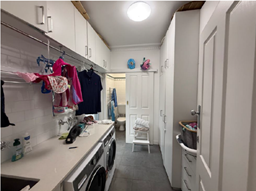
|
· Tile flooring
· Painted render
and tiled walls
· Modern laundry
and bathroom fixtures
· Timber framed
awning window and single-leaf door
· Plaster cornices
|
|
Figure 21: Laundry and toilet (Source: Three + One Heritage,
16.01.26)
|
|
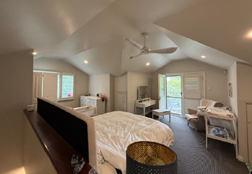
|
· Contemporary
first floor addition
· Master bedroom
and ensuite
|
|
Figure 22: Contemporary first floor addition (Source: Three +
One Heritage, 16.01.26)
|
|
|
|
|
|
Discussion
Strategic Merits
This section will review and outline the
strategic planning documents relevant to this Planning Proposal in order to
provide an overall response at the end of the section.
Greater
Sydney Region Plan
In relation to this Planning Proposal, the
relevant objective and strategy is as follows:
· Objective 13:
Environmental heritage is identified, conserved and enhanced.
· Objective 39:
A collaborative approach to city planning.
North
District Plan
In relation to this Planning Proposal, the
relevant priority and action from the Plan are as follows:
· Planning
Priority N2: Working through collaboration
o Objective 5: Benefits
of growth realised by collaboration of governments, community and business.
· Planning
Priority N6: Creating and renewing great places and local centres,
and respecting the district’s heritage
o Objective 12: Great
places that bring people together.
o Objective 13: Environmental
heritage is identified, conserved and enhanced.
Local
Strategic Planning Statement
In relation to this Planning Proposal, the
relevant priority is as follows:
· Planning
Priority 6: Create and renew public spaces and facilities to improve our
community’s quality of life.
The above policy contains a
section dedicated to “Embracing Heritage”, noting:
“A
variety of local heritage items and heritage streetscapes form part of the
character of centres throughout the North District and Lane Cove.”
Therein, it further states:
“Heritage
identification, management and interpretation are required so that heritage
places and stories can be experienced by current and future generations.”
The term “interpretation”
is considered to be directly applicable to this Planning Proposal. In this
context, the interpretation of heritage items relates not only to their
understanding and presentation but also to the process of their designation.
Accordingly, a Heritage Statement
has been prepared for the subject property and is enclosed with this proposal.
This report provides an assessment of the property and offers an interpretation
of its heritage value.
The cumulative effects of
additions and alterations to the subject property over the past few decades
have rendered its original heritage value to be considerably diminished.
Local Housing
Strategy
Section 6 of the strategy relates to Housing Priorities
within the LGA. Therein, section 6.2.7 refers specifically to “Preserving
and enhancing character and heritage”. This strategy recognises that
character and heritage should be evolving, interpretive concepts that support
innovation and contemporary community needs. Specifically, the strategy states
that:
“Incorporating character
and heritage can be interpretive, rather than strict repetition, encouraging
new housing to build upon existing values and adapt new trends into building
design and structure.”
In this context, retaining the heritage listing of 1 Austin
Crescent, despite its lack of remaining heritage significance, risks
constraining thoughtful and innovative development that could better reflect
current and future housing needs. The proposed removal of the listing allows
for the opportunity to create a new built form that is respectful of local
character, while embracing the strategy’s call for adaptation to “the
trends of the day.”
Moreover, the Strategy also recommends “routine
heritage reviews are undertaken”, where deemed necessary. We consider
this especially relevant in this instance, with this planning proposal intended
to begin the process of requesting Council to reconsider the subject local
heritage item.
The intent of the Strategy is to maintain and strengthen
Lane Cove’s valued character—not to impose heritage listings that
no longer serve their original purpose. As the Strategy makes clear:
“Future character and
heritage controls [should] seek to preserve and enhance character while also
encouraging innovation and adaptation of the trends of the day.”
The removal of the subject property from Part 1 of Schedule
5 of the LCLEP 2009 will facilitate future innovation and adaption of the site.
It is considered that that a local heritage designation on the subject property
is unduly restrictive in the context of the above guidance, particularly given
that the site is no longer an exemplar of an Interwar Californian Bungalow.
Site-Specific Merits
The criteria for assessing heritage
significance consider seven (7) matters as follows:
· Criterion A – Historical Significance;
· Criterion B – Historical Associations;
· Criterion C – Aesthetic Values;
· Criterion D – Cultural Associations;
· Criterion E – Cultural or Natural Research Value;
· Criterion F – Rarity;
· Criterion G – Representativeness;
The applicant has already provided an
assessment against each of the seven criteria in AT-2.
These will be reviewed with additional comments where relevant.
Criterion A
The applicant provides the following in
terms of criterion A:
“The subject dwelling,
constructed c.1941, is associated with the pattern of residential subdivision
and generally modest housing development in Lane Cove during the late Interwar
and early Postwar period. Its original construction reflects the economic
austerity of the era, evidenced by its modest scale, restrained detailing, and
readily available materials. However, the dwelling has undergone a number of
substantial external alterations, including a first-floor addition and
replacement of front façade openings, as well as changes to original
materials and detailing, which have highly modified its form and presentation
and diminished its ability to effectively demonstrate this historical phase in
a legible or representative way. Due to the extent of these modifications, the
dwelling is not considered to retain sufficient integrity to meet Criterion (A)
– Historic Significance at a local level.
This item is not considered
to be of Historic Significance at a State or Local level.”
In
response, Council can confirm these comments through the development
applications it has received for the various external alteration, including
changes to its original materials and detailing. As it is mentioned in the PP
when this property was originally listed, it
was considered a good and intact example of modest brick housing typical of
this era, reflecting the materiality and restrained decorative detailing
associated with the period. However, the dwelling has undergone substantial
changes, including a first-floor addition, replacement of original front
façade openings, external rendering, and a rear extension, which have
reduced the integrity of its original form and presentation and diminished its
ability to clearly demonstrate these representative characteristics.
Criterion B
The applicant provides the following in
terms of criterion B:
“The subject dwelling is
not known to be associated with any person or group of note.
This item is not considered to
be of Associative Significance at a State or Local level.”
In response, Council can confirm
the above comment.
Criterion C
The applicant provides the following in
terms of criterion C:
“The subject dwelling
presents as a highly modified example of a late Interwar dwelling evidenced by
its overall form, opening patterns, and simple austere design utilising
materials common in the period. The building is not considered to demonstrate
any particular aesthetic, creative, or technical achievement, and is more an
example of a building approach common at the time of construction. Recent
modifications to the building have heavily impacted its ability to demonstrate
this aspect of the building as a type, particularly the first-floor addition
and changes to the front façade openings, as well as the rendering of
the exterior which has obscured its original brick materiality and detailing.
This item is not considered to
be of Aesthetic Significance at a State or Local level.”
In
response, Council can confirm the building is now not considered to demonstrate
any particular aesthetic, creative, or technical achievement, and is more an
example of a building approach common at the time of construction. Recent modifications to the building have heavily impacted
its ability to demonstrate this aspect of the building as a type, particularly
the first-floor addition and changes to the front façade openings, as
well as the rendering of the exterior, which has obscured its original brick materiality
and detailing.
Criterion D
The applicant provides the following in
terms of criterion D:
“The subject dwelling
has not been identified as having strong or special association with a
particular community or cultural group in the Lane Cove area for social,
cultural or spiritual reasons.
This item is not considered to
be of Social Significance at a State or Local level.”
In
response, Council can confirm the subject dwelling has not been identified as
having strong or special association with a particular community or cultural
group in the Lane Cove area for social, cultural or spiritual reasons.
Criterion E
The applicant provides the following in
terms of criterion E:
“The subject site
provides limited potential for further research.
This item is not considered to
be of Technical / Research Significance at a State or Local level.”
In
response, Council can confirm the subject site now provides limited potential
for further research.
Criterion F
The applicant provides the following in
terms of criterion F:
“Most of the development
of Lane Cove occurred during the Interwar and Post-WWII eras, with many intact
examples from these periods still evident throughout the streetscapes of the
suburb and the wider LGA. The subject dwelling, while constructed during this
broader period of growth, is not considered rare or uncommon within this
context. It does not demonstrate any defunct customs, rare design features, or
construction techniques that are at risk of being lost.
This item is not considered to
meet the threshold for Rarity at the State or Local level.”
In
response, council can confirm this dwelling type is not considered rare in
nature, with similar building types present throughout the Land Cove LGA. It does not demonstrate any defunct customs, rare design
features, or construction techniques that are at risk of being lost.
Criterion G
The applicant provides the following in
terms of criterion G:
“The subject dwelling
was originally a good example of the austere late Interwar housing style,
representative of the type of modest residential development that characterised
much of Lane Cove’s growth during this period. However, subsequent
alterations including a first-floor addition and replacement of original front
façade windows, along with the application of modern cement render to
the exterior, have compromised the dwelling’s integrity and reduced its
ability to clearly demonstrate the characteristic features of its type.
Internally, while some elements of simple Interwar/Postwar decorative detailing
remain, changes to configuration and finishes have further diminished its
representative value.
This item is not considered to
be Representative at the State or Local level.”
According
to the document provided by the applicant, the
subject dwelling was originally a good example of the austere late Interwar
housing style, representative of the type of modest residential development
that characterised much of Lane Cove’s growth during this period.
However, subsequent alterations, including a first-floor addition and
replacement of original front façade windows, along with the application
of modern cement render to the exterior, have compromised the dwelling’s
integrity and reduced its ability to clearly demonstrate the characteristic
features of its type. Internally, while some elements of simple
Interwar/Postwar decorative detailing remain, changes to configuration and
finishes have further diminished its representative value.
In
response, council can confirm the subject dwelling no longer retains this
characteristic feature and is therefore no longer representative of the late
interwar housing style.
Independent Heritage Advice
The Planning Proposal for No. 1 Austin Crescent has not been
independently referred for heritage consultant advice. However, as part of the
previous Planning Proposal received for No. 3 Austin Crescent, an independent
heritage assessment (AT-3) was undertaken. That assessment concluded
that both No. 1 and No. 3 Austin Crescent are no longer intact and do not
present as simple, austere post–World War II suburban dwellings.
As a result, the current proposal has effectively already
been assessed by an independent heritage consultancy. The consultant was of the
opinion that the proposed de-listing of No. 1 Austin Crescent was adequately
justified for the following reasons:
In response to the heritage assessment by the applicant, the
consultant comments are:
“The
Heritage Assessment is comprehensive and provides detailed historic
information, information about the changes to the dwelling and its pair, a
comprehensive comparative analysis and assessment against the NSW Standard
Criteria for the assessment of heritage significance”.
The consultant is of the opinion that the proposed delisting
of 3 & 1 Austin Crescent has been adequately justified for the following
reasons:
“The
house (No.3 Austin Crescent) was listed in 1987 as part of a pair of intact,
simple, austere cottages that reflected suburban development in the post- WWII
period, with simple brick detailing. At some time between 2013 and 2025, the
house was rendered and painted, and the front garden area paved with concrete
for carparking. Due to these changes, the house is no longer intact and does
not present as a simple, austere, post -WWII suburban dwelling.
Furthermore,
its pair at No.1 Austin Crescent has undergone substantial changes that have
completely altered the presentation of the dwelling, including the addition of
a second storey, new concrete roof tiles, and, like No. 3 Austin Crescent, the
original face brickwork has been rendered and painted. As a result, the houses
no longer read as a pair, and neither house is considered to be intact.
Accordingly, the significance of the houses as a pair of intact, simple,
austere cottages from the post-war era has been lost”.
Overall, the advisor is
of the opinion that the “proposal to
remove the heritage listing from No.3 Austin Crescent is supported, and it is
recommended that the item, and the adjacent house at No.1 Austen Crescent, be
removed from Schedule 5”.
Based on the comments
above and considering the cumulative impacts of development that have occurred
on site, there appears to be sufficient justification for de-listing of this
heritage item, and the potential impacts of the proposed de-listing have been
adequately addressed.
LOCAL PLANNING PANEL ADVICE
This matter was reported to the
Local Planning Panel at its meeting on 10 March 2026.
After considering the matter, the
Local Planning Panel provides the following advice (AT-6) to Council in
relation to the Proposal:
The
Panel’s recommendation to the Lane Cove Council is that the Planning
Proposal for the property known as No. 1 Austin Crescent, Lane Cove, proceed to
Gateway. The Panel concurs with the Officer’s Report that the delisting
of the property as a local heritage item is warranted as the significant
alterations and second floor additions, together with cement rendering, have
transformed the dwelling so that it is not heritage significant.
It
is noted the property at No. 3 Austin Crescent was also recommended for
delisting because of its radical transformation with a second floor addition
and cement rendering. At the time of listing No’s 1 and 3, the dwellings
were seen as a representative pair of modest inter war dwellings. As such
individually, and as a pair, their heritage value no longer exists.
Accordingly, pursuant to Section 9.1 of the Environmental
Planning and Assessment Act 1979, the Lane Cove Local Planning Panel recommends
Council support the planning proposal, as it satisfies both the strategic and
site-specific merit tests for delisting the property.
While the measure and criteria for listing or de-listing
heritage items should be on heritage criteria alone, the Planning Proposal
(like all Planning Proposals) should include information about the planning
implications of delisting upon future development, including development
potential that would arise from the ‘Low and Mid Rise Housing’
development criteria within Part 6 of State Environmental Planning Policy
(Housing) 2021.
Community
Consultation
Statement of Intent
The consultation is designed to elicit any
feedback members of our community may have on the matter and report that
feedback back to Council for its consideration.
Method
|
Level of Participation
|
Inform
|
Consult
|
|
Form of Participation
|
Open
|
Open
|
|
Target Audience
|
Lane Cove Community and community groups
|
Lane Cove Community
|
|
Proposed Medium
|
eNewsletter
|
Public
Exhibition and Website Exhibition
|
Submissions from the informal
exhibition period were reported and responded to in the report (AT-5).
RESPONSE
TO NOTIFICATION
This Proposal was (informally) publicly exhibited from
Monday 16 February to Monday 2 March 2026. Two submissions were received.
|
Comment
|
Response
|
|
It is mentioned that it is a
wonderful property, and it’d be a shame to lose it to development.
|
Noted.
|
|
Clarification regarding the
proposed delisting of both no 1 and no 3 and, the purpose of de-listing
request, and who has applied for the delisting.
|
The purpose of the delisting
is to delist the property from the heritage items. The Planning Proposal was
submitted by the owners.
|
FURTHER
AMENDMENTS
In addition to
the Local Planning Panel’s advice, Council has recently received the
Gateway Determination for 3 Austin Crescent, Lane Cove (submitted following the
February 2026 Council meeting).
In the
Determination, they have requested that the applicant amend their Planning
Proposal to address:
· The draft Sydney Plan; and
· Council’s Community Strategic Plan.
Having regard to
this, it is recommended that the applicant amend their Planning Proposal to
address those two studies, in addition to the Local Planning Panel’s
advice.
ConClusion
According to the
heritage assessment provided by the applicant and independent heritage
consultant’s review, the property at No.1 Austin Crescent and its
adjoining pair at no. 3 have been significantly modified due to substantial
alterations undertaken over time.
Both dwellings
have lost the intact, austere post-war character for which they were originally
listed, and no longer read as a pair of heritage significance.
Council
considers the applicant’s heritage assessment to be thorough and supports
the proposal to remove No. 1 Austin Crescent from the heritage schedule.
The Lane Cove
Local Planning Panel, at its meeting on 10 March 2026, advised of its support
for the Planning Proposal with amendments, noting that it satisfies both the
strategic and site-specific merit tests.
It is
recommended that the applicant amend the Planning Proposal to address the
impacts (if any) on the State Environmental Planning Policy (Housing) 2021,
particularly the Low and Mid-Rise Chapter.
Financial
Considerations
The recommendations of this report pose no
financial impact on Council.
Governance
and Risk Considerations
Not applicable.
Environmental
Considerations
The subject of this report has no
environmental implications for Council.
Social
Considerations
The recommendations in this report will
have a positive social outcomes for the community as the subject dwelling has
not been identified as having strong or special association with a particular
community or cultural group in the Lane Cove area for social, cultural or
spiritual reasons.
Timing
A public exhibition period will be required
if the Planning Proposal is given a Gateway Determination. The timeframe for
future consultation will be set out on the Gateway Determination.
Link to Strategy
This report relates to the Community
Strategic Plan Outcome/s and Goal/s:
2. Our
Built Environment - A well designed, liveable and connected area
2.2 Housing
2.2.1 Ensure
planning controls require a diverse range of housing types and encourage
housing that is adaptable, accessible and affordable
Mark Brisby
Director - Planning and Sustainability
Planning and Sustainability Division
ATTACHMENTS:
|
AT‑1 View
|
Planning Proposal - 1 Austin Crescent
|
72 Pages
|
Available Electronically
|
|
AT‑2 View
|
Heritage Assessment - 1 Austin Crescent Lane Cove
|
49 Pages
|
Available Electronically
|
|
AT‑3 View
|
Independent Heritage Review
|
5 Pages
|
Available Electronically
|
|
AT‑4 View
|
Assessing heritage significance - NSW Heritage Criteria
|
55 Pages
|
Available Electronically
|
|
AT‑5 View
|
Local Planning Panel - REPORT
|
24 Pages
|
Available Electronically
|
|
AT‑6 View
|
Local Planning Panel - ADVICE
|
4 Pages
|
Available Electronically
|
Ordinary Council Meeting 23 April 2026
Planning Proposal 46 -
94 Northwood Road, Northwood (Heritage de-listing)
Item No: 15.2
Subject: Planning Proposal 46 - 94 Northwood Road, Northwood (Heritage
de-listing)
Record No: SU10845 - 19676/26
Division: Planning and
Sustainability Division
Author(s): Christopher
Pelcz; Golrokh Heydarian
Previous ORDT38/12
- Proposed Northwood Heritage Conservation Area - Ordinary Council - 21 May
2012 6:30pm
Items:
Purpose
A Planning Proposal for 94 Northwood Road,
Northwood has been submitted for consideration. The Planning Proposal seeking
to remove the property at 94 Northwood Road, Northwood from Schedule 5 of the
Lane Cove Local Environmental Plan 2009 (LEP). The heritage item is listed
individually, but it is also part of a larger group of heritage listed
properties at 88, 90, 94 & 96 Northwood Road.
Executive
Summary
· The
Planning Proposal to remove the property from Schedule 5 of the LEP was
originally included in the LEP Review in July 2025, however the Local Planning
Panel did not support the removal of the heritage listing as the assessment did
not adequately address the impact that de-listing would have on the heritage
significance of the group of properties located between 88 and 96 Northwood
Road.
· Following
the Panel’s advice the Proposal was returned to the applicant for
revision in order to address the Panel’s comments.
· A
revised Planning Proposal was submitted to another Local Planning Panel meeting
in November 2025, accompanied by an independent heritage review. The LPP
recommended a further independent review.
· The
separate review was received and reported back to the LPP in March 2026.
· The
LPP did not support the de-listing and recommended that Council consider
whether a Heritage Conservation Area for Northwood is appropriate.
|
RECOMMENDATION
That Council:
1. receive and note the advice
from the Local Planning Panel in relation to the Planning Proposal.
2. not support the Planning
Proposal as it lacks both strategic and site specific merit.
3. not commence studies at this
time to establish a Northwood Heritage Conservation Area.
|
Background
Previous
Council Resolutions
At the time
of the comprehensive Local Environmental Plan (LEP) phase (2006–2009),
Council undertook extensive studies, including heritage studies recommending
that the peninsulas of Greenwich and potentially Northwood be considered as
Heritage Conservation Areas.
At its
meeting of 4 December 2006, Council resolved that “No further action
be taken in relation to the proposed Northwood Conservation Area”.
The Greenwich Heritage Conservation Area was included in the eventual LEP.
The matter of
heritage conservation zones was again considered between 2011–2012 and at
the 21 May 2012 Council meeting, a report to consider part of the Northwood
peninsula as a proposed heritage conservation area was tabled. It was resolved
that it did “not wish to commence the process of classification of
Northwood as a Conservation Area at this time”.
No further
work was done in relation to this matter.
Previous Advice
The original Planning Proposal was
considered as part of the LEP review by the Local Planning Panel on 9 July 2025
(AT-1). The Panel
resolved (AT-2) to
support the LEP Review with one exception:
“not
support the delisting of heritage item 94 Northwood Road, Northwood, because
the heritage report in support of delisting does not, in the Panels view,
adequately address the heritage significance of this item as being part of a
group listing with other nearby listed heritage properties”.
This matter was reported (AT-3) to Council on 24 July 2025, where
it was resolved (AT-4)
to remove 94 Northwood Road from the Review and allow the applicant to amend
their documents in response to the Panel’s comments.
In response, the applicant revised both
their Planning Proposal (AT-5) and Heritage Study (AT-6) and the revisions were re-submitted to the Local Planning Panel,
along with the NSW Heritage listing criteria (AT-7) and Council’s Independent Heritage Advice (AT-8).
The matter was reported to the Local
Planning Panel (AT-9) on
25 November 2025, where the Panel resolved (AT-10):
1. Prior to a final decision regarding progress of the
Planning Proposal, Council should engage a further independent heritage
review of the Proposal that seeks to delist 94 Northwood Road, Northwood.
The review appended to the Report to the Panel, in the form of a memorandum,
was prepared by a well regarded heritage consultant Lisa Trueman, who provides
heritage consulting advice for the Council. However, Ms Truman was an expert on
the Local Planning Panel which previously advised Council that the proposed
delisting should not proceed. So, it could be reasonably perceived that her
recent review for Council represents an apprehension of bias and conflict of
duties, in undertaking a review of a matter for which she had prior involvement
and knowledge as a member of a previous panel’s deliberations.
2. From a review of the Applicant’s heritage
assessment, the Panel noted that primary weight was given to the percentage of
remaining original fabric in supporting delisting. It is common for heritage
items to be adapted over time, and for various elements of heritage items to
have differing levels of significance. From site observations, previous
additions to the dwelling appear to be sympathetic and the dwelling positively
contributes to a relatively cohesive group of dwellings between numbers 88 - 98
Northwood Road. If Council ultimately decides to delist the property as a
heritage item, consideration should be given to other potential mechanisms to
recognise the significance of the group, such as a conservation area
designation for the specific group or part of a wider area prior to such
delisting.
Based on the Panel’s advice, Council
undertook another Heritage Assessment (AT-11) and presented a supplementary report (AT-12) for final advice. The outcome is detailed in the Discussion
section of this report.
SITE
The site is a listed
heritage item (I298) located on the eastern side of Northwood Road, between
Cliff Road and Point Road, Northwood. The site runs through to Eva Street; its
frontage is 18.22m wide.
The property is
identified as part of a group in the state heritage inventory, with 88, 90, 94
and 96 Northwood Road. All four listings are for a house and garden.
The listings are for two
different types of single storey dwellings, No. 88 is a Federation bungalow,
while 94 and 96 are Californian bungalows – with remnant planting. The
listing for 90 Northwood simply states that it is a bungalow.
DEVELOPMENT HISTORY
The
applicant’s revised heritage study (AT-6) and Council’s own research reveal the following historical
timeline for the site is relevant.
According to
the applicant’s revised study (AT-6), the subject site appears to have been constructed prior to 1928.
However, Figure 1 (see below) is aerial image that shows that the small
dwelling and tennis court were constructed together in 1929.
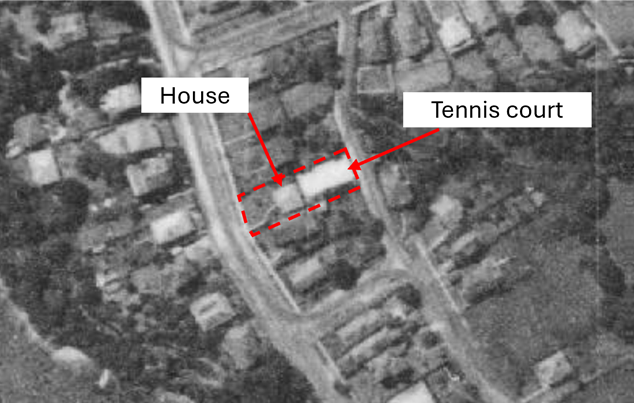
Figure 1: 1929 aerial image of
subject site showing a house and tennis court
The house and surrounding areas appear to have
barely changed at all from the period of 1929 till 1943 – this is
confirmed by Figure 2 which shows the subject site still with the same house
and tennis court.
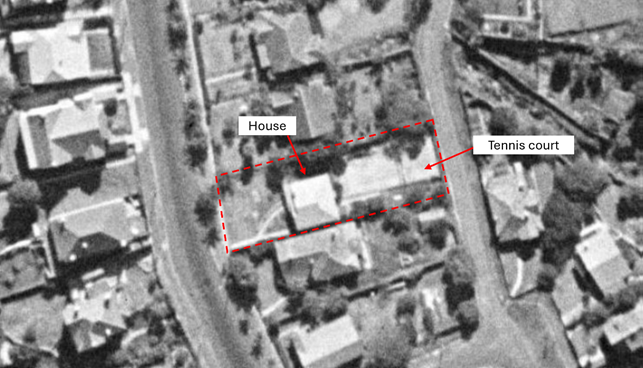
Figure 2: 1943 aerial image of subject site showing a house and tennis court
According to AT-6, the timeline of alterations are as follows:
· First alteration – 1971 –
Tennis court was removed and replaced with a garage (and possibly driveway)
facing the rear lane (of Eva Street), also the Canary Island Palm did not
appear in the front garden until this time.
· Second alteration – May 1983
– the rear brick fence (facing Eva Street) was approved in BA165/82.
· Third alteration – January 1983
– a new sunroom with a bay window of timber shingles was approved under
BA 527/82.
· Fourth alteration – April 1985
– other rear extensions (including new deck) approved in DA162/85.
· Fifth alteration – February 1990
– a carport was approved in DA72/89.
· Sixth alteration – February 1995
– alterations were approved (BA95/9) to the front of the house, including
the addition of the front bay to the master bedroom and the front veranda was
rebuilt with modern limestone flags.
All of these
changes are shown in Figure 3 – which is a 2025 aerial image of the site.
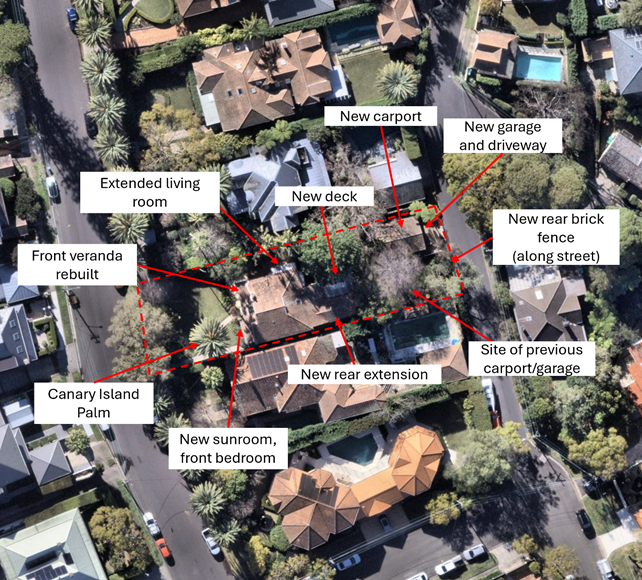
Figure 3: 2025 aerial image of subject site showing renovations
As part of the 1995 application, a large conifer
tree was removed from the front of the house to allow for an additional room to
be added onto the front house. The front veranda also appears to have been
rebuilt to accommodate this.
While the renovations appeared to be sympathetic,
none of the additions contain any original materials. There is also evidence to
suggest that a previous carport/garage existed on the site in a different
location (shown in Figure 3). This structure was demolished with the carport
being moved to its current location.
Based on a review of Council files, a number of
other applications were received to prune and remove a number of different
trees from the property – most of these were due to death of the tree or
damage caused by borers.
By way of comparison, the other heritage
properties at 88, 90 and 96 Northwood Road do not appear to have had such
extensive renovations.
Discussion
Strategic Merits
This section will review and outline the strategic planning
documents relevant to this Planning Proposal in order to provide an overall
response at the end of the section.
Section 9.1 Ministerial
Directions
In addition to the above, one of the
Section 9.1 Ministerial Directions is relevant to this Planning Proposal.
Direction 3.2 Heritage Conservation applies
because the Planning Proposal is seeking to remove 94 Northwood Road, Northwood
as a heritage item. The applicants revised heritage study (AT-6)
attempts to demonstrate that the property and its surrounds have been altered
significantly and retain no further heritage value, either individually or part
of a group.
Greater Sydney Region Plan
In relation to this Planning Proposal, the relevant
objective and strategy is as follows:
· Objective 13
– Environmental heritage is identified, conserved and enhanced; and
· Strategy 13.1
– Identify, conserve and enhance environmental heritage by…managing
and monitoring the cumulative impact of development on the heritage values and
character of places.
North District Plan
In relation to this Planning Proposal, the relevant priority
and action from the Plan is as follows:
· Planning
Priority N6 – Creating and renewing great places and local centres, and
respecting the District’s heritage; and
· Action 21.c
– Identify, conserve and enhance environmental heritage by…managing
and monitoring the cumulative impact of development on the heritage values and
character of places.
The following quote is also relevant to the Planning
Proposal and taken from both the Region and District Plan:
“Sympathetic built form
controls and adaptive reuse of heritage are important ways to manage the
conservation of heritage significance. Respectfully combining history and
heritage with modern design achieves an urban environment that demonstrates
shared values and contributes to a sense of place and identity” (page
77 of Region Plan and page 50 of District Plan).
Local Strategic Planning
Statement
In relation to this Planning Proposal, the relevant priority
is as follows:
· Planning
Priority 6 – Create and renew public spaces and facilities to improve our
community’s quality of life.
While there is no direct action on heritage per se, this
priority includes a section on embracing heritage. It is taken directly from
both the Region and District Plan as stated above.
Local Housing Strategy
While the Planning Proposal does not specifically relate to
housing, the strategy does include an action relating to heritage as follows:
· Ensure future
character and heritage controls seek to preserve and enhance character while
also encouraging innovation and adaptation of the trends of the day.
The following quote is also relevant to this Planning
Proposal:
“Routine heritage
reviews may also be undertaken, particularly in areas where existing dwellings
are anticipated to be demolished to make way for new larger dwellings. These
reviews should ensure that the overall character is reflected in new
development, without stifling innovation (page 91 of LHS)”.
Response
Based on all the documents mentioned above, it’s clear
that the cumulative impacts of development need to be considered for this
proposed de-listing.
Based on Council and the applicant’s research,
it’s clear that the house and garden remained largely un-altered from
1929-1943. Figures 1 & 2 confirm this and highlight that almost no real
garden or trees were present in the front of the house (facing Northwood Road)
or the rear of the property (facing Eva Street) at this time. Possibly in 1971,
the Canary Island Palm tree appears to have been added to the garden at the
front of the house. The trees in the rear portion appear to have been added
after this point as well.
However, both the house and garden have been altered since
the 1980s as stated in the History section of this report. It is also worth
mentioning that the heritage study Council used to justify its heritage items
was undertaken and completed in 1987, with the works on this property completed
largely after this period.
Notwithstanding this, further works were undertaken which
changed the entire front section (facing Northwood Road) of the house. As part
of the rear extensions, a new laundry, family room, bathroom, bedroom and deck
were added. Aside from the Canary Island Palm being planted in the 1970s, a
number of other trees in the garden of the property have either been trimmed or
removed to make way for these new developments.
In terms of the group listing, the house and gardens at
88-96 Northwood Road were identified in the Lane Cove Heritage Study as:
“Group of single-storey
bungalows set well back from the road. The houses of various dates form a
homogenous group in scale and character … Nos 96 & 94: single-storey
California bungalow style homes with features typical of the style. Remnant planting.”
The group of houses were noted as being significant as a:
“Group of single-storey
well-built houses of similar scale and character set on large suburban blocks
with remnant planting, on the road leading from the ferry. Indicative of the
scale and quality and character of suburban development occurring in Northwood
at this time.”
In terms of the individual nature of the items:
· 88 Northwood Road
– is described as a relatively intact Federation brick bungalow (with
garden) which still does not appear to have changed that much from that
description.
· 90 Northwood Road
– still presents (fronting Northwood Road) as a single storey bungalow
with decorative timber to front façade, enclosed veranda and remnant
planting.
· 96 Northwood Road
– still presents (fronting Northwood Road) as a single storey Californian
bungalow with typical features and remnant planting consistent with its
listing.
While these properties have also undergone different
renovations at some point, they have largely been consistent with their
relative listings and appear to have maintained their heritage integrity.
Therefore, preserving this property as a heritage item
appears to be consistent with the relevant objectives of the Regional Plan,
priorities and actions of the District Plan, and the priority of
Council’s Local Strategic Planning Statement – particularly when
the cumulative impact of development on these items is considered.
Council’s Local Housing Strategy also encourages reviews of our heritage
items and controls with a focus on maintaining the overall character while
being reflected in new development.
The next section will examine the site-specific merits of
the listing and give consideration to the heritage listing criteria (AT-7).
Site-Specific Merits
To assist with the site-specific merits of de-listing a
heritage item, the NSW Heritage Office has provided guidance on how to assess heritage
significance (AT-7) against a set of criteria.
This criterion also gives guidance as to what constitutes inclusion and/or
exclusion of a heritage item at either a local or state level.
Criteria
The criteria for assessing heritage significance considers
seven (7) matters as follows:
· Criterion A
– Historical Importance;
· Criterion B
– Historical Associations;
· Criterion C
– Aesthetic Values;
· Criterion D
– Cultural Associations;
· Criterion E
– Cultural or Natural Research Value;
· Criterion F
– Rarity;
· Criterion G
– Representativeness;
The applicant has already provided an assessment against
each of the seven criteria in AT-6.
These will be reviewed with additional comments where relevant.
Criterion A and B
The applicant provides the following in terms of criterion A
and B:
“The site contains the
roof and supporting structure of an early twentieth-century bungalow in a
suburban garden setting. The house and its allotment are among many subdivided
from Northwood House in the decades after 1900. While the allotment boundaries
are intact to the 1904 subdivision, this is not an aspect of significance that
would satisfy the heritage criterion.
The house is highly altered
and so it does not demonstrate inter-war ways of living”.
“The site history
suggests that the house has no known connections with historically important
people or events”.
In response, Council can confirm these comments through the
various applications for renovations that have occurred to the property and
grounds. The garden has also varied over the years with different plantings
(including the addition of the Canary Island Palm tree) and removal of dead
trees. There is also no credible evidence to suggest any type of historical
associations.
Criterion C
The applicant provides the following in terms of criterion
C:
“The house is highly
altered and only retains its original roof and plain brickwork in three walls.
The house has no original doors, windows or verandah flooring. The interior has
one original door frame, but no other original joinery. The house has no
original decorative plasterwork, and no original fittings or fixtures. The
house is so lacking in integrity that it only demonstrates an early Inter-War
Bungalow roof. The garden is a post-war work and is not distinctive”.
In response, Council reviewed the building applications
previously received for this site and the rear portion of the property has been
extended and the garage/carport moved to different locations on the site twice.
The original tennis court was also removed between 1970-1980.
Criterion D and E
The applicant provides the following in terms of criterion D
and E:
“The house and its site
are not associated with a particular community”.
“As a highly altered
house and garden among many suburban sites that were released for housing
around the same time in Northwood, the site does not contain building or
landscape fabric likely to be research interest, and the site is not
distinctive from other inter-war detached housing sites”.
In response, no particular communities are associated with
this site and given the presence of some of the original features that would
have some research value.
Criterion F
The applicant provides the following in terms of criterion
F:
“The house is highly
altered the remains of the original house suggest that it was more likely to
have been a typical 1920s bungalow, and not rare”.
A review of the building plans shows that the house and
garden did not appear to be unique nor is it the only example of the type. The
property next to 94 Northwood Road is also a heritage listed Californian
bungalow, in addition the other two heritage properties near the site are also
different types of bungalows. However, this is not considered a major reason
for de-listing.
Criterion G
The applicant provides the following in terms of criterion
G:
“The house retains its
roof, its pediment of timber shingles, and some plain brickwork in three walls.
The house is so altered that it does not represent an early twentieth-century
bungalow”.
A review of Council’s plans demonstrates that some
features are still present. The original garden was also quite sparse to begin
with and other trees and plantings were added between 1970-1980. After this
period, a number were trimmed or removed entirely.
Independent Heritage Advice
Council provided all material supplied with this proposal to
its independent heritage consultant in October 2025 for review. In response to
the heritage assessment and proposal, they provide the following comments (see AT-8):
“A review of that document has identified the
following deficiencies
· Does not follow
the appropriate guidelines, being ‘Assessing Heritage Significance -
Guidelines for assessing places and objects against the Heritage Council of NSW
criteria’, NSW Department of Planning and Environment, 2023 (attached)
· Does not
provide a proper assessment of the significance of the item, based on the
Heritage Council criteria and following the steps detailed in the above
guidelines.
· Does not assess
the impacts of the de-listing of the item on the significance or integrity of
the group
· Does not consider
the significance of the garden, which forms part of the listing
· Over-states the
amount of change to the house and the impacts of the changes on the
significance of the item and its group.
· Does not
provide a comparative analysis of the house against other items of the same
type and significance”.
In response to the comments about the house and garden being
substantially altered, the consultant comments are:
“The basis for the
proposal is that the house has been ‘highly altered’. This is
not concurred with. The original and significant form and early twentieth
century features of the house, as viewed from Northwood Road, remain
substantially intact and the house is readily identifiable as a single-storey
Inter-war California bungalow. The changes to the windows and front
verandah do not detract from the ability to view the house as part of a
‘Group of single-storey well-built houses of similar scale and character
set on large suburban blocks with remnant planting, on the road leading from
the ferry. Indicative of the scale and quality and character of suburban
development occurring in Northwood at this time.” The internal changes
and changes to the rear do not detract from the identified significance of the
house as part of a group”.
“The de-listing of this
house would undermine the significance of the group of houses and their
gardens from 88 – 98 Northwood Road, to which this property provides
a strong contribution. The level of change that has occurred to the house is
consistent across the group and aligns with what would
be reasonably anticipated by the relevant LEP and DCP heritage controls”.
Overall, the advisor is of the
opinion that the “proposal to remove the heritage listed House and
Garden at 94 Northwood Road, Northwood, from Schedule 5 of the LLEP, has not
been adequately justified. The documentation provided is inadequate to support
a de-listing and is based on evidence that is not supported”.
In addition, the recommendation is that the house and garden
at 94 Northwood Road, Northwood be retained.
However, the Heritage advice provided in February 2026 (AT-11)
was of the opinion that:
“Following assessment of
94 Northwood Road using the established heritage significance assessment
criteria, it has been found that, due to substantial alterations and additions,
continuation of listing in Schedule 5 of Lane Cove Local Environmental Plan
2009 is not supported.
Removal from Schedule 5 could
potentially affect the collective streetscape value of the houses and gardens
of 88, 90, 94 and 96 Northwood Road. However, the provisions of the LEP
regarding development in the vicinity of a heritage item, the objectives of the
R2 zone and provisions of Lane Cove DCP can be applied to guide any future
proposal for change”.
LOCAL PLANNING PANEL ADVICE
This matter was reported to the
Local Planning Panel at its meeting on 10 March 2026.
Submissions from the informal
exhibition period were reported and responded to in the report (AT-12).
The Local Planning Panel reconvened and considered the
matter on 10 March 2026 (AT-12). After considering the new Heritage
advice, it resolved (AT-13):
The Panel’s
recommendation to the Lane Cove Council is that the Planning Proposal to delist
the property known as No.94 Northwood Road, Northwood not proceed to Gateway.
The Panel has not been
persuaded that the subject property should be removed as a local heritage item
from the Lane Cove Local Environmental Plan 2009. The Panel at its meeting in
November 2025 requested a second independent heritage report and notes the
second independent consultant’s recommendation that the property should
be delisted.
However, this has not
persuaded the Panel that delisting is appropriate, and the Panel has the
benefit of the description for the original listing of 1987 by Moore, Pike,
Tropman and Associates and subsequent heritage reviews, including the Godden,
Mackay, Logan 2006/7 heritage review
The Panel notes that the most
recent heritage review was also undertaken by a well-regarded expert. However,
like the previous review leading to the Panel’s prior deferral, there is
potential for a perception of apprehended bias, as the second consultant was
involved in a Land and Environment Court case for No. 88 Northwood Road, when
the heritage significance and listing of that item as part of a group including
the subject property, was a central contention.
It is noteworthy that the
judgement for No. 88 Northwood Road (G K Morgan Investments P/L v Lane Cove
Council [2005]) stated at paragraphs 24 and 25:
“24. A heritage item
includes a building, work, relic, tree or place of heritage significance
described in Schedule 3 and shown on the heritage map. Schedule 3 includes Nos
88, 90, 94 and 96 Northwood Road grouped together with the common reference:
B122 (“the group”). This arrangement is reflected on the heritage
map.
25. It seems to me that the
intention of the LEP is to protect these four properties as a group. It is
plain that each property has its own heritage significance but considered
together they have an overall significance greater than the individual significance
of each of them. The Council’s Heritage Study relevant extracts of which
are contained in Miss Burke’s report by referring to the four properties
together and describing the individual houses and their setting separately, in
my view supports this approach.”
On balance, the Panel has
considered the original listing and its purpose as well as the two heritage
consultant reviews and considers that delisting the property is not
appropriate. The significance of the listing as part of a cluster in this part
of Northwood Road cannot be underestimated. While, like many heritage items,
there have been alterations and additions to the original fabric of the
dwelling, it must be recognised that this in itself would not warrant
delisting. The dwelling has the benefit of its extensive setback and garden
setting in the streetscape, consistent with the other heritage items in this
cluster.
The Panel concludes the
planning proposal lacks both strategic and site specific merit.
The Applicant was advised at
the meeting that a development application may be submitted at any time for the
property irrespective of a heritage listing.
By way of comment, the Panel
further recommends to Council that if the delisting of the heritage item
proceeds, then this should only occur if Lane Cove Local Environmental Plan
2009 is amended to introduce a Heritage Conservation Area for the consistent
group of dwellings in this block of Northwood at the same time.
Overall, based on the comments above, there does not appear
to sufficient justification for de-listing of this heritage item, and the
impacts of the proposed de-listing have not been considered or adequately
addressed.
Further, based on the Panel’s advice, Council may want
to consider revising the Northwood Heritage Conservation Area. However, this
would require a revised study which would require additional funds and is not
recommended at this time.
CONCLUSION
While this is only one heritage item at 94 Northwood Road, a
strategic and site-specific approach must be utilised before a de-listing can
occur.
In terms of its strategic merits, the planning framework is
directly aligned to say that heritage must be identified, preserved and
conserved and that any development of these sites must be sympathetic and
respectful. Further, overall character and managing the cumulative impacts of
development must be considered.
In this case, while the property has changed from its
original listing it does not detract from the ability to view the house
(individually and as part of a group) as a heritage item. In addition, the internal
changes and changes to the rear do not detract from the identified
significance. Given this, de-listing of this property as a heritage item is
difficult to justify on strategic grounds.
On its site-specific merits, the based on the review
conducted by the applicant and through Council’s independent heritage
consultant the applicant overstates the amount of change to the house and the
impacts of these changes on the significance of the item and the group.
Notwithstanding this, in terms of the criterion there is little to no evidence
to warrant de-listing.
The other houses and gardens in the group properties appear
to still be largely consistent with their original listings – this can be
seen in Figures 1, 2 and 3 of this report.
On balance as the proposed de-listing has not been justified
and is not considered reasonable it is therefore recommended for refusal.
Council may wish to consider re-introducing the Northwood Heritage Conservation
Area, based on the Panel’s advice, however this is not recommended by
staff at this point in time, given other work program priorities.
Financial
Considerations
The recommendations of this report pose no
financial impact on Council. However, if the Northwood Heritage Conservation
Area is pursued then this would require additional funding.
Governance
and Risk Considerations
There are no governance or risk
considerations as part of this Planning Proposal.
Environmental
Considerations
The subject of this report has no
environmental implications for Council.
Social
Considerations
The recommendations in this report maintain
social outcomes for the community
Timing
There are no timing implications as part of
this Planning Proposal.
Link to Strategy
This report relates to the Community
Strategic Plan Outcome/s and Goal/s:
2. Our
Built Environment - A well designed, liveable and connected area
2.2 Housing
2.2.2 Plan
for the growth of housing and transport services that create sustainable and
liveable communities
Mark Brisby
Director - Planning and Sustainability
Planning and Sustainability Division
ATTACHMENTS:
|
AT‑1 View
|
Previous Local Planning Panel - Report - 9 July 2025
|
89 Pages
|
Available Electronically
|
|
AT‑2 View
|
Previous Local Planning Panel - Advice - 9 July 2025
|
6 Pages
|
Available Electronically
|
|
AT‑3 View
|
Previous Council Report - 24 July 2025
|
5 Pages
|
Available Electronically
|
|
AT‑4 View
|
Previous Council Resolution - 24 July 2025
|
1 Page
|
Available Electronically
|
|
AT‑5 View
|
Planning Proposal 46 - 94 Northwood Road - September 2025
|
16 Pages
|
Available Electronically
|
|
AT‑6 View
|
Revised Heritage Assessment - 94 Northwood Road - August
2025
|
35 Pages
|
Available Electronically
|
|
AT‑7 View
|
Assessing heritage significance - NSW Heritage criteria
|
55 Pages
|
Available Electronically
|
|
AT‑8 View
|
Independent Heritage Assessment - October 2025
|
58 Pages
|
Available Electronically
|
|
AT‑9 View
|
Previous Local Planning Panel - Report - 25 November 2025
|
44 Pages
|
Available Electronically
|
|
AT‑10 View
|
Previous Local Planning Panel - Advice - 25 November 2025
|
16 Pages
|
Available Electronically
|
|
AT‑11 View
|
Independent Heritage Assessment - February 2026
|
9 Pages
|
Available Electronically
|
|
AT‑12 View
|
Local Planning Panel - Report - 10 March 2026
|
24 Pages
|
Available Electronically
|
|
AT‑13 View
|
Local Planning Panel - Advice - 10 March 2026
|
4 Pages
|
Available Electronically
|
Ordinary Council Meeting 23 April 2026
Adoption - Draft
Electric Vehicle Charging Infrastructure Policy
Item No: 15.3
Subject: Adoption - Draft Electric Vehicle Charging Infrastructure
Policy
Record No: SU11082 - 23369/26
Division: Planning and
Sustainability Division
Author(s): Bernadette
Riad
Purpose
The purpose of this report is to seek
Council’s adoption of the draft Electric Vehicle Charging Infrastructure
Policy.
Executive
Summary
· The
draft Electric Vehicle Charging Infrastructure Policy (the Policy) guides the
establishment of publicly accessible electric vehicle charging infrastructure
(EVCI) to encourage electric vehicle adoption in Lane Cove whilst maintaining
local amenity and services.
· The
draft Policy outlines the key site selection and design criteria guidelines
that will ensure installations meet safety, accessibility, environmental, and
community requirements.
· The draft Policy has been developed with the intention of supporting
the delivery of EVCI on public land so that it integrates effectively with the
local context and provides guidance to providers of EVCI on the selection of
locations and associated requirements.
· The
draft Policy was exhibited from 26 February 2026 to 30 March 2026. A total of
43 ‘feedback surveys’ were completed, with largely positive
feedback received.
· 11
responses expressed concerns with the draft Policy, and some minor adjustments
to the Policy have been made to address feedback received. The amendments
include:
o reference
for technology to be compatible with a wide range of makes and models
o more
specific wording around consideration for areas with high density housing
o reference
to the need for adherence to fire safety standards
o the
avoidance of ‘Rear to Kerb’ or ‘Nose to Kerb’ spaces
where possible
o consideration
of the type and capacity of charger
|
RECOMMENDATION
That Council adopt the amended
Electric Vehicle Charging Infrastructure Policy.
|
Background
In 2023, the NSW Government amended the
State Environmental Planning Policy (Transport and Infrastructure) 2021 (SEPP)
to set out the circumstances where Electric Vehicle Charging Infrastructure
(EVCI) would be permissible with or without consent.
The Draft EVCI Policy for Lane Cove has
been developed with consideration of this SEPP to help support the uptake of
EV’s within the Lane Cove LGA and broader region through the provision of
well-placed local charging infrastructure which considers the local context.
It sets out how
Lane Cove Council will manage the installation, operation, and use of EVCI on
Council land and road reserves so that it is fair, safe, and accessible, and provides guidance to the providers of EVCI on the selection of
locations and associated requirements.
The Draft Policy was presented to Council
at the Ordinary meeting of February 2026, where it was resolved that the draft
policy be placed on public exhibition for a period of 28 days and that the
outcomes of the public exhibition be reported back to Council.
Public exhibition of the Draft Policy took
place from 26 February 2026 to 30 March 2026 via Council’s ‘Have
Your Say’ web page, and was promoted through Council newsletters, social
media, and posters.
Discussion
As noted in the report presented to Council
at the Ordinary meeting in February 2026, the transport sector is the second
largest contributor to greenhouse gas emissions from the Lane Cove LGA, making
up approximately 29% of community emissions. Electric vehicles (EV) and other
electric transport modes provide a pathway to decarbonise the transport sector
and assist Council in reaching our emission reduction targets.
While most EV charging will be done at
home, approximately 1 in 3 drivers across NSW do not have access to off-street
parking to charge an EV. With more than 60% of Lane Cove residents living
in a multi-unit dwelling, the provision of public charging infrastructure is
critical to supporting the transition to EVs. Ensuring that the
placement of public EVCI is well placed and considers the local context is of
benefit to all.
DEVELOPMENT
OF THE DRAFT POLICY
The development of the draft Policy has
incorporated learnings from earlier work conducted by Stantec on behalf of the
Northern Sydney Regional Organisation of Councils (NSROC) on Policies and
Controls to Facilitate EV Charging infrastructure, as well as learnings from
Council’s who have adopted or are developing similar policies, including;
North Sydney, Northern Beaches, Ryde, City of Sydney, Waverley, Randwick,
Woolahra, and Inner West.
Following the exhibition of the Draft
Policy in March 2026, several minor adjustments were made. These are detailed
further in the Community Consultation section below.
Community
Consultation
Statement of Intent
The consultation was designed to elicit any
feedback members of our community may have on the matter and report that
feedback back to Council for its consideration.
Method
|
Level of Participation
|
Consult
|
|
Form of Participation
|
Open
|
|
Target Audience
|
Lane Cove Community
|
|
Proposed Medium
|
Public
Exhibition and Website Exhibition
|
Feedback Received
Of the 43 surveys completed, 11 expressed
concerns with the Policy specifically. A summary of these concerns and notes on
proposed adjustments to the Draft Policy or reasoning for Councils position on
the matter raised has been provided in the table below.
|
Concerns Raised
|
Comments
|
|
Accessibility
/ Equity
|
|
It seems an excellent
policy, but I would hope it specifies that.no further fast chargers will be
permitted on public land unless they are open to ALL brands of EVs.
|
While this has been the
intention to date, the Policy has been adjusted to specifically reference the
need for technology to be compatible with a wide range of makes and models.
All
EV chargers deployed by or in consultation with Council are universal and can
be used by all makes and models.
|
|
Offer
the same incentives to residents who drive petrol driven vehicles.
|
The
Policy addresses the growing take up of EVs through supporting the
appropriate deployment of EV charging infrastructure. It does not
specifically provide incentives to the drivers of these vehicles.
|
|
Siting /
Locations
|
|
The Lane Cove LGA includes
clusters of high density housing, where the new EVCI would have the highest
impact. However, due to the very limited or non-existent public land in
the immediate vicinity (i.e. walking distance) of high-density housing, the
residents of these areas will be effectively excluded from this project and
will have to rely on charging their EVs away from their home locations, at
chargers that are generally private such as at work or shopping centre car
parks.
With the current push by the NSW Government to force through even more high-density
developments in the Lane Cove LGA.. it is difficult to see how the stated
objective to "Ensure a fair and equitable distribution of EVCI that
supports community needs" will be met.
|
The Policy has
been amended to include reference to areas with high density housing.
|
|
What specific
solutions does the draft EVCI Policy include for high-density precincts such
as Hughes Park in Burns Bay Road?
|
The Policy does not deal with specific locations but
outlines the approach to be taken by Council in supporting the roll out of
EVCI across the LGA.
|
|
Unsure of where they
would be specifically.
|
The Policy
does not deal with specific locations but outlines the approach to be taken
by Council in supporting the roll out of EVCI across the LGA.
|
|
Need to be in
dedicated stations like petrol. Shouldn't take up parking spots.
|
While Council
recognises the role of dedicated ‘charging stations’ such as
those offered by existing petrol stations, the availability of land for new
developments of this type is limited and would not serve the transition to
EVs more broadly.
Installing EVCI on
public land and road reserves enables
greater distribution of chargers.
To balance the need for EVCI with parking for non-EV drivers,
the Policy requires consideration of the following when selecting sites for
public EVCI
- The availability of parking within in an
area or precinct (i.e. quantity, duration of stay and occupancy).
- The location of existing EV charging
facilities
|
|
Fire
|
|
Where these outlets
are positioned in the case of a fire. I note with great concern that 2
outlets installed in Lane Cove Council premises are in underground car parks.
The one in the Canopy is of major concern as it is 2 floors underground in a
confined space. When 'not if' one of these electric vehicles catches fire
they are extremely hard to extinguish, with lethal fumes. They should be in
open above ground areas only.
|
Data published by Fire
and Rescue NSW[1]
note the analysis of fire data from NSW, Europe, and Asia revealed that EV
fire rates range between 3 and 25 fires pre 100,000 registrations, while fire
rates for fuel-based vehicles ranged between 15.8 and 58.2 fires per 100,000
registrations in 2021-2023.
Recognising the risk
of fire from any vehicle type. The Policy has been amended to reference
adherence to fire safety standards published through the National
Construction Code (NCC) and Fire and Rescue NSW.
|
|
Shouldn't be
underground where fire would be catastrophic.
|
|
Parking
|
|
The public power pole
chargers are a great initiative but need to be signposted as EV only parking.
There are often ICE vehicles parked in front of the chargers.
|
Requirements
regarding public consultation around changes to parking restrictions, and the
need for line marking and signage is addressed in the Policy under
‘Engagement and Consultation’ and ‘Visual Identity’
The majority of kerbside
EVCI in Lane Cove have dedicated spots with “EV only while
charging” along with time restrictions (ie 2P) which align with the
existing time restrictions in that area.
In
some instances, CPOs have opted to trial non-dedicated spaces to understand
utilisation rates with non-dedicated parking.
|
|
Include
increased enforcement of non-EVs parked in EV charging bays
|
Parking is actively
patrolled and enforced by Council’s Rangers as part of their core
business.
|
|
Make
bays 24 hour EV charging only.
|
Parking restrictions are assessed on a case-by-case
basis, with any changes to restrictions requiring community consultation and
approval by Councils Local Transport Forum.
To date,
timing restrictions set against “EV
only while charging” parking has been set to align with the existing
time restrictions of the particular area (ie 2P).
|
|
Allow
vehicles to park in both directions if the location of their charging port
and length of charging cable dictates as such (e.g. on street charger at
Oxley St, St Leonards)
|
The
NSW Road Rules (2014) requires vehicles to park in the direction of
traffic. Where ‘Rear to Kerb’ or ‘Nose to Kerb’
parking requirements have been set and signposted, such requirements have
been set to ensure safety.
The Draft Policy has
been amended to show consideration for avoiding ‘Rear to Kerb’ or
‘Nose to Kerb’ spaces where possible.
|
|
Types of
EVCI
|
|
Should
include a policy for residents without off-street parking to run cables from
their houses to the kerb immediately in front of their property. This could
be done by allowing, for example, a channel to run the cable through under
the footpath at the resident's expense and ensuring they carry public
liability insurance for trip and fall risk. See www.kerbocharge.com/ for
example.
|
Council
has taken the position of prohibiting ‘private EVCI’ on public
land to minimise risk to Council infrastructure and community safety, and to
prevent neighbour disputes over parking on public roads.
|
|
Council
should consider also slow overnight charging options which would have less
demand on the grid and can use cheaper overnight rates
|
The
kerbside chargers currently installed across the LGA are 22kW chargers which
are lower demand that DC fast chargers and offer 40-130km of charge per hour
(depending on the vehicle)[2].
Reference to
consideration of the type and capacity of charger has been added to the draft
Policy under ‘Technology’.
|
|
Ownership /
Operational Models
|
|
I don’t think
opening bidding to companies for mass installations is the ideal method. If
you want a dedicated fast charging installation, absolutely petition Tesla.
But regular slow chargers should just be installed by the Council in
quantities and locations they see fit. You don’t need involvement from
suppliers, just an electrician, and, if you’re worried about stability,
an engineer? Making companies foot all the costs just makes it a for profit
endeavour.
|
While
the draft Policy does not prevent Council from installing EVCI on public land
or specify that EVCI will only be delivered by private operators,
Council’s current position is to support industry in leading the
rollout of EVCI on public land rather than taking on new assets and
maintenance.
|
|
Ratepayers
should not be subsidising what should be a commercial arrangement
|
The draft Policy
states that Council will support and facilitate industry to install, maintain
and operate EVCI, and that Council will bear no cost or responsibility for
the provision of, or upgrade to, electrical supply infrastructure to service
an EV charging site proposed by a third party.
|
Financial
Considerations
The recommendations of this report do not
pose a financial cost to Council.
Fees for the
installation of EVCI on Council Land will be presented to Council for their
consideration with the Fees and Charges for 2026/27.
Governance
and Risk Considerations
The Draft Policy has been developed in
accordance with Council’s Policy Framework and has been publicly
exhibited to ensure transparency and procedural compliance.
The Draft Policy presents minimal
governance or operational risk and aligns with Council’s goal to reduce
emissions and support the transition to sustainable technologies.
Environmental
Considerations
The Draft Policy supports Council’s
adopted Sustainability Action Plan and will result in a beneficial
environmental outcome by supporting the transition to low emission transport
through electric vehicles.
Social
Considerations
The Draft Policy will provide positive
social outcomes for the community by ensuring the placement of EVCI has minimal
impact on amenity or high demand parking and supporting the transition to EVs
which will result in reduced traffic noise and air pollution.
Timing
It is proposed that the Policy be adopted
to come into effect immediately and reviewed every Council term in line with
Council’s Policy Framework, or earlier if required due to material
changes to Council’s operating environment such as legislative amendment,
Council resolution or a variation to Council strategic direction.
Link to Strategy
This report relates to the Community
Strategic Plan Outcome/s and Goal/s:
2. Our
Built Environment - A well designed, liveable and connected area
2.1 Sustainable
Development
2.1.3 Focus
infrastructure planning and management on supporting sustainable ‘local
living’ to meet the 2036 Energy Emissions and Water Use Reduction Targets
and improve resilience to climate change
Mark Brisby
Director - Planning and Sustainability
Planning and Sustainability Division
ATTACHMENTS:
|
AT‑1 View
|
Revised Draft Electric Vehicle Charging Infrastructure
Policy
|
|
Available Electronically
|
Ordinary Council Meeting 23 April 2026
Adoption -
Sustainability Action Plan 2026 - 2030 and Outcomes Report for the
Sustainability Action Plan 2022 - 2025
Item No: 15.4
Subject: Adoption - Sustainability Action Plan 2026 - 2030 and Outcomes
Report for the Sustainability Action Plan 2022 - 2025
Record No: SU10235 - 24632/26
Division: Planning and
Sustainability Division
Author(s): Anastasia
Baldwin; Bernadette Riad
Purpose
The purpose of this report is to seek
adoption of the Sustainability Action Plan 2026 – 2030 and Outcomes
Report for the Sustainability Action Plan 2022 – 2025.
Executive
Summary
· Council adopted
the first Sustainability Action Plan (SAP) in 2005 and received approval from
IPART in 2007 to introduce a Sustainability Levy to support the implementation
of this Plan. The Sustainability Levy remains in place and has continued to
support the implementation of projects to deliver against the goals and actions
in Councils subsequent Sustainability Plans.
· To mark the end of
the 2022-2025 SAP, an Outcomes Report was prepared to report back on the
activities delivered under the 2022-2025 SAP, and a new SAP has been developed
to guide the delivery of initiatives and the allocation of Sustainability Levy
Funding through 2026 to 2030.
· The Outcomes
Report for the Sustainability Action Plan 2022–2025
(AT-1) and Draft Sustainability Action Plan for 2026-2030 were reported to
Council at the February 2026 Council meeting and were exhibited for 30 days
from 27 February 2026 to 29 March 2026.
· Four submissions
were received during this period, with three (3) from the online survey, and
one written submission received from the Bushland Advisory Committee (BMAC)
(AT-2).
· After
consideration of these submissions, a number of minor amendments were made to
the Sustainability Action Plan 2026–2030 (AT-3). The amendments include:
o reference to the Plan of
Management for Bushland in Lane Cove (pg12)
o reference to the Parks and
Open Spaces team against indicator d) (pg17)
o inclusion of an indicator to
report on the number of endemic plants produced by Councils Nursery (pg17)
o inclusion of an indicator to
report on the number of stormwater outlets that are improved such that
stormwater damage to bushland is reduced or prevented (pg17)
o adjustment of the wording of
action 1.05 to specifically reference stormwater runoff into bushland and to
prevent rather than minimise erosion (pg18)
o inclusion of wording under
Goal 4 that ‘this goal links to actions contained in goal 1, with the
celebration of the natural environment playing a key role in the delivery of
both goals’ (pg24)
o adjustment to the wording of
action 4.08 to specify ‘in appropriate locations’ (pg25)
· The amended
Sustainability Action Plan 2026-2030 and Outcomes Report for the 2022-2025
Sustainability Action Plan are recommended for adoption.
|
RECOMMENDATION
That Council:
1. adopt
the amended Sustainability Action Plan 2026–2030.
2. adopt
the Outcomes Report for the 2022–2025 Sustainability Action Plan.
|
Background
Council adopted its first Sustainability
Action Plan (SAP) in 2005. Following this, an application was made to IPART to
introduce a Sustainability Levy to support the delivery of actions within the
Sustainability Action Plan. The Levy was approved in 2007 and has continued to
support the implementation of projects to deliver against the SAP goals and
actions.
With the support of the SAP and the
Sustainability Levy, Council has made significant progress in incorporating
sustainability into our programs and activities and responding to the
challenges presented to our environment and our communities.
Our most recent SAP covered the period
between 2022 and 2025 and saw the implementation of over 395 activities and
programs. As part of the closure of this Plan, Council undertook a review of
the actions implemented, and our progress towards achieving our adopted goals.
The results of this review are outlined in the 2022-2025 Sustainability Action
Plan Outcomes Report (AT-1), which was presented to Council at the Ordinary
meeting of February 2026 along with the Draft Sustainability Action Plan
2026-2030.
At the February meeting, Council resolved
to:
· Place the Draft Sustainability Action Plan 2022-2025 Outcomes Report
and Draft Sustainability Action Plan 2026-2030 on public exhibition for a
period of 28 days and report the outcome of the public exhibition to Council.
· Add a section to the Draft Sustainability Action Plan 2026-2030,
prior to public exhibition, outlining a breakdown of the spending of the
Sustainability Levy to ensure transparency to the community. This section
should present a percentage breakdown of the Sustainability Levy spending
between 2022-2025, aligned with Goals 1-12 of the previous plan.
The breakdown of Levy spending against each
of the goals of the 2022-2025 SAP was added to page 11 of the Draft
Sustainability Action Plan 2026-2030, with both documents exhibited from
27 February 2026 to 29 March 2026.
Discussion
The Draft Sustainability Action Plan
2026-2030 (AT-3) has been developed to build on the achievements and learnings
of our previous plans and provides the framework from which Council will
continue to lead by example and support our community in taking collective
action towards sustainability.
It reflects Council’s quadruple
bottom line approach ensuring all decisions consider a balance of economic,
environmental, social and governance to enhance the quality of life in Lane
Cove.
Specifically, the Plan aims to:
· Maximise the integration of sustainability across Council’s
operations
· Identify directions for initiatives to improve sustainability
outcomes for Council and our community
· Guide the direction of sustainability levy funding to deliver best
practice sustainability outcomes.
The Plan includes our adopted emissions and
water use targets of:
· 80% reduction in emissions (FY16/17 baseline) by 2036
· Net Zero Emissions for Council by 2028
· Net Zero Emissions for the Lane Cove Local Government Area by 2040
· No net increase in water use (FY16/17 baseline)
It also introduces the following waste
related targets in line with the NSW Waste and Sustainable Materials (WASM)
Strategy:
· 80% diversion of waste from landfill by 2030 (FY15/16 baseline)
· 10% reduction in waste generation per person by 2030 (FY 15/16
baseline)
The Plan retains our three (3) key themes:
Liveability, Community and Environment, with each theme supported by three
goals. These goals describe the desired outcomes and are supported by actions,
which identify the priority activities Council will undertake to work towards
that goal. The actions focus on areas of high importance and high impact, and
where Council can meaningfully engage the community.
Progress will be tracked through
indicators, which provide a clear and transparent way to measure outcomes over
time.
|
Environment
|
Community
|
Liveability
|
|
Goal 1: Healthy waterways, bushland and
wildlife
|
Goal 4: An engaged community
|
Goal 7: A community with access to
quality affordable facilities, services and housing
|
|
Goal 2: A circular community
|
Goal 5: A healthy, safe and resilient
community
|
Goal 8: Green, comfortable and vibrant
urban spaces
|
|
Goal 3: A community powered by renewable
energy
|
Goal 6: A diverse, connected, and
inclusive community
|
Goal 9: A thriving local economy
|
DEVELOPMENT OF THE DRAFT PLAN
The development of the draft SAP has
involved a multi-stage approach. The first stage involved a detailed review of
our progress towards achieving our emissions and water use targets, as well as
our broader sustainability goals. This included a review of the actions
implemented under the 2022-2025 SAP to understand what had been achieved, what
actions were no longer relevant, and what needed further attention.
The next phase involved a strategic review
of broader sustainability frameworks and best practice at the local, state,
federal and global levels. As part of this process, Council reviewed a range of
comparable work by other councils, the NSW government, and international
organisations.
Alongside this strategic review, Council
engaged with a range of internal and external stakeholders to inform the
development of this SAP.
Our consultative approach provided
community and staff with an opportunity to identify sustainability priorities
for the next four years and provide insights into key issues, needs, and
opportunities for sustainability in Lane Cove. This feedback has directly
informed us about the actions and strategies incorporated into this SAP.
Community
Consultation
Statement of Intent
The consultation was designed to elicit any
feedback members of our community may have on the matter and report that
feedback back to Council for its consideration.
Method
|
Level of Participation
|
Consult
|
|
Form of Participation
|
Open
|
|
Target Audience
|
Lane Cove Community
|
|
Proposed Medium
|
Public
Exhibition and Website Exhibition (27 February 2026 to 29 March 2026)
|
Feedback Received
4 submissions were received during public
exhibition, three (3) from the online survey (see below), and 1 via direct
email from the Bushland Management Advisory Committee (BMAC) (AT-2).
The three (3) online submissions expressed
general alignment with the plan with no major concerns raised. BMAC also
expressed alignment with the plan but suggested 6 amendments be made to the
Plan. All 6 of these suggestions were addressed in the updated SAP as outlined
below.
· Adding reference
to the Plan of Management for Bushland in Lane Cove in the section on Policy
Alingment (pg 12)
· Adding reference
to the Parks and Open Spaces team against indicator d) (pg 17)
· The inclusion of
an indicator to report on the number of endemic plants produced by Councils
Nursery (pg 17)
· The addition of an
indicator to report on the number of stormwater outlets that are improved such
that stormwater damage to bushland is reduced or prevented (pg 17)
· Adjustment of the
wording of action 1.05 to specifically reference stormwater runoff into
bushland and to ‘prevent’ rather than minimise erosion (pg18)
· The inclusion of
wording under Goal 4 that ‘this goal links to actions contained in goal
1, with the celebration of the natural environment playing a key role in the
delivery of both goals (pg 24)
· The adjustment to
the wording of action 4.08 to specify ‘in appropriate locations’
(pg 25)
A summary of the online submissions is
presented below, noting that any survey questions that did not receive
responses have been excluded.
|
|
Participant 1
|
Participant 2
|
Participant 3
|
|
Have you read the Draft Sustainability
Action Plan 2026 - 2030
|
Yes
|
Yes
|
Yes
|
|
Which Goals do you think are a
priority for Lane Cove?
|
Goal 7: A community with access to
quality affordable facilities, services and housing
|
Goal 1: Healthy Waterways, Bushland and
Wildlife, Goal 3: A community powered by renewable energy, Goal 7: A
community with access to quality affordable facilities, services and housing
|
Goal 1: Healthy Waterways, Bushland and
Wildlife, Goal 2: A Circular Community, Goal 3: A community powered by
renewable energy, Goal 7: A community with access to quality affordable
facilities, services and housing
|
|
Are there any specific actions you
think are a priority for Lane Cove? Please provide an action ID number.
|
Bike Plan - Goal 7, indicator B
|
|
1.01 1.02 1.03 1.09 1.11 2.01 2.04 2.05
2.12 3.01 3.02 3.03 3.04 3.05 3.06 4.08 5.06 5.09 7.01 7.02 7.05 7.06 7.07
7.08
|
|
Do you have any thoughts or feedback
on the Draft Sustainability Action Plan 2036 - 2030?
If yes, please provide details.
|
The priority should be to encourage
walking cycling and public transport in the area. Less focus on purchasing
electric vehicles.
|
No
|
I think the plan has many strengths, but
much of the plan is actually not about sustainability at all. Many of
council's other responsibilities have been rolled into this plan, which
threatens to dilute the money spent on sustainability. Council should focus
on the goals I have outlined above that actually tangibly will make a more
sustainable and environmentally friendly Lane Cove and focus on other issues
in the course of its other duties.
|
|
Please select your age group
|
25 - 34
|
35 - 44
|
15 - 24
|
|
What is your relationship to Lane
Cove? (select all that apply)
|
Live
|
Live, Participate in recreational
activity
|
Live, Work, Participate in recreational
activity
|
Financial
Considerations
Implementation of the plan will be funded
through a combination of internal budgets (including the Sustainability Levy),
external grants, and state and federal partnerships. Each department will be
responsible for seeking and applying for funding to deliver on their actions,
where needed.
Governance
and Risk Considerations
The Plan has been developed in accordance
with Council’s policies and procedures and has been publicly exhibited to
ensure transparency and alignment with community values.
Environmental
Considerations
The proposed actions in this report will
result in a beneficial environmental outcome through the enhancement of local
environments and ecosystems, the reduction of resource use, the lowering of
emissions, the increase in resource recovery, and the transition to a more
circular community.
Social
Considerations
The recommendations in this report will
have positive social outcomes for the community through improved opportunities
for engagement, support to build a healthy, safe and resilient community,
improved social cohesion, access to quality affordable services, improved local
amenity, and a thriving local economy.
Timing
It is proposed that the Sustainability
Action Plan will come into effect on 1 July 2026. The Sustainability Action
Plan will undergo continual review, with a new plan to be developed in 2030 and
adopted by 2031 to ensure Council continues to operate under a current and
relevant Sustainability Action Plan.
Link to Strategy
This report relates to the Community
Strategic Plan Outcome/s and Goal/s:
6 Our
Council - A Leading Council that Engages its Community to Deliver Effective,
Efficient and Sustainable Services
6.2 Best
Value
6.2.4 Ongoing
integration of sustainability and climate change initiatives into
Council’s business and operations.
Mark Brisby
Director - Planning and Sustainability
Planning and Sustainability Division
ATTACHMENTS:
|
AT‑1 View
|
FINAL 2022 - 2025 Sustainability Action Plan - Outcomes
Report
|
48 Pages
|
Available Electronically
|
|
AT‑2 View
|
Letter BMAC - Submission SAP 2026-2030 - 29 March 2026
|
4 Pages
|
Available Electronically
|
|
AT‑3 View
|
FINAL Sustainability Action Plan 2026 - 2030
|
40 Pages
|
Available Electronically
|
Ordinary Council Meeting 23 April 2026
Feasibility of Community
E-Shuttle for Lane Cove
Item No: 16.1
Subject: Feasibility of Community E-Shuttle for Lane Cove
Record No: SU1697 - 14162/26
Division: Open Space and
Infrastructure Division
Author(s): Sashika
Perera
Purpose
The purpose of this report is to respond to
a Notice of Motion - Community E-Shuttle for Lane Cove and to inform Council of
the outcome of investigations into the feasibility, cost and logistics of
introducing a community E-shuttle bus service within the Lane Cove LGA.
Executive
Summary
· A
review of the feasibility of introducing a community e-shuttle service in Lane
Cove has been completed. An analysis of existing public transport found
generally good bus coverage during peak hours, but two key service gaps were
identified:
o Greenwich
and Riverview → Lane Cove Village outside peak times
o Lane Cove
West Business Park → Chatswood during peak
· Based
on these gaps, 2 potential routes were identified for further investigation.
The investigations explored the costs associated with the provision of the
service by either a private operator or council operated service, as well as
funding and partnership opportunities.
· A
privately operated service is expected to cost approximately
$280,800 per year for both routes (includes driver + operations). A
Council operated service would cost approximately $517,310 in the first year
(includes EV bus purchase) and $167,310 annually thereafter, excluding
operational/fuel costs).
· Council
approached 16 local businesses for sponsorship opportunities, but none were
able to contribute. Council contacted 6 aged care facilities, who all were
supportive of the initiative in principle, but none could provide funding or
operational support.
· Of
4 community bus companies contacted only one had capacity to operate a 5 day a
week service.
· Collaboration
with Willoughby Council is not possible as they advised that they discontinued
their shuttle services in 2022 and advise that they did not plan to reinstate
the service.
· Given
the high costs associated with the establishment and operations of a community
e-shuttle grant opportunities were also explored, however no suitable grant
programs are currently available.
· Benchmarking
with other councils showed that many have cancelled shuttle services due to low
patronage and high operating costs.
· Given
these considerations, including the high cost of establishing and operating the
shuttle service, this report does not recommend that Council proceed with the
establishment of a community shuttle bus service in the Lane Cove LGA now.
|
RECOMMENDATION
That Council:
1. does
not proceed further with a community shuttle bus service due to:
· financial
estimates have indicated high ongoing operational costs,
· lack of
partnership and sponsorship opportunities from local businesses,
· investigations
have shown that similar services in other LGAs have been cancelled due to
lack of demand, high operational costs and not being a core local government
service,
· bus
services are a State Government responsibility,
2. continue
to lobby the NSW Government for additional services where deficiencies in the
public bus network have been identified.
|
Background
The July 2024 Council meeting resolved
(158/2024)
1. That Council conduct
preliminary investigations into the feasibility, cost, and logistics of
introducing a community e-shuttle, or regular shuttle bus service within the
Lane Cove LGA. This study should consider:
○ Potential routes covering key
residential, commercial, recreational areas, and transport hubs.
○ Scheduling that aligns with peak usage
times and maximizes accessibility.
○ Estimated costs and potential funding
sources, including grants and partnerships, sponsorship from local shops,
optional small donations from bus users etc.
○ Opportunities for collaboration with
other LGAs (e.g. Willoughby)
○ Feasibility of running this as a free
service or by donation to keep costs for users minimal and
2. Entering into partnerships with aged care providers
to utilise their bus assets to deliver a service to the community in addition
to their residents.
This report addresses the above points and
undertakes a brief assessment of similar services in other Local Government
Areas (LGA)s.
Discussion
Potential routes covering key
residential, commercial, recreational areas, and transport hubs and scheduling
that aligns with peak usage times and maximises accessibility.
Attachment AT-1 Assessment
of Bus Routes in Lane Cove LGA shows the bus services
operating in the Lane Cove LGA and outlines peak and non-peak operating
frequency for each bus service. A qualitative assessment of the bus coverage
for each precinct is outlined below.
Burns Bay Road
• Burns
Bay Road has good coverage during peak and non-peak hours with route 530
operating 20-30 minutes all day. It connects Burns Bay Road to Lane Cove
Village and Chatswood
• This
is also supplemented by route 251 commencing from Cope Street and connecting to
Lane Cove Village and CBD during peak hours only
• Route
536 also operates along Burns Bay Road during peak hours only connecting to
Lane Cove Village and Chatswood
• No
additional connections are proposed at this stage
Riverview
• Riverview
is well serviced during the AM peak hours with routes 253 and 254 operating
15-30 minutes during the AM peak hours. It connects to Lane Cove and CBD
• During
non-peak hours, route 254 operates every 2-3 hours
• As
such, Riverview could be better connected to Lane Cove outside of peak hours.
Longueville and Northwood Peninsulas
• Longueville
and Northwood Peninsulas are well serviced during peak and non-peak hours by
route 261
• Route
261 connects Longueville and Northwood Peninsulas to Lane Cove every 30-60 minutes
during weekdays
• Route
261 connects Longueville and Northwood peninsulas to Victoria Cross metro every
20-30 minutes during weekdays
• No
additional connections are proposed at this stage.
Greenwich
• Route
265 services Greenwich however, it does not service the Greenwich Peninsula
outside of school holidays
• During
the school term there are 3 services in the AM peak and 2 services in the PM
peak that service the peninsula
• Route
265 services Osbourne Park/Gore Hill areas with services every 30-60 minutes
from 6am-6pm. As such the Osborne Park/Gore Hill areas are well serviced
• However,
connections from Greenwich peninsula to Lane Cove Village could be improved.
• Route
267 connects Greenwich peninsular to Crows Nest and Chatswood and with services
every 30-60 minutes all day. As such, Greenwich peninsular is well connected to
Crows Nest and Chatswood.
Lane Cove West
• Lane
Cove West is serviced by 285 and 258
• Route
285 connects the business park to the City and is well serviced during the
morning and afternoon peak hours
• Route
258 connects the business park to Chatswood and only 2 services in the AM and
PM peak hours.
• The
connection from Lane Cove West Business Park to Chatswood could be improved
during AM and PM peak hours.
Mowbray Road
• Mowbray
Road is serviced by routes 292, 533 and 258
• Routes
292 connects Mowbray Road to the CBD via the interchange. It operates every
10-30 minutes all day.
• Route
533 connects Mowbray Road to Chatswood. It operates every 10-30 minutes all day
• Route
258 connects Mowbray Road to Chatswood as well. It has two services in the AM
and PM peak hours
• Mowbray
Road is well serviced and has good connections to Lane Cove, CBD and Chatswood
Lane Cove Interchange to City and Crows Nest
• Routes
286, 287, 288, 290, 291 and 622 all service the Lane Cove Interchange and
connects to CBD, Crows Nest or Victoria Cross
• Route
288 is the predominate service connecting Lane Cove to CBD with services
running every 5-20 minutes all day
• Route
291 is the predominate service connecting Lane Cove to Crows Nest with services
running every 15-45 Minutes all day
• Other
routes operate only in the AM peak and connects to Crows Nest or Victoria Cross
• Route
290 operates as a night service only connecting to Crows Nest and CBD
• The
Lane Cove interchange is well serviced by Routes 288 connecting to the CBD and
291 connecting to Crows Nest.
Lane Cove Interchange to Macquarie Park
• Routes
288,290,291 and 292 service the Lane Cove Interchange and connects to Macquarie
Park
• Routes
288 operates every 10-20 minutes all day while 291 and 292 operate every 30-60
minutes all day
• Route
290 is a night service
• The
Lane Cove interchange is well connected to Macquarie Park.
Based on the above assessment, it is
evident that most of the LGA is well serviced, however, two areas were
identified as having deficient connections to the Lane Cove LGA and Chatswood:
o Greenwich and Riverview
→ Lane Cove Village outside peak times
o Lane Cove
West Business Park → Chatswood during peak
Based on these gaps, 2 potential routes
were identified for further investigation.
Route 1:
Greenwich to Riverview via Lane Cove Village between 10am – 2pm weekdays
Route 2:
Lane Cove Business Park to Chatswood between 6-9am and 4-6pm Weekdays
The 2 proposed routes for the shuttle bus
are shown in Figure 1.
Figure 1: Potential Bus Route
for Community Shuttle Bus
Estimated costs and potential funding
sources, including grants and partnerships, sponsorship from local shops,
optional small donations from bus users etc.
 2.1 Costs estimates for
privately operated bus service
2.1 Costs estimates for
privately operated bus service
Council contacted 4 bus companies to gauge
their interest, available resources and for cost estimates for hiring a bus for
the above two routes for the required times. Their responses are outlined
below:
|
Company
|
Comment
|
|
Company 1
|
Not able to offer the
requested service due to the lack of resources to commit to a 5-day service.
May be available up to 1 day/week.
|
|
Company 2
|
Company 2 indicated that they have the
bus assets to run a community bus with driver.
Cost estimates are:
Route 1: $440/day
Route 2: $640/day (AM and PM Peak)
This includes a driver and operating
costs.
|
|
Company 3
|
The requirement to be able to stop in public bus stops
prohibits Company 3 from moving forward with providing a quote for shuttle
services.
Company 3 provides community transport, and not all of
their vehicles are appropriately registered with TV number plates to enable
them to stop in public bus stops.
Also, there are no e-buses in their fleet.
|
|
Company 4
|
Not able to offer the service requested
due to the lack of drivers.
|
Utilising the rates provided by Company 2,
if Council was to pursue the option of hiring a privately operated bus company
to run a shuttle bus service, the costs of the service would be approximately
$280,800/annum for both routes including driver and operating costs.
2.2 Costs
estimates for Council operated bus service
Council has
investigated the cost of purchasing a 22-seater bus. The indicative costs are
$135,000 for a diesel bus and $350,000 for a EV bus.
Bus driver
rates of pay in Sydney are in the vicinity of $55/hour. Council would also need
to include an additional 30% for oncosts. For 9 hours of bus service for both
routes, it is estimated that this would cost $167,310 for employee costs.
The total cost
of running a bus service in-house is approximately $517,310 in the first year
(assuming the purchase of an EV bus) and $167,310 for subsequent years.
Expenses such
as fuel, maintenance, insurance, and administrative overheads are significant
and ongoing and have not been included in the calculations of the total cost
above. Without the ability to charge passengers directly, the service will
likely have significant adverse impact on operational budgets.
2.3 Potential
funding sources
Company 2 indicated advertising may be a
potential funding source. The cost includes approximately $10,000/year for back
of bus advertising and $5,000/year/side for advertising material on the side of
the bus.
These indicative costs have not been
included in the total costs above.
2.4 Grants
Council’s Community Services division
have stated that there are currently no grants for community shuttle buses that
Lane Cove Council would be eligible to apply for funding.
2.5 Partnerships,
sponsorship from local shops
Council connected with 16 retail, professional services, and
hospitality businesses in Lane Cove Village including major supermarkets. Each
of these retailers expressed support for the community bus concept.
However, none of them were able to provide sponsorship /
funding. Some of the larger retailers stated that such decisions are made at
the regional and / or state level and their preference is national branding and
sales.
The small business owners’ response varied from
“indifferent” to supportive of the concept, however none have the
financial capacity to sponsor / fund the proposed community bus. Specific
feedback from 3 business owners as follows:
· If Council decides
on 1 bus route it should be for the connection to Crows Nest Metro
· Council should
consider transport for children after school directly to Blackman Park for
sport(s) training as a higher priority
· This is a great
initiative but questioned just how many residents will take up the service
3. Opportunities
for collaboration with other LGAs (e.g. Willoughby)
Lane Cove approached Willoughby Council
with the proposal to collaborate on providing a shuttle bus service for Route
2.
As Route 2 proposes a connection from Lane
Cove West to Chatswood, this route can be diverted via Mowbray Road to also
service Willoughby LGA if supportive of the proposal.
Willoughby City Council previously operated
2 community shuttle services, the Loop Bus service and the Artarmon Loop
service, which provided connections between Chatswood and surrounding centres,
and between St Leonards Station and the Artarmon Industrial Area.
Following a comprehensive review of service
performance, Willoughby Council resolved to discontinue these services in 2022
due to persistently low patronage and the significant operational costs
associated with maintaining the services. As this decision was made relatively
recently and followed careful consideration of service performance and
financial sustainability, Willoughby Council is not currently considering the
reintroduction of a council operated shuttle bus service as part of its
transport service delivery.
A
full response from Willoughby Council is included in AT-2.
4. Feasibility
of running this as a free service or by donation to keep costs for users
minimal
A community
shuttle bus service that is operated by Council must be accredited with the Bus
Operated Accreditation Scheme (BOAS) as a public passenger service and will be
considered a Regular Passenger Service under the Passenger Transport Act 2014.
A Regular Passenger Service operator must
hold a service contract with Transport for NSW or be the sub-contractor to
TfNSW to charge a fare. As any proposed Council bus service would not be
contracted or a sub-contracted service with Transport for NSW, Council is not
allowed to charge a fare.
As such, the community bus service must run
as a free service or be limited to voluntary donations by patrons.
Council has
reviewed Northern Beaches Council’s Hop, Skip and Jump service and it
showed that they had budgeted for an annual income of $12,000 from voluntary
donations by patrons across their five services.
At a high
level, it could be extrapolated that an estimated annual income from donations
would be in the vicinity of $3,000. This is noting that the Northern Beaches
service operates 11.5 hours/day during weekdays and the proposed routes for
Lane Cove operates for 9 hours/day on weekdays.
These
indicative income estimate have not been included in the calculation of the
total cost.
5. Entering
into partnerships with aged care providers to utilise their bus assets to
deliver a service to the community in addition to their residents.
Council reached out to six aged care
facilities along Route 1 to determine if they have the bus assets to partner
with Council to deliver a community shuttle bus service. Their comments are
outlined below:
|
Age Care
Facility
|
Comment
|
|
Age Care Facility 1
|
Council met with age care facility 1 to
discuss the request for partnership for a community shuttle bus. Company 1
own a bus that is shared with other aged care facilities that they operate in
the area. While supportive of the concept, they indicated the need for
further discussion with senior management. After a meeting that Council staff
had with the age care facility, no further updates were received.
|
|
Age Care Facility 2
|
Stated that they have
a bus which they share with other facilities they operate in the area. As
such, most of the time the bus will be servicing their residents and will not
be available on a regular basis for a community-based service.
|
|
Age Care Facility 3
|
Age care facility 3 indicated that they
have a bus, however, no dedicated bus driver as the bus is operated by staff
that have other responsibilities within the facility
|
|
Age Care Facility 4
|
Age care facility 4 does not have a bus
available
|
|
Age Care Facility 5
|
Age care facility 5 has one bus that is shared between
other facilities across Sydney. However, currently do not have a dedicated
driver and current resourcing levels do not align with Council’s
proposal.
|
|
Age Care Facility 6
|
Age care facility 6 is a palliative care
facility and their bus is used as an ambulatory service to transport patients
to and from Royal North Shore hospital
|
6. Assessment
of Similar Services in other LGAs
To assess the feasibility of operating an e-shuttle bus, Council
investigated 4 community bus services in other LGAs as well as the previous
community bus operated in Lane Cove. These include:
1. Canada Bay
Council – Bay Rider
2. City of Ryde Council – Shop Ryder
3. Strathfield Council – Strathfield Connector
4. Northern Beaches Council – Hop Skip and Jump
5. Lane Cove Council – Village Xpress
This section provides a brief overview of the operating conditions for
five community shuttle services.
6.1 Canada
Bay Council – Bay Rider
• Service Operated by Drummoyne Community
Centre Inc.
• Service is a pre-booked door to door
service
• Operates Wednesdays and Thursdays
• One 8-seater minibus is used to operate the
service
• Service has one part time driver and admin
staff to manage bookings
• Service used for passengers and deliveries
• July to December 2024
• 44 passengers used the service and made 24
trips per week (1.2k/yr)
• deliveries – 3.7/week (200/yr)
• Council contributes $40k/yr towards service
• DCC has received some additional funding
and is looking to expand the service
• Service costs approximately $33/boarding
6.2 City of Ryde
Council – Shop Ryder
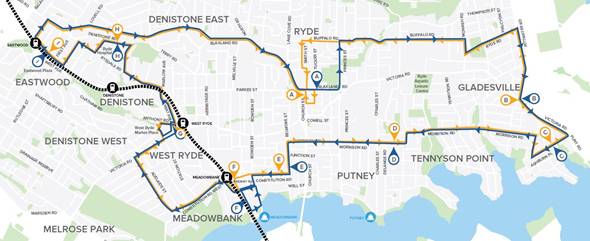
• City of Ryde Council service, operated by a
contractor
• Fixed route bi-directional service
• Operated 4 days a week (Wednesdays to
Saturdays) 8:00am to 2:00pm
• Service operated hourly in each direction
totaling 10 services per day
• Two 24-seater minibuses used
• Services picked up an average of 24
passengers per loop (51.6k/yr)
• Service costs approximately $200k/yr or
$3.88/boarding
• Service cancelled in December 2025 due to
high operational costs and legislative constraints.
6.3 Strathfield
Council – Connector Service
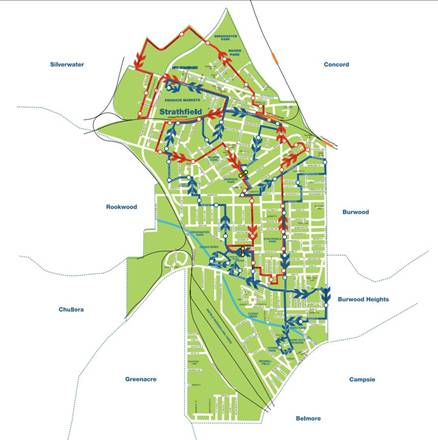
· Strathfield Council operated service
• Originally
2 fixed routes
• Operated 7 days a week 7:00am to 7:00pm
• Council had 23 casual bus drivers on the
books
• Morning shift and afternoon shift
• 28 shifts per week to staff
• Service operated two buses for each route
• Five 24-seater minibuses required to run
service
• Most popular route averaged 11 passengers
per hour
• Other route averaged 8 passengers per hour
• Passenger total of 69.6k/yr
• Passenger donation approximately $2k/yr
• Service cost approximately $1.3M/yr or
$19.78/boarding
• Service was cancelled in April 2025 due to
not being a core service of local government and high operating costs.
6.4 Northern
Beaches Council – Hop Skip & Jump
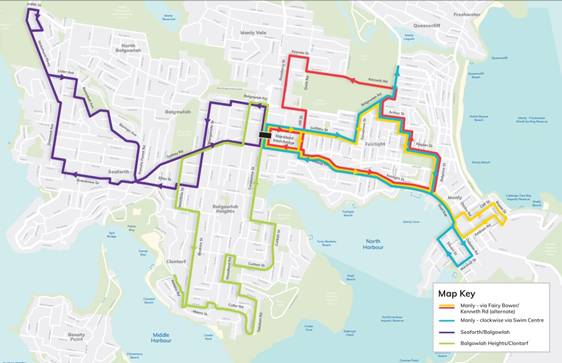
• Northern Beaches Council operated service
• Originally 5 fixed routes
• Operates 7 days a week 7:00am to 6:30pm
• Council employs 11 casual bus drivers
• Service operates half hourly and hourly
• Four 22-seater minibuses required
• Maintenance costs were high
• Replacement costs for 4 buses is $1M
• Services pick up an average of 174k
boardings per year
• Passenger donation approximately $12k/yr
• Costs approximately $820k/yr or
$4.71/boarding
• 4 routes canceled in June 2025 due to
decreasing passenger numbers and increasing costs
• Last route to be reviewed in future
6.5 Lane Cove
Council – Village Xpress
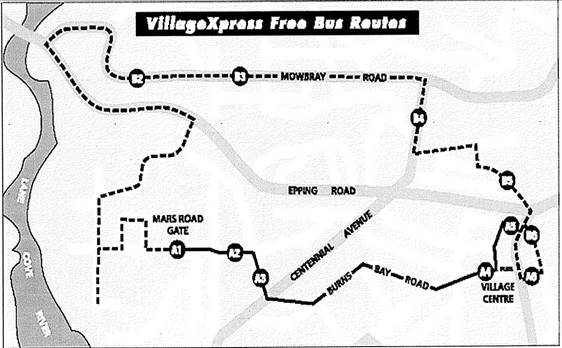
• Council service, operated by a contractor
• 2 fixed routes
• Operated weekdays 11:00am to 2:30pm
• Route A operated from Banksia Close to
Village at 20min intervals (9/day)
• Route B operated from Mars Road via Mowbray
Road to Village at 50min intervals (3/day)
• Two 24-seater minibuses required
• Route A picked up an average of 39
boardings per day (10k/yr)
• Route B picked up an average of 4 boardings
per day (1k/yr)
• Cost approximately $80k/yr or
$7.27/boarding
• Council could not get sponsorship
• Service ran from 2002 to 2009
While a Council run shuttle bus certainly
provides a sustainable mode of community transport, the consideration of
operational costs, patronage numbers and logistics is vital to the viability of
this project. Capturing the ‘lessons learnt’ from community shuttle
buses in other LGAs, the key factors that contributed to the cancellation of
these services are low patronage and significant operational and maintenance
costs associated with fleet. Bus services are provided by the NSW Government, and
some Councils deem this not to be core service when trying
to operate in a financially sustainable and responsible manner.
Operational costs aside, a community bus
service may not be the most attractive transport option for the majority of
Lane Cove Residents given the high parking availability in the Lane Cove
Village. This may impact on patronage numbers making the cost per boarding
significant. Council also risks the proposed bus routes being redundant if
TfNSW introduces additional bus services in the LGA.
Community
Consultation
Not applicable at this stage
Financial
Considerations
A privately operated shuttle bus has an
ongoing cost of $280,800/annum for both routes including driver and operating
costs.
If Council
wishes to pursue the option of running the shuttle bus service in house, the
total cost of running a bus service is approximately $517,310 in the first year
(assuming the purchase of an EV bus) and $167,310 for subsequent years (not
including operational and fuel costs).
The costs for
the establishment and operation of a community shuttle bus service have not
been included in the proposed 2026/27 draft budget. Should Council wish
to pursue a shuttle bus service; to maintain the proposed 2026/27 financial
position, Council would need to remove services from the draft 2026/27 budget
or adopt an increased deficit.
Governance
and Risk Considerations
A shuttle bus
service operated by Council must comply with the following:
· Passenger Transport
Act 2014
· Passenger Transport
Regulation 2017
· Local Government Act
1993
· Bus Operator
Accreditation Scheme (BOAS)
Environmental
Considerations
Whilst there would be some environmental
benefits with the introduction of a community shuttle bus, the financial
impacts outweigh the environmental benefits.
Social
Considerations
Whilst there would be some social benefits
to some members of the community with the introduction of a community shuttle
bus, the financial impacts outweigh the social benefits.
Timing
Not applicable
Link to Strategy
This report relates to the Community
Strategic Plan Outcome/s and Goal/s:
2. Our
Built Environment - A well designed, liveable and connected area
2.4 Transport
& Mobility
2.4.3 Encourage
and lobby for a connected, accessible, reliable, safe, sustainable and
integrated transport system that will meet future needs
Martin Terescenko
Director - Open Space and Infrastructure
Open Space and Infrastructure Division
ATTACHMENTS:
|
AT‑1 View
|
Assessment of Bus Routes in Lane Cove LGA
|
7 Pages
|
Available Electronically
|
|
AT‑2 View
|
Willoughby Council Response to Community Bus
|
2 Pages
|
Available Electronically
|
Ordinary Council Meeting 23 April 2026
Public Exhibition -
Draft Small Watercraft Storage Policy
Item No: 16.2
Subject: Public Exhibition - Draft Small Watercraft Storage
Policy
Record No: SU445 - 24797/26
Division: Open Space and
Infrastructure Division
Author(s): Harrison
Lillis
Purpose
The purpose of this report is to seek
Council endorsement to the public exhibition of the draft Small Watercraft
Storage Policy.
Executive
Summary
· There
has been a sustained growth in the ownership and improper storage of small
watercraft in waterfront locations within the Lane Cove local government area
in recent years, resulting in environmental and recreational impacts.
· Council
does not have an adopted Policy position on this issue, however at the December
2025 Council meeting council resolved to develop a LGA wide Watercraft
Management Strategy.
· A
draft Small Watercraft Storage Policy has been prepared that aims to formalise
and manage small watercraft storage at foreshore locations in the LGA. The
Policy has been guided by policies of neighbouring councils, with the draft
Policy prescribing designated storage areas and types for registered boat
owners, including the introduction of a fee regime to ensure adequate ongoing
management of facilities and minimise abandoned and improperly stored
watercraft, especially in environmentally sensitive areas.
· Areas
within the LGA have been identified and mapped as suitable for storage
immediately; some areas are identified for future storage opportunities and
others noted as unsuitable (refer to attachment AT-2).
· Given
that Council does not currently charge a registration fees for small watercraft
on public land a fee structure for registration is proposed and aligns with fee
structures of neighbouring Councils.
|
RECOMMENDATION
That the Draft Small Watercraft
Storage Policy and draft Schedule of Fees and Charges for the storage of
small watercraft be placed on public exhibition with the outcomes of the
public exhibition reported to Council.
|
Background
Throughout 2025, Council consulted the
local community and users of Griffith Park / Dunois Reserve in Longueville
seeking feedback on the management of the public foreshore, particularly
regarding storage of private small watercraft on public land.
Council proposed a series of formal storage
options, including dinghy racks, to better accommodate the quantity of boats
currently stored in ad-hoc clusters along the foreshore. The boats along Dunois
Reserve are untidy, make access to the water difficult, are damaging mangrove
systems and spread along the foreshore area zoned as Environmental Conservation
(C2).
There was general support for the
installation of racks, however a significant majority of respondents (89.6%)
believe that the racks will not wholly address the clutter of watercraft along
the foreshore, and that there will be an ongoing issue with improper boat
storage.
Additionally, 93% of respondents believe
that it is necessary that Council develop an LGA wide watercraft strategy to
enforce the proper storage of watercraft, like other nearby Councils.
At the December 2025 Council Meeting,
Council subsequently resolved (302/25) to develop this strategy as below:
|
302
|
1.
adopt the proposed concept design (Attachment – AT-3);
2. move to
commence development of an LGA wide strategy regarding watercraft management;
and
3. implement the
construction of the Dunois Reserve Watercraft Storage design alongside the
development of the Council Watercraft Management Strategy.
|
This report responds to item 2 of
Resolution 302/25 regarding an LGA wide approach to watercraft management on
public land.
Discussion
Council currently permits owners of small
watercraft to store registered vessels on public land. The registration process
is at no cost to the boat owner and there are no formal requirements regarding
how boats are to be stored.
The limited waterfront space within the LGA
and increased demand of people seeking to store watercraft has created both
environmental and recreational issues. The capacity of the foreshore in places
has been surpassed which leads to both improper storage in sensitive bushland
areas, and limits access for others seeking to enjoy the foreshore.
Council has developed the following
strategy to better manage the storage of small private watercraft on public
foreshore:
1. Where possible, formalise and consolidate storage options in areas
of high demand.
2. Prohibit any storage on environmentally sensitive areas or areas
zoned as environmental conservation (C2).
3. Introduce a fee structure for the storage of private watercraft on
public land.
This strategy has been formalised as a
Draft Small Watercraft Storage Policy for public exhibition (AT-1). This policy
seeks to establish the standards by which Council can regulate and control the
storage of dinghies and small watercraft on foreshore and public land within
the Lane Cove LGA.
The policy includes a structured system of
permits and enforcement protocols to manage high demand for foreshore space,
protect the natural environment, and ensure equitable access to the waterfront.
It is accompanied by a publicly accessible Lane Cove Watercraft Storage Zone
Map (AT-2) that defines designated storage zones and facilities that serve to
inform the community of what is allowed on the foreshore.
Fees and Charges
Council has developed the comparison chart
below of neighbouring Council fee structures for watercraft storage and
registration.
|
Small Watercraft
Neighbouring Council Annual Fees and Charges (25/26)
|
|
LGA
|
Locker
|
Rack
|
Informal
|
Concession
|
|
Hunters Hill
|
Resident
|
$510
|
$179
|
$179
|
$147
|
|
Non Resident
|
$510
|
$510
|
$510
|
$410
|
|
North Sydney
|
|
$824 - $1484
|
$352
|
$155
|
15% Discount
|
|
Note: North Sydney specifies charges depending on
Location, not type.
No resident discount.
|
|
Northern Beaches
|
Resident
|
Harbour Location
|
$377
|
-
|
-
|
|
Non Resident
|
$626
|
-
|
-
|
|
Resident
|
Non harbour location
|
$258
|
-
|
-
|
|
Non Resident
|
$392
|
-
|
-
|
|
Ryde
|
Resident
|
-
|
$269
|
-
|
$134
|
|
Non Resident
|
-
|
$537
|
-
|
$269
|
|
Mosman
|
Resident
|
-
|
$102.73 / $254.55
|
$102.73
|
-
|
|
Non Resident
|
-
|
$346.36 / $854.55
|
$345.45
|
-
|
|
Note: Mosman rates for racks changes depending on
location
|
Each neighbouring Council differs somewhat
in how they apply registration and storage fees, however, most offer a discount
for residents and a sliding scale depending on the location/facility provided.
Council currently manages Lockers in two locations and
provides some dinghy racks at Burns Bay Reserve and Greenwich Baths. Council
does not currently charge for the use of dinghy racks or for informal tie up
locations along public foreshore land.
|
|
Council Fees and Charges – Existing (25/26)
|
|
|
Lockers - Woodford Bay
|
Lockers - Yacht Bay
|
Registration - Racks /
Informal / Tie Up
|
|
|
Boat
|
Kayak
|
Dinghy
|
Watercraft
|
NO CHARGE
|
|
Resident
|
$720
|
$720
|
$540
|
$720
|
|
Non Resident
|
$720
|
$720
|
$540
|
$720
|
Council proposes the below fee structure in
line with the new policy to assist in maintaining existing infrastructure, help
with future upgrades and reduce abandoned boats left along the foreshores.
|
Council Fees and
Charges – Proposed (26/27)
|
|
|
Boat and Kayak Locker (Large)
|
Dinghy Locker (Small)
|
Rack
|
Tie Up
|
Concession
|
Storage Fee
|
Impound Fee
|
|
Resident
|
$755
|
$565
|
$200
|
$150
|
15% Discount
|
$53.5 / day
|
$161 / article
|
|
Non Resident
|
$1,130
|
$850
|
$600
|
$450
|
15% Discount
|
Community
Consultation
Statement of
Intent
The consultation
is designed to elicit any feedback members of our community may have on the
matter and report that feedback back to Council for its consideration.
Method
|
Level of Participation
|
Consult
|
|
Form of Participation
|
Open
|
|
Target Audience
|
Lane Cove Community
|
|
Proposed Medium
|
Website
Exhibition, inviting written submissions and survey responses (as part of the
Draft 2026/27 Budget & Operational Plan exhibition)
|
Financial
Considerations
Some funding ($40k) to support the cost of
disposal of impounded dinghies collected from the foreshore has been requested
for the next financial year, however additional funds may be required in future
where new storage facilities are identified as necessary, or to cover future
disposal costs. The proposed fees for storage and registration provides an
additional income stream to offset costs and assist with ongoing maintenance of
storage facilities.
Governance
and Risk Considerations
Council will own and manage the any future
storage facilities, in the same way that Council currently operates boat
lockers. The risks associated with new facilities are anticipated to be the
same.
Environmental
Considerations
The proposed actions in this report will
result in a beneficial environmental outcome by prohibiting the ad-hoc storage
of vessels along foreshore land zoned as Environmental Conservation (C2).
Additionally, it will identify where recreational foreshore areas are at
capacity for small watercraft storage to mitigate future instances of abandoned
property on public land.
Social
Considerations
The recommendations in this report will
have positive social outcomes for the community through better organising
recreational areas of the LGA waterfront to allow for more diversity of
community activity. Additionally, the policy and its enforcement will allow for
a greater variety of community users to access the foreshore on a day-to-day
basis.
Timing
The policy and proposed fee structure is
intended to commence by the 26/27 financial year.
Link to Strategy
This report relates to the Community
Strategic Plan Outcome/s and Goal/s:
2. Our
Built Environment - A well designed, liveable and connected area
3 Our
Society - An Inclusive, interconnected, active and resilient community
2.3 Assets,
Infrastructure & Public Domain
3.3 Community
Services & Facilities
2.3.3 Investigate
opportunities to improve the public domain to enhance public lifestyle
3.3.1 Provide,
maintain and upgrade community buildings and facilities to meet changing
community needs and ensure versatility
2.3.2 Develop
best practice asset registers and management and investment plans for
infrastructure and assets
2.3.4 Investigate
opportunities to create more open space
Martin Terescenko
Director - Open Space and Infrastructure
Open Space and Infrastructure Division
ATTACHMENTS:
|
AT‑1 View
|
DRAFT_Policy XX-XX Small Watercraft Storage
|
5 Pages
|
Available Electronically
|
|
AT‑2 View
|
LCC_Watercraft Storage Map
|
1 Page
|
Available Electronically
|
Ordinary Council Meeting 23 April 2026
Local Transport Forum -
March 2026
Item No: 16.3
Subject: Local Transport Forum - March 2026
Record No: SU1326 - 25309/26
Division: Open Space and
Infrastructure Division
Author(s): Hasir
Suhaib
Purpose
The purpose of this report is to seek
Council endorsement of recommendations from the Lane Cove Local Transport Forum
held on 17 March 2026 and the out-of-cycle report circulated to Forum members
on 2 April 2026.
Executive
Summary
· The Lane Cove Local Transport Forum considers upcoming transport and
parking proposals and assesses the impact of proposals on local, regional and
state roads and provides evidence-based information on which decisions
regarding transport and parking proposals can be made.
· The Lane Cove Local Transport Forum met in March 2026 and provided
recommendations for Council’s consideration.
· The attached Agendas (AT-1) provides a background for proposals,
results of community consultation and a recommendation.
· The
Minutes (AT-2) provide a summary of the discussion from Forum members and a
final recommendation.
· An
additional out-of-cycle Local Transport Forum report was circulated to Forum
members on 2 April 2026. This report related to the Traffic Management
Plan (TMP) from St Ignatius' College to manage traffic associated with school
events held at the College. See (AT-3) for Agenda and
(AT-4) for Minutes.
· This
report recommends the adoption of the Minutes of the Local Transport Forum
meeting held on 17 March 2026 and the Minutes of the out-of-cycle report.
|
RECOMMENDATION
That Council:
1. adopt the recommendations of the Lane Cove Local Transport
Forum held on Tuesday 17 March 2026.
2. adopt the recommendations of the Lane Cove Local Transport
Forum Out of Cycle report circulated on Thursday 2 April 2026.
|
Background
The Lane Cove Local Transport Forum is a requirement of
Transport for NSW and is primarily a technical review forum which provides
advice to Council on matters referred to it by Council.
These matters must relate to prescribed traffic control
devices and traffic control facilities for which Council has delegated
authority.
The Forum has no decision-making powers but provides
recommendations for Council to consider, noting that Council is not bound by
its advice.
Local Transport Forum meetings can be held
physically, digitally or via correspondence. As physical meetings are held
bi-monthly, traffic and parking changes that require urgent referral to the
Local Transport Forum can be done via an electronic meeting format.
This involves:
· Circulating a
report for each proposal by email to all members of the Local Transport Forum,
· Each report
includes details of consultation, investigations and assessments undertaken
with a preliminary recommendation for consideration by members,
· Responses from
members are requested within 7 days,
· Council will then
amend the recommendations if required and circulate minutes collating all
feedback from members of the Local Transport Forum,
· This report
including minutes will then be referred to the subsequent Council meeting for
consideration after which the Council adopted recommendation is implemented,
· All residents that
provided a submission on each item as part of the consultation process will be
notified of the Local Transport Forums recommendation and the date of the
Council meeting it will be reported to, should they wish to register to speak
at the public forum,
· All residents that
provided a submission on each item as part of the consultation process will
also be notified of the adopted final Council resolution,
· Out of Cycle
Reports are circulated electronically, face to face meetings are not required
and will not be held.
This process is a common and necessary practice to ensure
minimal delays with implementing time sensitive traffic and parking changes.
Discussion
The Lane Cove Local Transport Forum was held on Tuesday 17
March 2026. The Agenda is included as AT-1.
The Local Transport Forum recommendations are outlined in
the Minutes of the meeting (AT-2), which address:
1. Traffic
committee meeting confirmation of minutes – Tuesday 17
February 2026
2. St
Vincent’s Road (south end) from Gore Street to Bob Campbell oval,
Greenwich - proposed shared user path
3. Dorritt
Street from Little Street to Phoenix Street, Lane Cove - Proposed alteration of
the existing speed cushions to speed humps
4. Chisholm
street (south end) at Greenwich Road, Greenwich - Proposed installation of 'No
Stopping' zone
5. Longueville
road (west side) at Zeta Road, Lane Cove - Alter the part of the existing 37
meter 'No Parking' 8.00 - 9.30 am, 2.30 -4.00 pm to 17.0 meter '10 min parking'
8.00 - 9.30 am, 2.30 - 4.00 pm
6. Merinda
Street (west side) from Mindarie Street to Cul de sac, Lane Cove North - Alter
the existing 'No Parking' zone, 9.00am - 5.30pm, Mon – Fri and 8.00am -
12.00 pm, Saturday.
7. Alpha
Road (north side), from Beta Road to Gamma Road, Lane Cove - Proposed 'No
Parking' zone.
An additional out-of-cycle report was
circulated to Forum members on 2 April 2026. The Agenda includes AT-3 and the
Minutes as AT-4 which address:
1. Traffic
Management Plan – St Ignatius’ College Riverview
Community
Consultation
Community consultation is undertaken for
each proposal and is outlined in the Agenda included in AT-1.
Financial
Considerations
The Agenda included in AT-1 outlines the
financial considerations for each proposal.
Governance
and Risk Considerations
Reporting of the recommendations of the
Local Transport Forum to Council for endorsement by council is a statutory
requirement.
Environmental
Considerations
The subject of this report has no
environmental implications for Council with the exception of Bob Campbell Oval
which has already been reported in the previous Council Meeting.
Social
Considerations
The subject of this report has no social
impactions for Council.
Timing
The items discussed in the Agenda and
Minutes are proposed to be implemented this financial year.
Link to Strategy
This report relates to the Community
Strategic Plan Outcome/s and Goal/s:
2. Our
Built Environment - A well designed, liveable and connected area
2.6 Traffic
2.4 Transport
& Mobility
2.6.1 Facilitate
improvements to car, bicycle and pedestrian safety
2.6.2 Ensure
application of appropriate traffic management measures to ensure the safety and
amenity of local streets and improve traffic flow
2.6.4 Provide
shared user paths and other related infrastructure as an alternative to driving
2.4.2 Implement
infrastructure upgrades for people to incorporate more walking and cycling into
their daily lives
Martin Terescenko
Director - Open Space and Infrastructure
Open Space and Infrastructure Division
ATTACHMENTS:
|
AT‑1 View
|
Agenda of Local Transport Forum - Tuesday, 17 March 2026
|
|
Available Electronically
|
|
AT‑2 View
|
Minutes of Local Transport Forum - Tuesday, 17 March 2026
|
|
Available Electronically
|
|
AT‑3 View
|
Agenda of Local Transport Forum - Out of Cycle
Report - Circulated on 2 April 2026
|
|
Available Electronically
|
|
AT‑4 View
|
Minutes - Local Transport Forum - Out of Cycle Report -
Agenda Circulated on 2 April 2026
|
|
Available Electronically
|
Ordinary Council Meeting 23 April 2026
Public Exhibition -
Draft Infrastructure Asset Management Policy
Item No: 16.4
Subject: Public Exhibition - Draft Infrastructure Asset Management
Policy
Record No: SU240 - 25828/26
Division: Open Space and
Infrastructure Division
Author(s): Sebastian
Szewcow
Purpose
The purpose of this report is to seek
Councils endorsement to commence the public exhibition of the draft
Infrastructure Asset Management Policy.
Executive
Summary
· Council's
existing Infrastructure Asset Management Policy was first adopted in 2010 but
has not undergone a review.
· A
new Policy has been prepared that establishes a framework for the sustainable
management of Council's Infrastructure Assets to reflect reasonable community
expectations of time, quality and value for money.
· The draft Policy sets guidelines for implementing consistent
asset management framework for the management of existing and new assets
throughout the Lane Cove Council area. The application of these principles will
ensure our assets continue to provide the appropriate level of service to meet
the community’s needs and expectations in a sustainable manner.
|
RECOMMENDATION
That the draft Infrastructure Asset
Management Plan be placed on public exhibition and a report on the outcomes
of the public exhibition be reported to Council.
|
Background
Asset management consists of a series of
actions that lead to the provision of infrastructure that is relevant to the
community’s needs, appropriately maintained, and for which replacement or
renewal arrangements have been made. Financial decisions relating to
assets form part of the asset management process, as does the determination of
a level of service appropriate to the community’s needs.
Council’s existing Infrastructure
Asset Management Policy was first adopted in 2010 but has not undergone a
review.
Discussion
Asset management in Lane Cove is based on
plans prepared for the following key asset classes: roads, buildings,
drainage, and parks. Effective financial management underpins the actions
taken in respect of the commissioning, operation, maintenance, renewal and
eventual disposal of an asset. This asset lifecycle is covered in the draft
Infrastructure Asset Management Policy. Asset Management Plans for each
asset class have been developed and will be further refined so they can be
effectively implemented.
To provide a framework for the systematic
and sustainable management of Council’s infrastructure assets, and to
guide future revisions of asset management plans, Council has prepared a new
Infrastructure Asset Management Policy.
The Policy establishes a clear, consistent,
and sustainable framework for the management of Council’s Infrastructure
Assets. It ensures that planning, construction, maintenance, renewal and
disposal activities align with the sustainable management of infrastructure
assets to reflect reasonable community expectations of time, quality and value
for money.
The principles of the draft Policy are
aligned with the ISO 55000 Asset Management Standard, the NSW Integrated
Planning and Reporting Framework, and contemporary local government best
practice.
Community
Consultation
Statement of Intent
The consultation is designed to elicit any
feedback members of our community may have on the matter and report that
feedback back to Council for its consideration.
Method
|
Level of Participation
|
Consult
|
|
Form of Participation
|
Open
|
|
Target Audience
|
Lane Cove Community
|
|
Proposed Medium
|
Website
Exhibition, inviting written submissions and survey responses (as part of the
Draft 2026/27 Budget & Operational Plan exhibition)
|
Financial
Considerations
The recommendations of this report pose no
financial impact on Council.
Governance
and Risk Considerations
It is good governance to keep
Council’s Infrastructure Asset Management Policy up to date to ensure
Council’s processes are current and reflect best industry practices.
Environmental
Considerations
The subject of this report has no
environmental implications for Council.
Social Considerations
The subject of this report has no social
implications for Council
Timing
Subject to adoption by Council, the draft
Infrastructure Asset Management Policy will be publicly exhibited on
Council’s website for a period of six (6) weeks. A further report will be
presented to Council following the exhibition period providing comments on any
submissions received.
Link to Strategy
This report relates to the Community
Strategic Plan Outcome/s and Goal/s:
2. Our
Built Environment - A well designed, liveable and connected area
2.3 Assets,
Infrastructure & Public Domain
2.3.2 Develop
best practice asset registers and management and investment plans for
infrastructure and assets
Martin Terescenko
Director - Open Space and Infrastructure
Open Space and Infrastructure Division
ATTACHMENTS:
|
AT‑1 View
|
Draft Infrastructure Asset Management Policy 2026
|
5 Pages
|
Available Electronically
|
Ordinary Council Meeting 23 April 2026
Council Snapshot March
2026
Item No: 18.1
Subject: Council Snapshot March 2026
Record No: SU220 - 27413/26
Division: Office of the
General Manager
Author(s): Corinne
Hitchenson
Purpose
This report provides the monthly Snapshot
report and current Resolution tracker.
Executive
Summary
Attached for the information of Councillors
is a review of Council’s recent activities for the month of March 2026 at
AT-1.
Council’s Resolution Tracker showing
the progress of Council’s resolutions is included at AT-2.
RECOMMENDATION
That Council receives and notes:
1. Council Snapshot for February 2026
2. Resolution Tracker for 19 March 2026 Council
Meeting
Background
On a monthly
basis, Council staff compile a snapshot for Councillors outlining recent
Council activities.
In addition,
staff review and update the Council Resolution Tracker [AT-2], which identifies
outstanding actions and notes those recently completed in response to Council
resolutions
Discussion.
This Snapshot
report provides a summary of the operations of each Division within Council for
the month of March 2026 [AT-1]
Conclusion
The monthly Council Snapshot and Resolution
Tracker are provided for the information of the April 2026 Council meeting.
Louise Kerr
General Manager
Office of the General Manager
ATTACHMENTS:
|
AT‑1 View
|
Council Snapshot March 2026
|
42 Pages
|
Available Electronically
|
|
AT‑2 View
|
Council Resolution Tracker for 23 April 2026 Council
Meeting
|
43 Pages
|
Available Electronically
|